ToolMage
Sign in

Best 1 Review Platform for Information

Popular Review Platform in Information include cocoleco, helping you work more efficiently.

cocoleco
Free

cocoleco

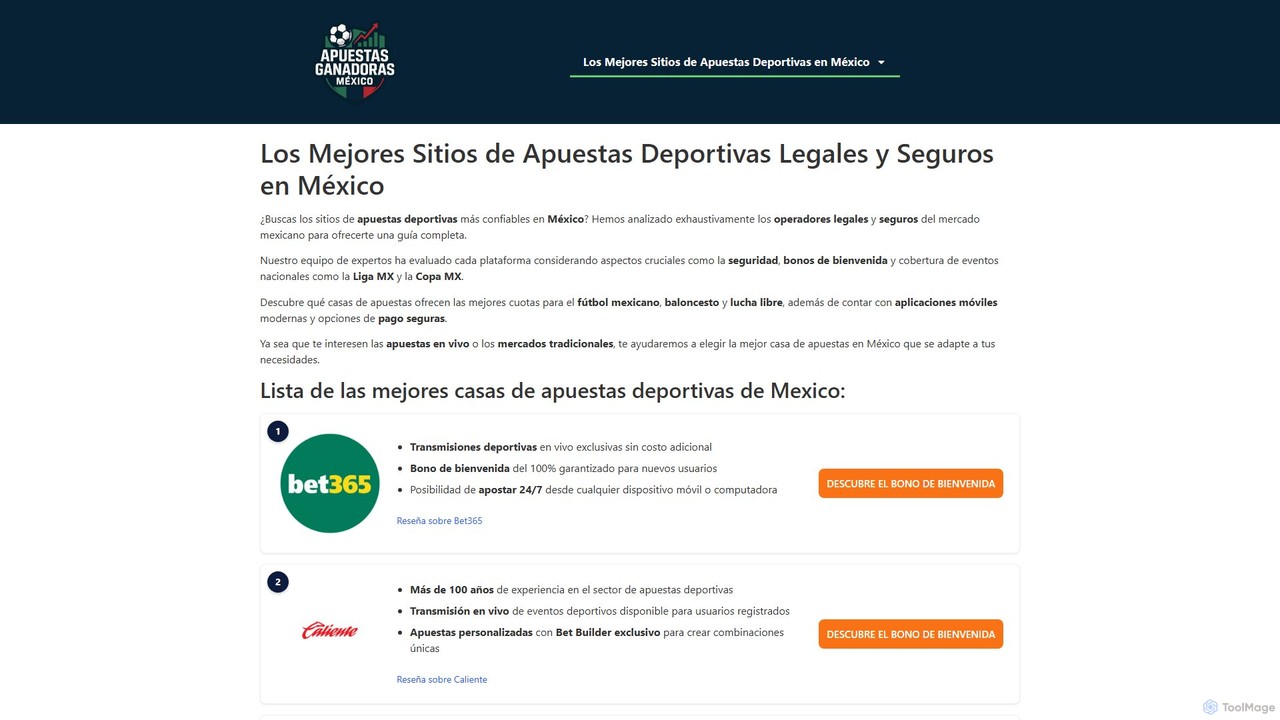
An AI-powered comparison platform that analyzes and ranks the best sports betting sites in Mexico. It provides in-depth reviews, bonus tracking, and data-driven recommendations to help users find secure and high-value betting operators, with a special focus on local leagues like Liga MX.

Sports Betting
Visits 4.9KFavorites 131Likes 124

About Review Platform

An AI Review Platform is a specialized tool that automates the collection, analysis, and management of customer feedback from various sources. It utilizes Natural Language Processing (NLP) to dissect large volumes of text-based reviews, identifying sentiment, key topics, and emerging trends. This allows businesses to move beyond manual reading and gain actionable insights from customer opinions at scale. These platforms transform unstructured feedback into structured data for strategic decision-making.

Core Features

  • Sentiment Analysis: Automatically classifies reviews as positive, negative, or neutral to gauge overall customer satisfaction.
  • Topic & Keyword Extraction: Identifies recurring themes, product features, or issues mentioned in reviews, such as 'battery life' or 'customer support'.
  • Review Aggregation: Gathers reviews from multiple channels like app stores, e-commerce sites, and social media into a single dashboard.
  • Automated Summarization: Generates concise summaries from thousands of reviews, highlighting the most critical feedback points.
  • Trend Reporting: Tracks changes in sentiment and topics over time to monitor product updates or marketing campaigns' impact.

Use Cases

These platforms are invaluable for product managers seeking to prioritize feature development based on user requests, marketing teams aiming to understand competitive advantages, and customer experience leaders monitoring service quality. For instance, an e-commerce brand can quickly identify a product defect mentioned across numerous reviews, while a SaaS company can spot the most-requested integration.

How to Choose

When selecting an AI Review Platform, consider the supported data sources; ensure it covers the channels where your customers leave feedback. Evaluate the depth of its analytical capabilities, such as the accuracy of sentiment analysis and the granularity of topic modeling. Also, assess its integration options with other tools like Slack, Jira, or your CRM, and verify its proficiency in analyzing reviews across all relevant languages for your user base.

Review Platform use cases

1

Prioritizing Product Feature Development

A SaaS product manager is tasked with planning the next quarter's development roadmap. Instead of relying on anecdotal evidence, they use an AI Review Platform to aggregate and analyze over 10,000 user reviews from G2, Capterra, and the App Store. The platform's topic extraction feature automatically identifies 'integration with Salesforce' and 'improved reporting dashboard' as the two most frequently requested features. This data-driven insight allows the manager to confidently prioritize these features, aligning the roadmap directly with user needs and reducing development guesswork.

2

Analyzing the Competitive Landscape

A marketing analyst for a mobile app wants to understand their competitive positioning. They configure an AI Review Platform to track not only their own app's reviews but also those of their top three competitors. The platform's sentiment analysis reveals that while their app has a higher overall rating, a competitor is consistently praised for its 'user-friendly interface'. The analyst uses this insight to launch a marketing campaign highlighting their app's powerful features, while also providing feedback to the product team about improving the UI to close the competitive gap.

3

Monitoring Customer Service Quality

The Head of Customer Experience at a large retail chain needs to monitor service quality across 200 store locations. They use an AI Review Platform to aggregate all Google Maps and Yelp reviews. By setting up alerts for reviews containing keywords like 'rude staff', 'long wait', or 'unhelpful', they are immediately notified of negative experiences. The platform's dashboard visualizes which locations have the highest frequency of negative service-related feedback, allowing the manager to target specific stores for additional staff training and operational improvements, ultimately improving customer satisfaction.

4

Managing Online Reputation for Hospitality

A hotel group manager oversees reputation for a portfolio of 15 boutique hotels. They use an AI Review Platform to consolidate reviews from TripAdvisor, Booking.com, and Google. The platform not only flags negative reviews for immediate attention but also uses AI to generate draft responses. This allows the manager to quickly approve or edit personalized replies, ensuring a consistent and timely response to all feedback. This process helps mitigate negative sentiment, shows guests their feedback is valued, and improves the hotels' online ratings over time.

5

Identifying E-commerce Product Defects

An e-commerce brand manager launches a new electronic gadget. Within weeks, they notice a dip in the product's average rating. Using an AI Review Platform, they filter for all 1-star and 2-star reviews across Amazon and their own website. The topic analysis feature quickly surfaces a high volume of comments related to 'faulty charging port'. This immediate, data-backed insight allows them to alert the manufacturing team, pause shipments, and communicate proactively with affected customers, preventing a wider-scale product recall and protecting the brand's reputation.

6

Informing Market Research with User Voice

A market research firm is compiling a report on the electric vehicle (EV) industry. To capture authentic consumer sentiment, they use an AI Review Platform to analyze thousands of owner reviews from automotive forums and review sites. The AI summarizes key themes, revealing that while 'range anxiety' is a decreasing concern, 'software glitches' and 'inconsistent charging speeds' are now the top pain points for EV owners. This direct-from-consumer data provides a much richer and more current perspective than traditional surveys, adding significant value to their industry report.

Review Platform FAQ

What is an AI Review Platform?

An AI Review Platform is a software tool that uses artificial intelligence, specifically Natural Language Processing (NLP), to automatically analyze customer reviews from many sources. Instead of manually reading feedback, these platforms can process thousands of reviews to identify key information such as overall sentiment (positive/negative), recurring topics (e.g., 'price', 'customer service'), and emerging trends. They provide businesses with a scalable way to understand customer feedback and make data-driven decisions.

How do I choose the right AI Review Platform?

To choose the right platform, consider these four key factors:

  • Data Sources: Ensure the platform can aggregate reviews from all the channels that matter to your business, such as specific app stores, e-commerce sites (like Amazon), or industry-specific sites (like TripAdvisor).
  • Analytical Depth: Evaluate the quality of its AI. How accurate is the sentiment analysis? Can it identify nuanced topics and trends, or just broad keywords?
  • Integration Capabilities: Check if it can connect with your existing workflow tools, like sending alerts to Slack, creating tickets in Jira, or syncing data with a CRM.
  • Language Support: If you have a global customer base, verify that the platform can accurately analyze feedback in all the necessary languages.
What's the difference between a Review Platform and a Social Media Monitoring tool?

The main difference lies in their focus and data sources. An AI Review Platform is specialized in analyzing structured and semi-structured feedback from dedicated review sites like G2, Yelp, Google Maps, and app stores. Its analysis is typically product or service-centric. In contrast, a Social Media Monitoring tool casts a wider net, tracking brand mentions, hashtags, and conversations across open platforms like Twitter, Facebook, and blogs. While both use sentiment analysis, review platforms provide deeper insights into specific product features and customer service experiences, whereas social media tools focus more on brand perception and campaign tracking.

What key features should I look for in an AI Review Platform?

Beyond basic aggregation, look for these critical features:

  • Accurate Sentiment Analysis: The ability to correctly identify positive, negative, and neutral tones, ideally at the sentence or aspect level, not just for the whole review.
  • Granular Topic Extraction: The platform should automatically identify and categorize specific themes (e.g., 'UI/UX', 'pricing', 'bugs') without requiring extensive manual setup.
  • Customizable Dashboards and Reports: You should be able to create reports that filter by date, source, sentiment, or topic to answer specific business questions.
  • Alerting and Notifications: The ability to set up real-time alerts for specific keywords (like 'scam' or 'broken') or a sudden drop in ratings is crucial for proactive management.
Who benefits most from using an AI Review Platform?

Several roles and departments gain significant value from these platforms:

  • Product Managers: They use the data to identify bugs, validate their roadmap, and prioritize new features based on direct user feedback.
  • Marketing Teams: They analyze competitor reviews to find weaknesses and strengths, refine messaging, and monitor brand sentiment.
  • Customer Experience (CX) Teams: They track service quality, identify training needs for support staff, and quickly respond to negative feedback to manage reputation.
  • Business Leaders & Strategists: They get a high-level overview of customer satisfaction and market trends to inform strategic decisions without getting lost in individual comments.