Iot Best in category 2 results Smart Home AI Tool

Popular AI tools in the Smart Home field of Iot include Home Assistant、Napi Bot, etc., helping you quickly improve efficiency.

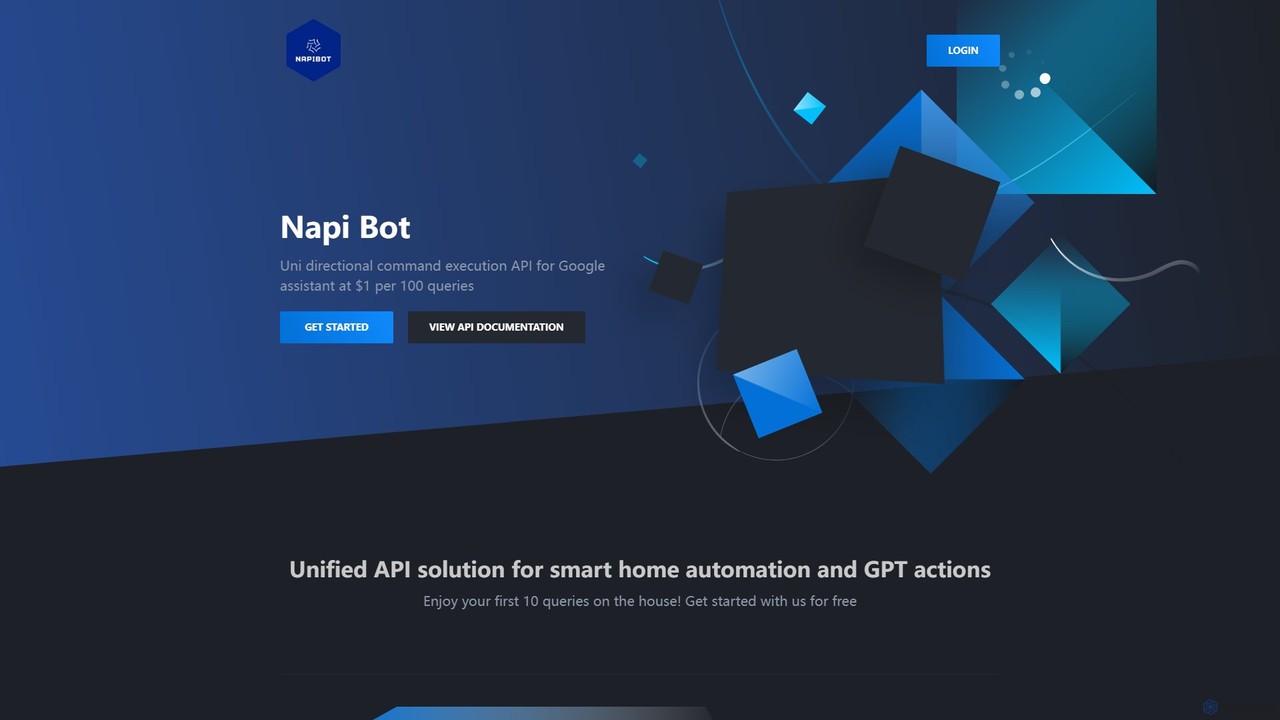
Napi Bot

Napi Bot

Napi Bot is a developer-focused API that enables unidirectional command execution for Google Assistant. It provides a unified, …

2.9K
Home Assistant

Home Assistant

Home Assistant is a powerful, open-source home automation platform that prioritizes local control and user privacy. It integrates …

5.7M

About Smart Home

Smart Home AI tools are applications that use artificial intelligence to automate, manage, and optimize home environments. As a key application within the Internet of Things (IoT), these tools go beyond simple remote control by learning user behaviors, predicting needs, and making autonomous decisions. They analyze data from various sensors and devices to create a responsive, efficient, and secure living space. This intelligent automation enhances convenience, improves energy efficiency, and provides advanced security monitoring.

Core Features

  • Predictive Automation: Learns daily routines to proactively adjust lighting, temperature, and appliances without manual input.
  • Natural Language Voice Control: Allows complex commands and conversational interaction with the home ecosystem via voice assistants.
  • AI-Powered Security Analytics: Differentiates between people, pets, and vehicles to reduce false alarms and provide specific alerts.
  • Energy Optimization: Analyzes usage patterns and external factors like weather to intelligently manage heating, cooling, and power consumption.
  • Personalized Ambiance Creation: Creates custom lighting and sound scenes based on activities like 'movie night' or 'focus work'.

Use Cases

These tools are widely used by homeowners and families seeking convenience, security, and efficiency. They are integral in modern home construction and renovation projects. Key applications include automated climate control, intelligent security surveillance, dynamic lighting systems, and integrated home entertainment management.

How to Choose

When selecting a Smart Home AI tool, consider its ecosystem compatibility (e.g., Google Home, Apple HomeKit, Amazon Alexa). Evaluate the depth of its AI capabilities—does it offer simple rule-based automation or true predictive learning? Also, assess the platform's privacy policy, data security measures, and the range of supported third-party devices and integrations.

Smart HomeUse Cases

1

AI-Enhanced Home Security Monitoring

A family uses an AI-powered smart home system to secure their property. The AI analyzes video feeds from cameras to distinguish between a delivery person leaving a package, a neighbor's pet, and an unidentified person lingering near the entrance. Instead of generic motion alerts, the system sends specific notifications like 'Person detected at front door' or 'Vehicle in driveway'. This intelligence significantly reduces false alarms and allows homeowners to respond more appropriately to genuine security events, even when they are away.

2

Predictive Climate and Lighting Control

For a busy professional, the smart home AI learns their daily schedule. It recognizes they typically leave for work at 8 AM and return at 6 PM. The system automatically lowers the thermostat and turns off most lights after they leave. Based on traffic data and their phone's location, it begins to cool or heat the house to their preferred temperature 30 minutes before their estimated arrival, ensuring a comfortable environment the moment they walk in, all while optimizing energy usage without any manual programming.

3

Voice-Controlled Personalized Entertainment

A user wants to watch a movie. Instead of juggling multiple remotes, they simply say, 'Hey Google, it's movie time.' The AI assistant understands this contextual command. It then executes a pre-set routine: dimming the smart lights to 10%, lowering the automated blinds, turning on the TV and soundbar, and launching a streaming service. This demonstrates how AI uses natural language processing to translate a simple phrase into a complex series of actions across multiple devices, creating a seamless user experience.

4

Automated Elderly Care Monitoring

For families caring for an elderly relative living alone, an AI smart home system provides peace of mind. It uses a network of non-intrusive motion sensors and smart device usage data to learn the person's daily patterns. If the AI detects a significant deviation, such as a prolonged period of inactivity during the day or a failure to open the medicine cabinet at the usual time, it sends a discreet alert to a designated family member. This proactive monitoring helps ensure safety without compromising the individual's independence.

5

Intelligent Kitchen and Cooking Assistance

A home cook uses an AI-powered smart display in their kitchen. They ask the assistant for a recipe, and it displays step-by-step instructions and video guides. As they cook, they can use voice commands to set multiple timers ('set a timer for pasta for 10 minutes and another for the sauce for 20 minutes'). A connected smart oven can even be preheated by the AI assistant to the correct temperature specified in the recipe. This centralizes cooking management, making complex meals easier to handle and reducing the chance of errors.

6

Dynamic Ambiance Adjustment for Activities

A user is transitioning from work to relaxation in the evening. They say, 'Hey Siri, I'm done with work.' The AI system initiates a 'Relax' scene. The bright, cool-toned lights in the home office turn off, while the living room lights shift to a warm, soft glow at 30% brightness. The smart speaker begins playing a curated 'Chill' playlist at a low volume. This demonstrates how AI can manage multiple environmental factors simultaneously to create an ambiance tailored to a user's current activity or mood, enhancing overall well-being at home.

Smart HomeFrequently Asked Questions