ToolMage
Sign in

Best 3 Edge Computing AI tools for Iot

Popular Edge Computing AI tools in Iot include Liquid AI, Qualcomm AI Hub, and Neuton.AI, helping you work more efficiently.

Liquid AI
Freemium

Liquid AI

Liquid AI provides an edge-native AI stack for building efficient, general-purpose AI that runs directly on devices. It features Liquid Foundation Models (LFMs), a platform (LEAP), and an app (Apollo) to deliver fast, private, and customizable AI solutions with zero cloud dependency, optimized for low-power environments like IoT, automotive, and mobile.

Machine Learning
Visits 157.7KFavorites 137Likes 126
Neuton.AI
Freemium

Neuton.AI

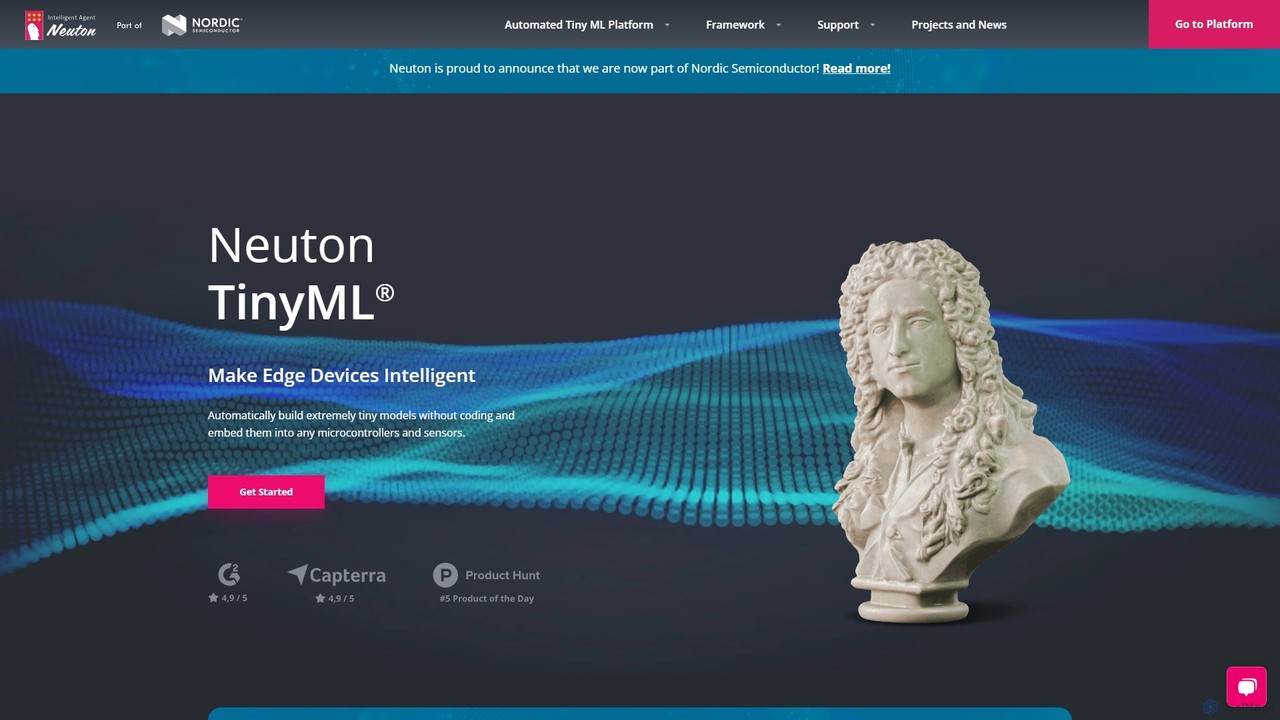
Neuton.AI is a no-code AutoML platform designed to create ultra-compact and efficient machine learning models (TinyML) for edge and IoT devices. It empowers developers to build and deploy AI on resource-constrained hardware like MCUs and sensors without deep technical expertise.

Machine Learning
Visits 8.3KFavorites 151Likes 165
Qualcomm AI Hub
Freemium

Qualcomm AI Hub

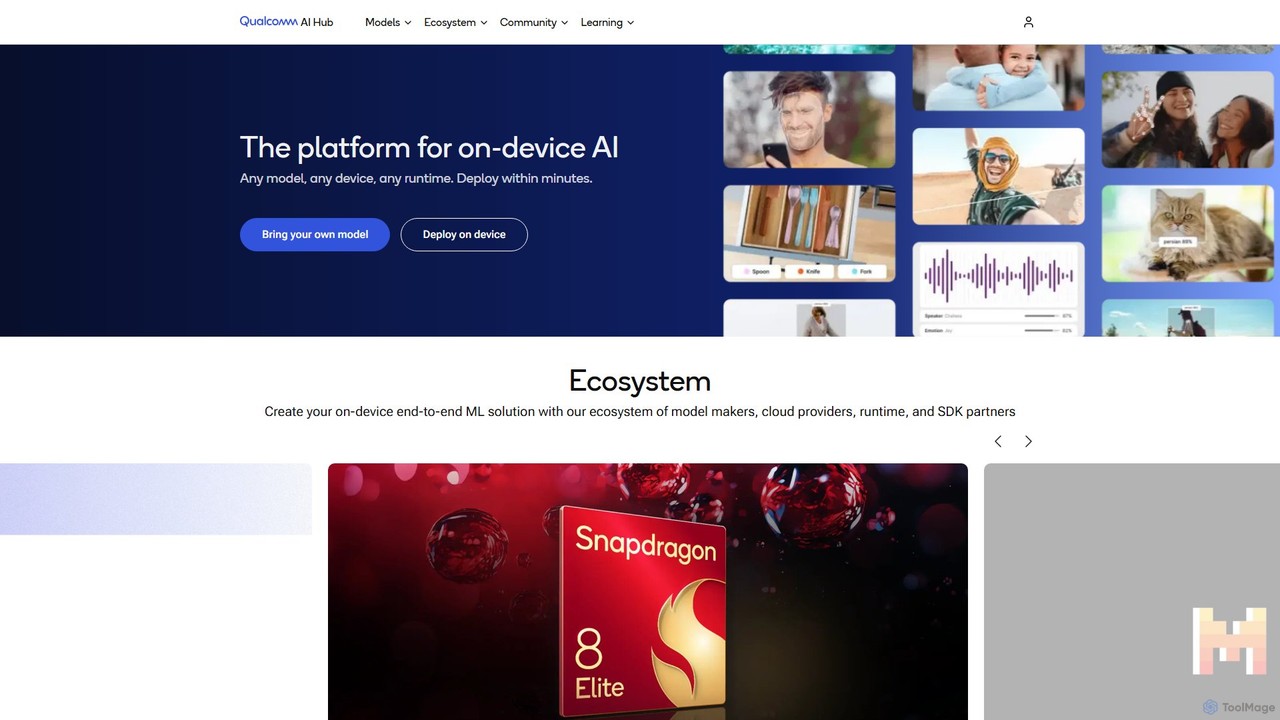
A developer platform for optimizing and deploying AI models on-device. Qualcomm AI Hub provides a library of 100+ pre-optimized models and tools to compile, profile, and run your own models on real Snapdragon-powered hardware, streamlining the path to production for edge AI applications.

Model Deployment
Visits 119KFavorites 164Likes 152

About Edge Computing

Edge Computing tools are a class of AI solutions designed to process data locally, on or near the device where it is generated, rather than in a centralized cloud. These tools leverage local processing power to perform real-time analysis, inference, and decision-making, significantly reducing latency. This approach is critical for Internet of Things (IoT) applications requiring immediate responses, such as autonomous vehicles, smart manufacturing, and real-time video analytics. By minimizing data transmission, edge computing also enhances data privacy, improves security, and reduces bandwidth costs.

Core Features

  • Local Data Processing: Analyzes data directly on devices or local servers without constant cloud dependency.
  • Low-Latency Inference: Executes AI models at the edge for near-instantaneous results and responses.
  • Offline Functionality: Ensures continuous operation even with intermittent or no internet connectivity.
  • Bandwidth Optimization: Reduces the volume of data sent to the cloud, lowering transmission costs.
  • Enhanced Security: Keeps sensitive data on-premise, minimizing exposure to external threats during transmission.

Use Cases

Edge computing is vital in industries where speed and reliability are paramount. In manufacturing, it enables predictive maintenance on machinery. In retail, it powers real-time in-store analytics without compromising customer privacy. It is also fundamental for autonomous systems like drones and vehicles, and for remote healthcare monitoring where immediate alerts are crucial.

How to Choose

When selecting an edge computing tool, first verify its hardware compatibility with your specific devices (e.g., IoT sensors, cameras, industrial gateways). Evaluate the ease of deploying, updating, and managing AI models across distributed devices. Assess performance benchmarks and latency metrics for your use case, and consider how the solution scales as your number of edge devices grows.


Edge Computing use cases

1

Predictive Maintenance in Smart Factories

A manufacturing engineer needs to prevent costly production line downtime. An edge computing tool is deployed on a local gateway connected to machinery sensors. This tool runs a machine learning model that analyzes vibration and temperature data in real-time, directly on the factory floor. When the model detects anomalies indicating a potential equipment failure, it instantly triggers an alert to the maintenance team. This immediate, on-site analysis avoids cloud latency and allows for proactive repairs, preventing shutdowns and reducing maintenance costs.

2

Real-Time Retail Customer Analytics

A retail manager wants to optimize store layout and staffing based on customer behavior. Edge devices with cameras are installed in the store. These devices process video feeds locally to anonymize individuals and extract metadata like foot traffic counts, dwell times, and queue lengths. Only this anonymous, aggregated data is sent to a central dashboard for analysis. This approach provides valuable insights in real-time while ensuring customer privacy, as no personally identifiable video is ever transmitted to the cloud. The manager can then make data-driven decisions to improve the in-store experience.

3

Autonomous Vehicle Obstacle Detection

An autonomous systems developer is tasked with ensuring a vehicle can react instantly to road hazards. The vehicle is equipped with powerful onboard edge computing hardware that processes data from LiDAR, radar, and cameras. Complex perception models run directly on this hardware, identifying pedestrians, other vehicles, and obstacles in milliseconds. This local processing is critical because relying on a cloud connection would introduce dangerous delays. The edge system makes split-second driving decisions, such as braking or steering, achieving the sub-second response time necessary for safe autonomous navigation.

4

Remote Patient Monitoring with Immediate Alerts

A healthcare provider needs to monitor high-risk patients at home. Patients use wearable devices equipped with an edge AI chip. The device continuously analyzes vital signs like heart rate and blood oxygen levels locally. If the AI model on the chip detects a critical anomaly, it triggers an immediate alert on the device itself and sends a notification to a caregiver, even if the home's internet connection is unstable. This ensures timely intervention by processing sensitive health data securely on the device, reducing reliance on constant connectivity and protecting patient privacy.

5

On-Drone Crop Health Analysis

An agronomist uses a drone to monitor a large farm for early signs of disease. The drone is equipped with an edge computing module and a multispectral camera. As it flies, the module processes imagery in real-time, running an AI model to detect subtle changes in plant coloration that indicate stress or infection. Instead of transmitting terabytes of raw video for later analysis, the system generates a real-time health map, pinpointing problem areas. This allows the farmer to take immediate, targeted action, such as applying pesticides only where needed, saving resources and improving crop yield.

6

On-Premise Video Surveillance Anomaly Detection

A security manager for a large facility needs to monitor hundreds of cameras without overwhelming their network or staff. Edge computing devices are connected to the security cameras. These devices analyze video streams locally and in real-time to detect specific events, such as unauthorized entry into a restricted zone or an abandoned package. When an anomaly is detected, the edge device sends a short video clip and an alert to the central monitoring station. This drastically reduces network bandwidth usage compared to streaming all feeds to the cloud and allows security personnel to focus only on critical events.

Edge Computing FAQ

What is Edge Computing in the context of AI?

Edge Computing is a computing paradigm that processes data near its source. In AI, this means running machine learning models directly on local devices like IoT sensors, cameras, or gateways, instead of sending data to a centralized cloud for processing. This approach is designed to deliver faster response times, improve operational reliability in low-connectivity environments, and enhance data privacy by keeping sensitive information on-premise.

How does Edge Computing differ from Cloud Computing?

The main difference is the location of data processing. Cloud Computing centralizes processing in large data centers, requiring data to be transmitted from devices over the internet. Edge Computing decentralizes processing, performing it on or near the device itself. This makes Edge Computing superior for applications needing real-time responses (low latency) and offline capabilities. Cloud Computing remains essential for training large AI models and analyzing massive, non-time-sensitive datasets.

What are the key benefits of using AI at the edge?

The primary benefits of deploying AI at the edge are:

  • Low Latency: Processing data locally eliminates the round-trip delay to the cloud, enabling real-time decisions.
  • Increased Reliability: Applications can function continuously, even with intermittent or no internet connection.
  • Reduced Bandwidth Costs: By processing data locally, only essential results or metadata need to be sent to the cloud, saving significant costs.
  • Enhanced Privacy and Security: Sensitive data, like video feeds or health metrics, can be processed on-device without being exposed to the public internet.
Who should use Edge Computing tools?

Edge Computing tools are ideal for developers, engineers, and businesses working on applications where speed, reliability, and data privacy are critical. Key users include:

  • IoT Developers: Building smart devices for homes, cities, and industries that require immediate local control.
  • Manufacturing Engineers: Implementing real-time quality control and predictive maintenance on the factory floor.
  • Automotive and Robotics Engineers: Developing autonomous systems that must perceive and react to their environment instantly.
  • Retail and Logistics Managers: Deploying on-site analytics for inventory management and customer behavior analysis.
How do I choose the right Edge Computing solution?

When selecting an Edge Computing solution, consider these factors:

  • Hardware Support: Ensure it is compatible with your target hardware, from low-power microcontrollers to powerful edge servers.
  • Model Compatibility: Check if it supports your preferred AI frameworks (e.g., TensorFlow Lite, PyTorch Mobile, ONNX Runtime).
  • Performance Metrics: Evaluate its inference speed (latency) and processing capacity (throughput) for your specific AI model.
  • Deployment and Management: Look for tools that simplify deploying, monitoring, and updating models across a large fleet of distributed devices.
  • Power Consumption: For battery-powered devices, choose a solution optimized for energy efficiency.