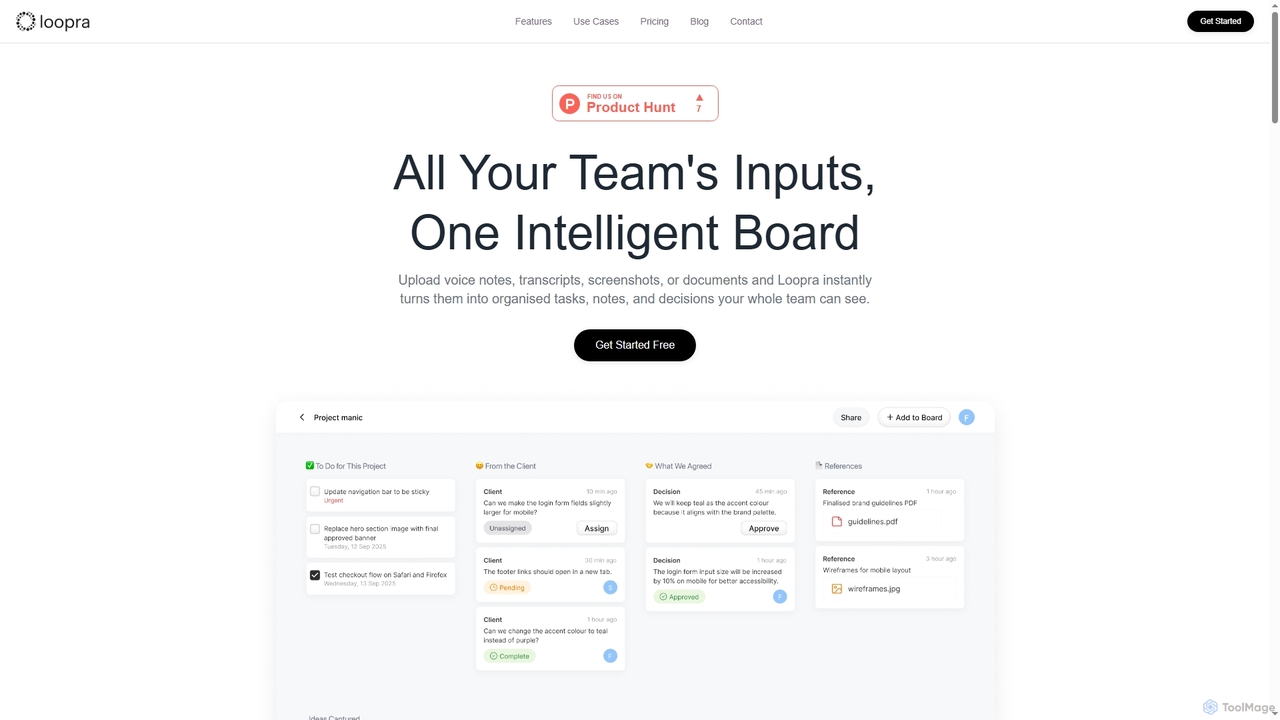
AI Meeting Notes tools are specialized applications that leverage artificial intelligence to automate the capture, transcription, summarization, and organization of discussions during meetings. These intelligent platforms utilize advanced speech-to-text and natural language processing (NLP) to convert spoken words into accurate text, identify key topics, and extract action items. As a crucial component of knowledge management, they significantly enhance team productivity by transforming raw meeting data into structured, searchable insights, ensuring no important detail is missed and information is easily accessible for future reference.
Core Features
- Real-time Transcription: Converts spoken dialogue into text instantly, providing an immediate record of discussions.
- Automated Summarization: Generates concise summaries of key discussion points, decisions, and outcomes.
- Action Item Extraction: Automatically identifies and lists tasks, assigned owners, and deadlines from the conversation.
- Speaker Identification: Distinguishes between different speakers in the transcript, enhancing clarity and accountability.
- Searchable Transcripts: Allows users to quickly find specific information, keywords, or topics within extensive meeting records.
Use Cases
These tools are invaluable for various professionals, from project managers needing to track decisions to sales teams documenting client calls. They streamline post-meeting workflows, ensuring all participants are aligned and follow-ups are clear. For remote teams, they bridge communication gaps by providing a comprehensive record of virtual discussions, fostering better understanding and reducing the need for redundant follow-up meetings.
How to Choose
When selecting an AI meeting notes tool, consider its transcription accuracy, especially for diverse accents and technical jargon. Evaluate its integration capabilities with your existing calendar and collaboration platforms (e.g., Zoom, Google Meet). Look for robust summarization features and the ability to customize templates. Finally, assess data security protocols and pricing models to match your team's specific needs and budget.