Mynt
Mynt is a secure, data-driven AI writing assistant that allows you to generate high-quality content based on your …
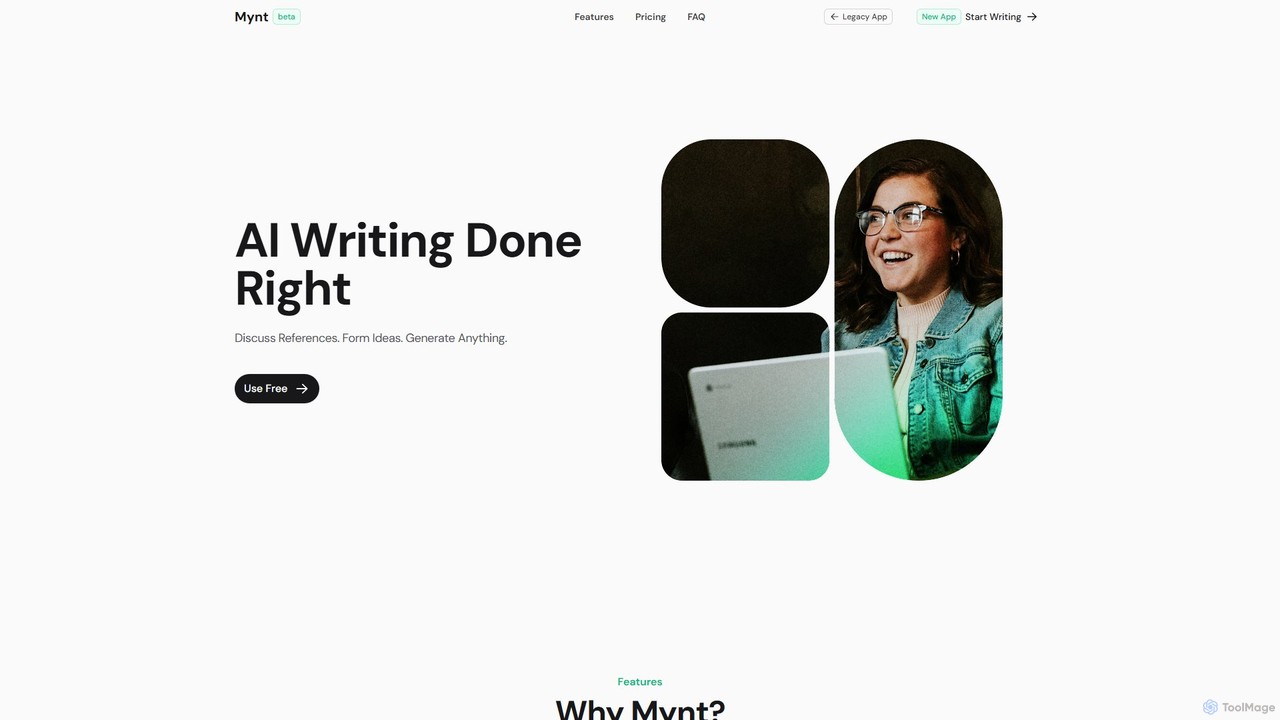
Mynt is a secure, data-driven AI writing assistant that allows you to generate high-quality content based on your own documents, websites, and code. Upload your reference materials, discuss ideas with an AI chat, and create anything from reports to articles in a collaborative environment. It prioritizes data privacy and offers flexible integration with various large language models.
About Document Analysis
Document Analysis tools are AI-powered solutions designed to automatically process, understand, and extract valuable insights from various types of documents. Leveraging advanced Natural Language Processing (NLP) and machine learning, these tools can identify patterns, summarize content, extract key entities, and classify information from unstructured and semi-structured texts. They significantly enhance knowledge management by transforming raw data into actionable intelligence, streamlining workflows, and improving decision-making across industries.
Core Features
- Text Extraction: Accurately extracts text from PDFs, images (OCR), and scanned documents, converting them into searchable and editable formats.
- Content Summarization: Automatically generates concise summaries of lengthy documents, highlighting key information and main ideas.
- Entity Recognition: Identifies and categorizes specific entities like names, organizations, locations, dates, and product codes within documents.
- Sentiment Analysis: Determines the emotional tone (positive, negative, neutral) of text within documents, useful for feedback analysis.
- Document Classification: Automatically categorizes documents into predefined types or topics, such as invoices, contracts, or research papers.
Use Cases
Professionals in legal, finance, research, and customer service sectors frequently utilize document analysis tools. For instance, legal teams use them to quickly review vast amounts of discovery documents, while financial analysts apply them to extract critical data from quarterly reports. Researchers leverage these tools to synthesize information from numerous academic papers, accelerating literature reviews and knowledge discovery.
How to Choose
When selecting a Document Analysis tool, consider its accuracy in text extraction and entity recognition, especially for your specific document types. Evaluate its integration capabilities with existing systems like CRM or DMS, and assess the range of supported document formats. Furthermore, examine the scalability for handling large volumes of data and the level of customization offered for specific analytical needs, alongside pricing models and data security features.

Document AnalysisUse Cases
Legal Document Review Automation
Legal professionals can use AI document analysis to rapidly scan thousands of legal contracts, discovery documents, or case files. The tools identify relevant clauses, extract key dates, parties, and obligations, and flag potential risks or inconsistencies, drastically reducing manual review time and improving accuracy in litigation or contract management.
Financial Report Data Extraction
Financial analysts and auditors employ these tools to automatically extract critical financial data points, such as revenue figures, expenses, and balance sheet items, from quarterly and annual reports, invoices, and bank statements. This automates data entry, ensures compliance, and facilitates quicker financial modeling and risk assessment.
Customer Feedback Analysis
Businesses leverage document analysis to process large volumes of customer feedback from surveys, emails, and social media comments. The AI identifies common themes, sentiment, and emerging issues, providing actionable insights for product development, service improvement, and marketing strategies without manual review.
Research Paper Summarization
Academics and researchers utilize these tools to quickly summarize scientific articles, literature reviews, and patents. By automatically extracting abstracts, key findings, methodologies, and conclusions, the tools enable faster comprehension of vast research bodies, aiding in literature synthesis and identifying research gaps.
Contract Management and Compliance
Companies use document analysis to manage complex contracts by automatically extracting terms, conditions, renewal dates, and compliance requirements. This ensures adherence to contractual obligations, identifies non-compliance risks, and streamlines the entire contract lifecycle from creation to expiration.
Medical Record Processing
Healthcare providers and researchers apply document analysis to anonymized patient records, clinical notes, and research studies. The tools extract diagnoses, treatments, medication histories, and patient demographics, facilitating epidemiological studies, improving patient care coordination, and accelerating medical research.