ToolMage
Sign in

Best 1 Personal Search AI tools for Knowledge Management

Popular Personal Search AI tools in Knowledge Management include Hyperlink, helping you work more efficiently.

Hyperlink
Freemium

Hyperlink

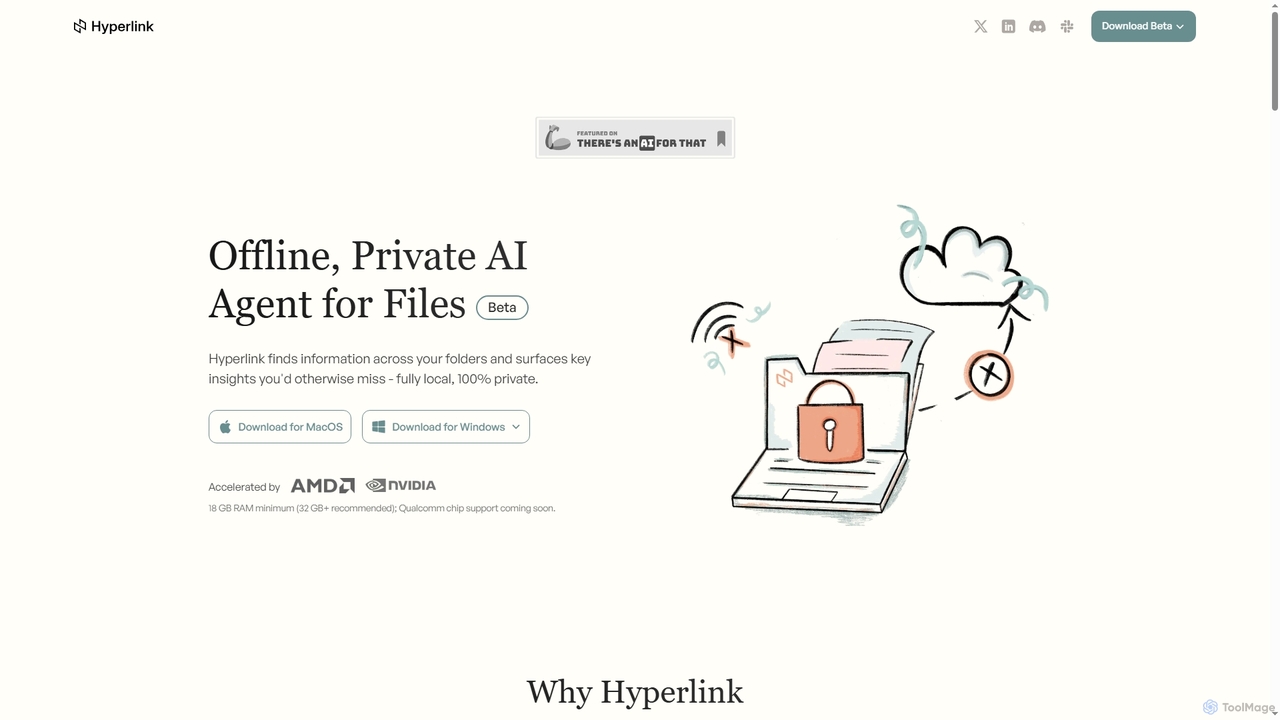
Hyperlink is a fully on-device, private AI agent designed for document search and understanding. It allows knowledge workers to instantly find, analyze, and summarize information from their local files, notes, and documents without compromising privacy. With features like real-time file indexing, in-text citations, and image text search, Hyperlink transforms your personal data into an intelligent, searchable knowledge base, all processed offline on your device.

Offline Agent
Visits 5.6KFavorites 125Likes 127

About Personal Search

Personal Search AI tools are a specialized category within knowledge management that leverage artificial intelligence to help individuals efficiently find, organize, and retrieve information from their diverse personal digital footprint. These tools employ advanced natural language processing and semantic understanding to index and search across various personal data sources, including emails, documents, notes, cloud storage, and browsing history. Their primary value lies in transforming scattered personal data into an easily accessible and searchable knowledge base, significantly enhancing productivity and information recall for individuals.

Core Features

  • Cross-Platform Indexing: Automatically indexes and connects information across multiple personal applications and cloud services.
  • Natural Language Query: Allows users to search using conversational language, understanding intent rather than just keywords.
  • Semantic Search: Goes beyond keyword matching to understand the meaning and context of queries, providing more relevant results.
  • Personalized Results: Learns from user behavior and preferences to deliver increasingly tailored search outcomes.
  • Privacy and Security Controls: Ensures personal data remains private and secure, often with local processing or robust encryption.

Applicable Scenarios

Personal Search tools are invaluable for knowledge workers, researchers, students, and anyone managing a large volume of digital information. They are particularly useful for professionals who need to quickly locate specific details from past projects, communications, or research materials scattered across different platforms. Students can use them to consolidate and review study notes, articles, and web clippings for academic tasks, while individuals can manage their digital clutter more effectively by having a unified search interface for all their personal data.

How to Choose

When selecting a Personal Search AI tool, consider its integration capabilities with your existing personal applications and cloud services to ensure comprehensive indexing. Evaluate the accuracy and sophistication of its natural language processing and semantic search features. Prioritize tools with strong privacy and security protocols, as you will be entrusting them with sensitive personal data. Additionally, assess the user interface for ease of use and the flexibility of its organization and tagging features to match your personal workflow.

Personal Search use cases

1

Rapidly Locating Project-Specific Information

A project manager needs to find all emails, meeting notes, and documents related to "Project Alpha" from the last six months, scattered across Gmail, Slack, and Google Drive. The AI personal search tool quickly aggregates and presents all relevant information, saving hours of manual searching and ensuring they are fully prepared for project reviews.

2

Consolidating Research Materials for Academic Work

A university student is writing a thesis and needs to gather all relevant articles, personal notes, web highlights, and PDF annotations on a specific topic. The personal search tool indexes all these disparate sources, allowing the student to query naturally and retrieve synthesized information, streamlining their research process significantly.

3

Recalling Past Ideas and Creative Inspirations

A content creator remembers a brilliant idea they jotted down months ago but can't recall where—it could be in a Notion note, an email draft, or a voice memo transcript. The personal search AI allows them to describe the idea in natural language and instantly retrieve the original note, preventing loss of valuable creative assets.

4

Efficiently Managing Digital Clutter and Archives

An individual with years of digital files, photos, and downloaded articles across various local and cloud folders struggles to find anything specific. The personal search tool creates a unified, searchable index, enabling them to find any file by describing its content or context, rather than its exact name or location, significantly reducing digital clutter stress.

5

Personalized Learning and Skill Development Review

A professional is preparing for a certification exam and needs to review specific concepts learned from online courses, e-books, and personal study notes. The AI tool can pull up all relevant snippets and documents across their personal knowledge base, tailored to their learning objectives, making study sessions more focused and effective.

6

Streamlining Client Communication History Retrieval

A freelance consultant needs to quickly review all past communications, proposals, and deliverables for a specific client across email, CRM notes, and shared documents. The personal search AI provides a chronological and thematic overview, ensuring they are fully prepared for client meetings and can maintain consistent, informed interactions.

Personal Search FAQ

What are Personal Search AI tools?

Personal Search AI tools are applications that use artificial intelligence to help individuals find, organize, and retrieve information from their own digital data. Unlike general search engines, they focus on your personal ecosystem—emails, documents, notes, cloud storage, and browsing history—to provide highly relevant and personalized results, acting as a unified brain for your digital life.

How do Personal Search tools differ from general search engines?

General search engines (like Google) index the public web, while Personal Search tools index your private, personal data. Personal tools offer deep integration with your specific apps (e.g., Gmail, Notion, Dropbox) and provide semantic understanding of your unique context, ensuring privacy and delivering results tailored exclusively to your personal information, not the broader internet.

What kind of data can Personal Search tools index?

Most Personal Search tools can index a wide array of personal digital data, including emails (Gmail, Outlook), cloud documents (Google Drive, Dropbox, OneDrive), notes (Evernote, Notion, Obsidian), chat histories (Slack, Teams), local files, browser history, and even transcribed voice memos. The exact types depend on the tool's integration capabilities and your connected services.

What are the main benefits of using AI for personal search?

The main benefits include significantly increased efficiency in information retrieval, reduced time spent searching for lost data, and improved organization of personal knowledge. AI enables semantic search, meaning you can find information by describing its content or context, rather than needing exact keywords or file names, turning your scattered data into a cohesive, searchable knowledge base.

How to choose the right Personal Search AI tool?

To choose the right tool, prioritize based on your primary data sources (e.g., if you use many Google services, look for strong Google integration). Evaluate its privacy policy and security features, as personal data is sensitive. Consider the accuracy of its AI-powered search, ease of use, and whether it offers features like natural language querying, cross-platform indexing, and flexible organization options that align with your workflow.