ToolMage
Sign in

Best 1 Client Intake AI tools for Legal

Popular Client Intake AI tools in Legal include Caseflood.ai, helping you work more efficiently.

Caseflood.ai
Paid

Caseflood.ai

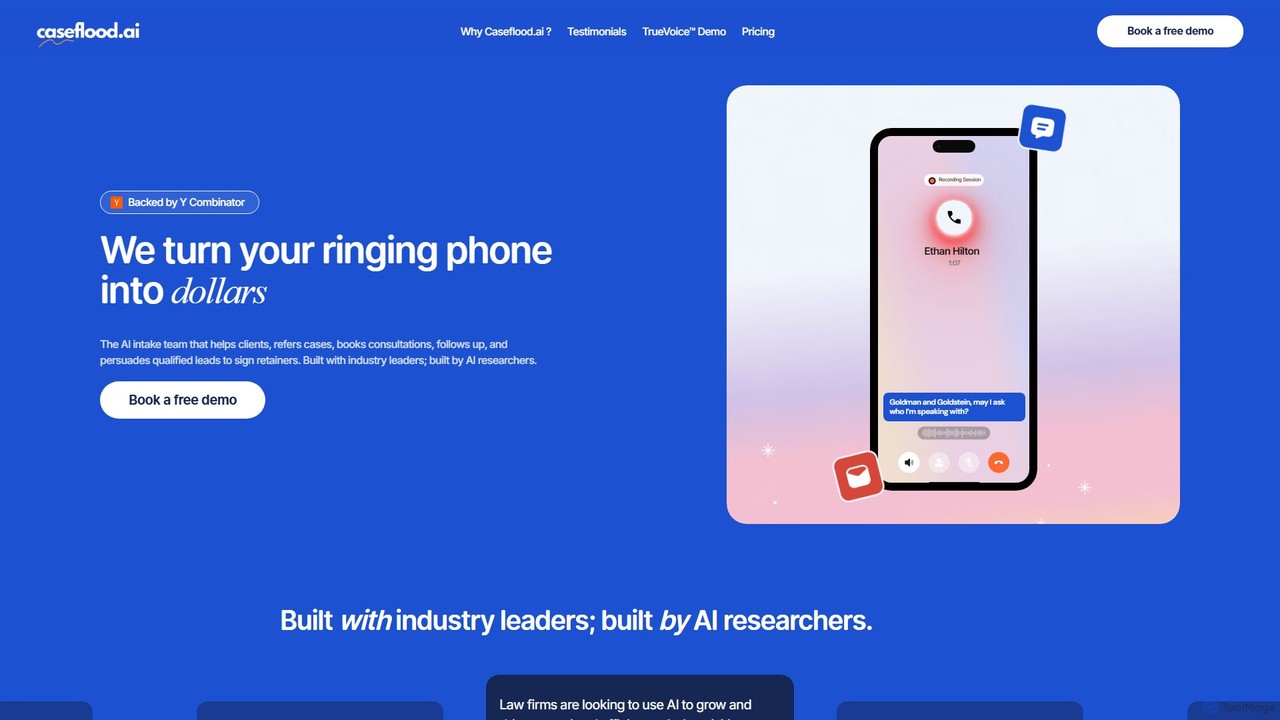
Caseflood.ai is an AI-powered intake team for law firms. It operates 24/7 to answer calls, qualify leads, book consultations, and sign retainers. It helps firms convert more leads into clients, generate referral revenue, and improve operational efficiency without missing a single call.

Lead Generation
Visits 7.9KFavorites 120Likes 120

About Client Intake

AI-powered Client Intake tools are specialized solutions designed for legal professionals and law firms to streamline the initial client onboarding process. These tools leverage artificial intelligence to automate data collection, identity verification, conflict checking, and document generation, significantly enhancing efficiency and accuracy in the legal sector. By digitizing and optimizing the intake workflow, they help firms reduce administrative burden, improve client experience, and ensure compliance from the very first interaction.

Core Features

  • Automated Data Collection: Gathers client information through intelligent forms and questionnaires, reducing manual entry.
  • Identity Verification (IDV): Utilizes AI to verify client identities and documents securely, meeting compliance requirements.
  • Conflict Checking: Automatically screens new clients against existing databases to identify potential conflicts of interest.
  • Document Generation: Populates standard legal documents and engagement letters with collected client data.
  • E-Signature Integration: Facilitates secure electronic signing of intake forms and agreements.

Applicable Scenarios

Legal Client Intake tools are invaluable for law firms of all sizes, corporate legal departments, and independent practitioners. They are particularly useful for managing high volumes of new clients, ensuring regulatory compliance, and standardizing the onboarding process across different practice areas such as corporate law, personal injury, family law, and real estate. These tools help legal teams focus more on legal work rather than administrative tasks.

How to Choose

When selecting an AI Client Intake tool, consider its integration capabilities with existing legal practice management systems, the breadth of its automation features (e.g., IDV, conflict checking), data security protocols, and compliance with legal industry standards. Evaluate the user-friendliness for both clients and staff, scalability for future growth, and the clarity of its pricing model to ensure it aligns with your firm's operational needs and budget.

Client Intake use cases

1

Streamlining New Corporate Client Onboarding

Corporate legal teams use AI Client Intake to automate the collection of company details, shareholder information, and regulatory compliance documents, ensuring a swift and error-free onboarding process for new business clients. This reduces the time spent on manual data entry and verification, allowing legal professionals to focus on strategic legal advice rather than administrative tasks, thereby accelerating the client engagement timeline.

2

Accelerating Personal Injury Claim Intake

Personal injury law firms deploy these tools to quickly gather incident details, medical history, and witness information from prospective clients, enabling faster case assessment and initial filing preparation. By automating the collection of critical information, firms can reduce the time from initial contact to case filing, improving response times and client satisfaction in time-sensitive legal matters.

3

Automating Family Law Consultation Preparation

Family law practitioners utilize AI Client Intake to securely collect sensitive personal and financial data from clients prior to initial consultations, allowing lawyers to review relevant information and prepare more effectively. This ensures that attorneys arrive at consultations well-informed, leading to more productive discussions and a better understanding of the client's needs from the outset, while maintaining data privacy.

4

Enhancing Real Estate Transaction Intake

Real estate legal departments use these tools to efficiently collect property details, buyer/seller information, and financial specifics, standardizing the intake process for property purchases, sales, and leases. This automation reduces errors in critical transaction data, speeds up the due diligence phase, and ensures all necessary legal documents are prepared accurately and promptly, facilitating smoother real estate closings.

5

Ensuring Regulatory Compliance for Financial Services Legal

Legal teams in financial services leverage AI Client Intake for robust identity verification and anti-money laundering (AML) checks, ensuring strict adherence to regulatory requirements during client onboarding. These tools provide an auditable trail of compliance activities, reducing the risk of penalties and reputational damage by automating complex regulatory screenings and documentation, which is crucial in highly regulated industries.

6

Standardizing Pro Bono Client Registration

Non-profit legal aid organizations implement AI Client Intake to standardize the registration and eligibility screening for pro bono clients, ensuring equitable access to legal services while managing administrative overhead. This allows these organizations to efficiently process a higher volume of requests, accurately determine eligibility, and allocate resources more effectively to those most in need, enhancing their community impact.

Client Intake FAQ

What are AI Client Intake tools?

AI Client Intake tools are software solutions that use artificial intelligence to automate and optimize the initial process of bringing new clients into a legal practice. They typically handle tasks like collecting client information, verifying identities, performing conflict checks, and generating initial legal documents, all designed to make the client onboarding process more efficient and compliant for law firms.

How do AI Client Intake tools benefit law firms?

Law firms benefit significantly from AI Client Intake tools by reducing manual administrative work, minimizing human error, and accelerating the onboarding timeline. These tools enhance client satisfaction through a smoother, more professional experience, improve data security, and ensure regulatory compliance, ultimately allowing legal professionals to focus more on substantive legal work rather than repetitive intake tasks.

What's the difference between AI Client Intake and traditional manual intake processes?

Traditional manual intake relies on paper forms, in-person interviews, and manual data entry, which is time-consuming and prone to errors. AI Client Intake, conversely, digitizes and automates these steps using intelligent forms, automated verification, and integrated systems. This results in faster processing, greater accuracy, enhanced security, and a more streamlined experience for both the firm and the client, reducing the administrative burden significantly.

What key features should I look for in an AI Client Intake solution?

When evaluating AI Client Intake solutions, prioritize features such as robust identity verification (IDV) and anti-money laundering (AML) capabilities, comprehensive conflict checking against existing client databases, customizable intake forms, and seamless integration with your existing legal practice management software. Additionally, consider secure data storage, e-signature functionality, and automated document generation to maximize efficiency and compliance.

Can AI Client Intake tools handle sensitive client data securely?

Yes, reputable AI Client Intake tools are designed with stringent security measures to protect sensitive client data. They typically employ end-to-end encryption, multi-factor authentication, and compliance with industry-specific regulations (like GDPR, HIPAA, or local legal data protection laws). Firms should always verify the vendor's security protocols, data residency policies, and compliance certifications to ensure the highest level of data protection.