
ToolMage
Sign in

Best 1 Client Management AI tools for Legal

Popular Client Management AI tools in Legal include Hona, helping you work more efficiently.

Hona
Paid

Hona

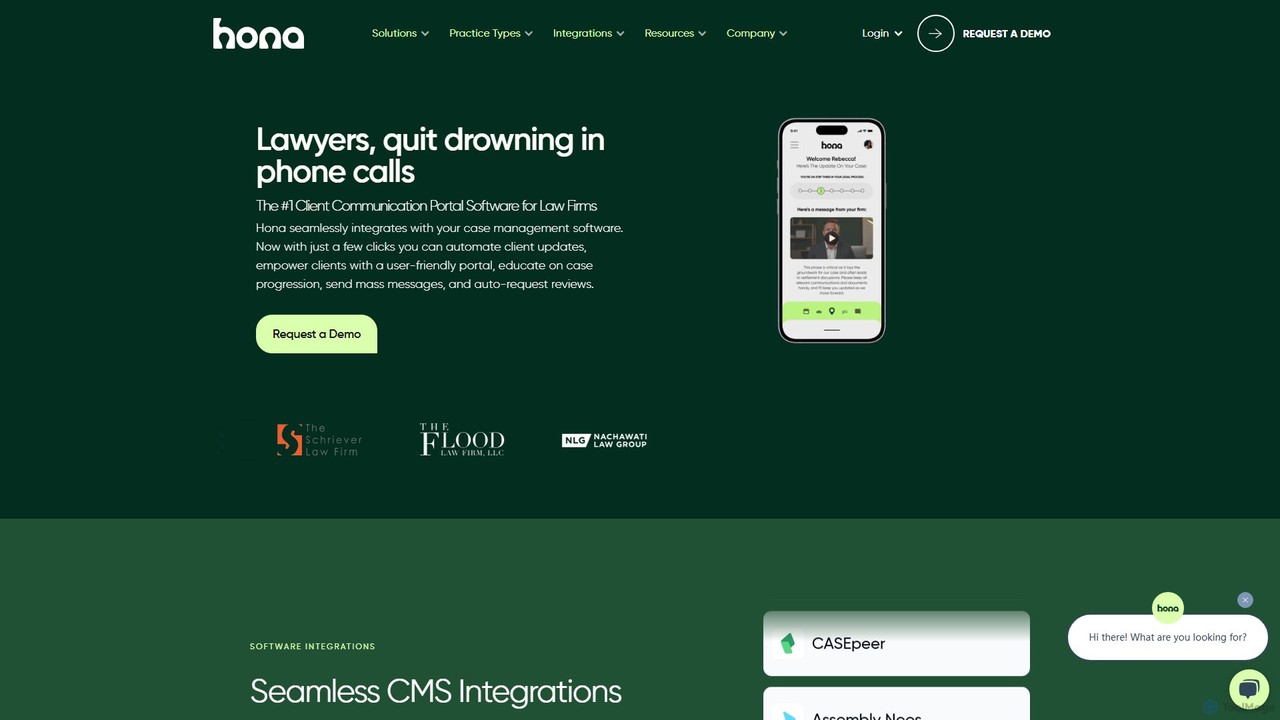
Hona is a client communication portal software designed specifically for law firms. It automates client updates, provides a secure portal for case tracking, and integrates seamlessly with major case management systems like Clio and CASEpeer. By streamlining communication, Hona helps lawyers reduce administrative workload, enhance client trust and transparency, and improve overall firm efficiency and reputation.

Client Portal
Visits 36.9KFavorites 157Likes 146

About Client Management

Client Management AI tools are specialized platforms designed to streamline and enhance client interactions within the legal sector. Leveraging artificial intelligence, these tools automate routine tasks, manage client data securely, and improve communication efficiency. They empower legal professionals to focus more on strategic legal work by optimizing client intake, case tracking, and relationship nurturing, ensuring compliance and better service delivery.

Core Features

  • Automated Client Intake: Streamlines the onboarding process with AI-powered forms, data extraction, and initial conflict checks.
  • Case & Document Linking: Connects client profiles directly to relevant cases, documents, and communications for a unified view.
  • AI-Powered Communication: Assists in drafting client emails, scheduling reminders, and summarizing interaction histories.
  • Billing & Time Tracking Integration: Seamlessly links client activities to billing systems, ensuring accurate and transparent invoicing.
  • Conflict Checking & Compliance: Utilizes AI to scan for potential conflicts of interest and ensure adherence to legal regulations.

Use Cases

Legal firms, solo practitioners, and corporate legal departments utilize these tools to manage their client portfolios more effectively. They are crucial for automating initial client consultations, organizing case-specific communications, and ensuring all client-related data is securely stored and easily accessible for compliance and reporting.

How to Choose

When selecting an AI client management tool for legal use, consider its integration capabilities with existing legal practice management software, the robustness of its data security and compliance features, and its specific AI functionalities for legal tasks like conflict checking or document analysis. Scalability and user-friendliness for legal teams are also vital for successful adoption.

Client Management use cases

1

Streamline Legal Client Onboarding with AI

A law firm's intake specialist uses an AI client management tool to automate the initial client onboarding process. The AI assists in gathering essential information through smart forms, performs preliminary conflict checks against existing client databases, and automatically creates a new client profile linked to potential case types. This reduces manual data entry errors and significantly cuts down the time from initial contact to formal client engagement, allowing the specialist to focus on personalized client interactions.

2

Centralize Case Communications for Legal Clients

A litigation attorney manages multiple complex cases, each with distinct client communication needs. The AI client management system centralizes all emails, call logs, and meeting notes related to a specific client and their cases. It can also suggest relevant document templates or previous correspondence, ensuring consistent and accurate communication while providing a complete audit trail for compliance and transparency.

3

Proactive Client Relationship Management for Law Firms

A legal practice aims to maintain strong, long-term relationships with its clients. The AI tool tracks client engagement, identifies key milestones, and suggests timely follow-ups or relevant legal updates. For instance, it might flag a client whose case has been dormant for a while, prompting the attorney to send a personalized update or offer additional services, thereby enhancing client loyalty and identifying new business opportunities.

4

Automate Legal Billing and Invoice Generation

A legal assistant needs to generate accurate invoices for various clients across different cases. The AI client management system integrates directly with time-tracking and expense logging, automatically compiling billable hours and disbursements linked to specific client matters. It then generates detailed, transparent invoices according to pre-set billing rules, reducing manual reconciliation errors and accelerating the billing cycle, ensuring clients receive clear and timely financial statements.

5

AI-Powered Conflict Checking and Compliance for Legal Clients

Before taking on a new client or case, a legal firm must rigorously check for conflicts of interest and ensure regulatory compliance. An AI client management tool rapidly scans vast databases of past and present clients, cases, and associated parties. It identifies potential conflicts based on names, entities, and case details, providing a comprehensive report that helps the firm make informed decisions and mitigate risks, upholding ethical standards.

6

Deliver Personalized Legal Services with Client Insights

A legal advisor seeks to offer highly personalized advice to clients. The AI client management system aggregates all available client data, including past case history, communication preferences, and specific legal needs. By analyzing this comprehensive profile, the AI can help the advisor anticipate client questions, tailor legal strategies, and recommend relevant services, leading to a more bespoke and effective legal service experience for each client.

Client Management FAQ

What are AI Client Management tools for law firms?

AI Client Management tools for law firms are specialized software solutions that leverage artificial intelligence to optimize how legal professionals interact with, manage, and serve their clients. These tools go beyond traditional CRM by incorporating legal-specific functionalities such as automated client intake, intelligent case linking, conflict checking, and secure document management. Their primary goal is to streamline administrative tasks, enhance communication, and ensure compliance, allowing legal teams to deliver more efficient and personalized services.

How do AI Client Management tools for legal differ from general CRM?

While both manage client relationships, AI Client Management tools for the legal sector are specifically tailored to the unique demands of law firms. General CRM focuses on sales and marketing pipelines, whereas legal-specific tools integrate functionalities critical to legal practice, such as case management, conflict checking, legal document automation, and compliance tracking. They understand legal terminology and workflows, providing a more relevant and secure environment for sensitive client data and legal processes, which generic CRMs lack.

What are the benefits of AI Client Management in legal practice?

Implementing AI Client Management tools in a legal practice offers several key benefits. Firstly, it significantly improves efficiency by automating repetitive tasks like client intake and data entry, freeing up legal professionals' time. Secondly, it enhances client satisfaction through more organized communication, faster response times, and personalized service delivery. Thirdly, these tools bolster compliance and reduce risk by automating conflict checks and maintaining meticulous records. Finally, they provide valuable insights into client relationships and operational performance, aiding strategic decision-making.

How to choose an AI Client Management tool for a law firm?

When selecting an AI Client Management tool for your law firm, prioritize features that align with legal workflows. Look for robust client intake automation, seamless integration with existing legal practice management or billing software, and advanced conflict-checking capabilities. Data security, compliance with legal regulations (e.g., GDPR, HIPAA if applicable), and secure document management are paramount. Additionally, consider the tool's AI-powered communication assistance, reporting features, scalability, and user-friendliness for your legal team.

Do AI Client Management tools enhance legal compliance and data security?

Yes, AI Client Management tools are designed with legal compliance and data security as core priorities. They often include features like automated conflict checking to prevent ethical breaches, secure data encryption, and access controls to protect sensitive client information. Many tools also offer audit trails for all client interactions and document access, helping firms meet regulatory requirements and demonstrate due diligence. By centralizing and securing client data, these tools significantly reduce the risk of data breaches and non-compliance.