
ToolMage
Sign in

Best 1 Consultation AI tools for Legal

Popular Consultation AI tools in Legal include eadvocate4you, helping you work more efficiently.

eadvocate4you
Freemium

eadvocate4you

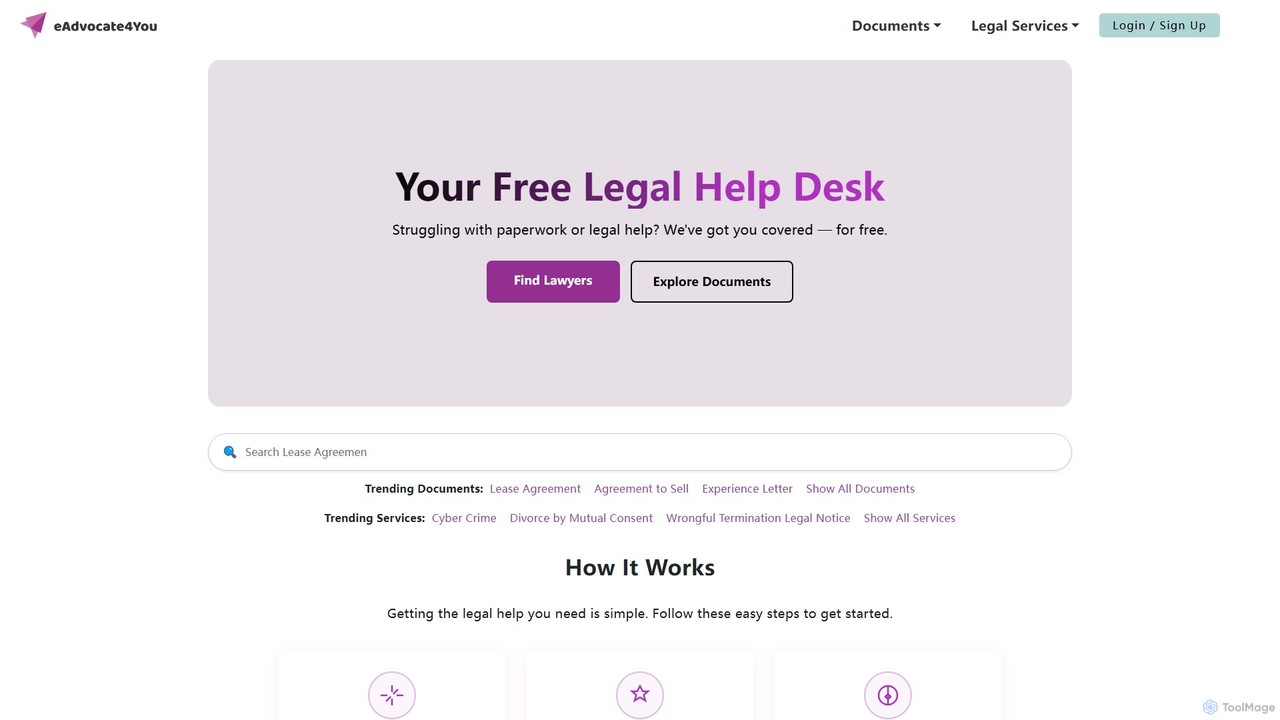
eadvocate4you is a free legal help desk offering a wide range of services. It provides over 40 customizable legal document templates and connects users with lawyers for free initial consultations across 60+ legal categories. It is also developing LegalGPT, an AI-powered assistant for case analysis and legal research.

Consultation
Visits 7.6KFavorites 142Likes 136

About Consultation

AI Consultation tools in the legal sector are specialized platforms that leverage artificial intelligence to provide guidance, analysis, and insights on legal matters. These tools utilize advanced natural language processing (NLP) and machine learning algorithms to interpret legal texts, identify precedents, and assess case specifics. Their primary value lies in automating routine legal research, assisting with document review, and offering preliminary strategic advice, thereby enhancing efficiency and accuracy for legal professionals and individuals seeking initial legal insights.

Core Features

  • Automated Legal Research: Rapidly searches vast legal databases to find relevant statutes, cases, and regulations.
  • Document Analysis & Review: Scans and interprets legal documents like contracts or briefs, highlighting key clauses, risks, and discrepancies.
  • Case Strategy & Prediction: Analyzes historical case data to suggest potential outcomes and strategic approaches.
  • Client Inquiry Triage: Processes initial client questions, categorizes them, and provides preliminary information or directs to appropriate resources.

Use Cases

Legal firms and corporate legal departments frequently employ these tools to streamline their operations. For instance, lawyers can use them to quickly gather background information for new cases or to identify potential liabilities in complex contracts. Individuals seeking initial legal guidance can also leverage these platforms to understand their rights or obligations before engaging with a human lawyer.

How to Choose

When selecting an AI consultation tool, prioritize accuracy of its AI models, especially in specific legal domains. Evaluate its data security protocols to ensure client confidentiality and compliance. Consider integration capabilities with existing legal tech stacks and the user interface's intuitiveness. Finally, assess the scope of legal areas covered and the transparency of its analytical processes.

Consultation use cases

1

Automated Legal Research for Case Preparation

A legal paralegal needs to quickly gather all relevant statutes, case law, and regulations for a new client's complex litigation case. By using an AI consultation tool, they can input key facts and legal questions, and the tool rapidly sifts through vast legal databases, identifying highly pertinent documents and summarizing key findings. This saves hours of manual research, allowing the paralegal to focus on deeper analysis and strategy development, significantly accelerating the initial case preparation phase.

2

Contract Review and Risk Identification

A corporate legal department frequently reviews numerous contracts for potential risks and compliance issues. An AI consultation tool can be fed hundreds of contracts, automatically scanning for specific clauses, non-standard language, or deviations from company policy. It then flags high-risk areas, suggests amendments, and provides a summary of potential liabilities. This process drastically reduces the time spent on manual contract review, minimizing human error and ensuring a higher level of legal compliance across all agreements.

3

Generating Initial Legal Opinions

Junior lawyers often spend considerable time drafting initial legal opinions for clients based on complex scenarios. An AI consultation tool can assist by taking a detailed case description and generating a preliminary legal opinion, outlining relevant laws, potential arguments, and possible outcomes. While requiring human review and refinement, this capability provides a strong starting point, significantly reducing the initial drafting time and allowing junior lawyers to learn from AI-generated insights, thereby improving their productivity and foundational understanding.

4

Client Inquiry Triage and Preliminary Response

Law firms receive numerous client inquiries daily, many of which are routine or require basic information. An AI consultation tool can act as a first point of contact, analyzing incoming emails or chat messages, identifying the nature of the inquiry, and providing automated preliminary responses or directing the client to the appropriate lawyer or resource. This streamlines client intake, reduces the workload on administrative staff, and ensures clients receive timely, albeit initial, guidance, improving overall client satisfaction and operational efficiency.

5

Compliance Monitoring and Alerting

For businesses operating in highly regulated industries, staying compliant with ever-changing legal frameworks is a constant challenge. AI consultation tools can continuously monitor legal updates, regulatory changes, and industry-specific compliance requirements. When a new regulation is published or a potential compliance gap is detected in company documents, the AI system can automatically generate alerts and provide preliminary guidance on necessary adjustments. This proactive approach helps organizations avoid penalties and maintain legal integrity without extensive manual oversight.

6

Litigation Strategy Support

Experienced litigators often seek to refine their case strategies by analyzing vast amounts of historical data. AI consultation tools can process past court decisions, judge tendencies, and opposing counsel's track records to identify patterns and predict potential outcomes. By providing data-driven insights into the strengths and weaknesses of various legal arguments, these tools empower lawyers to develop more robust and effective litigation strategies, increasing the likelihood of favorable resolutions and optimizing resource allocation for complex disputes.

Consultation FAQ

What are AI Consultation tools in the legal field?

AI Consultation tools in the legal field are software applications that use artificial intelligence, primarily natural language processing and machine learning, to provide automated legal guidance, analysis, and insights. They can interpret legal documents, conduct research, and offer preliminary advice. These tools aim to augment the capabilities of legal professionals and make legal information more accessible, streamlining tasks like document review, case assessment, and compliance checks.

How to choose the right AI legal consultation tool?

Choosing the right AI legal consultation tool involves several key considerations. First, assess the accuracy and reliability of its AI models, especially for your specific legal domain. Data security and privacy features are paramount to protect sensitive client information. Evaluate its integration capabilities with your existing legal tech stack and its user-friendliness. Consider the breadth of legal areas it covers, the transparency of its analytical processes, and the quality of its support and updates. Finally, compare pricing models to find a solution that aligns with your budget and needs.

What specific tasks can AI legal consultation tools assist with?

AI legal consultation tools can assist with a wide range of specific tasks, significantly enhancing legal workflows. These include automated legal research, where they quickly find relevant statutes and precedents; document review and analysis, identifying key clauses, risks, and discrepancies in contracts or briefs; and case strategy support, by analyzing historical data to predict outcomes. They can also help with client inquiry triage, providing preliminary responses, and compliance monitoring, alerting users to regulatory changes. These capabilities free up legal professionals for more complex, high-value work.

How do AI consultation tools benefit legal professionals?

AI consultation tools offer numerous benefits to legal professionals by enhancing efficiency, accuracy, and strategic decision-making. They automate time-consuming tasks like research and document review, freeing up lawyers to focus on complex analysis and client interaction. By providing data-driven insights and predictive analytics, these tools help in developing stronger case strategies and identifying potential risks early. This leads to reduced operational costs, improved client satisfaction through faster service, and a competitive edge in the rapidly evolving legal landscape, ultimately allowing legal professionals to deliver higher quality services.

How do AI legal consultation tools differ from traditional legal research platforms?

AI legal consultation tools differ from traditional legal research platforms primarily in their analytical capabilities and proactive insights. Traditional platforms are essentially digital libraries, requiring users to know what to search for and interpret results manually. AI tools, however, leverage machine learning to understand context, identify patterns, and even predict outcomes based on vast datasets. They can offer preliminary opinions, flag risks automatically, and provide strategic suggestions, moving beyond simple information retrieval to deliver actionable intelligence and a more consultative experience.