HeyDoc
HeyDoc is a free AI-powered personal medical assistant. Engage in a confidential chat about any health symptoms or …
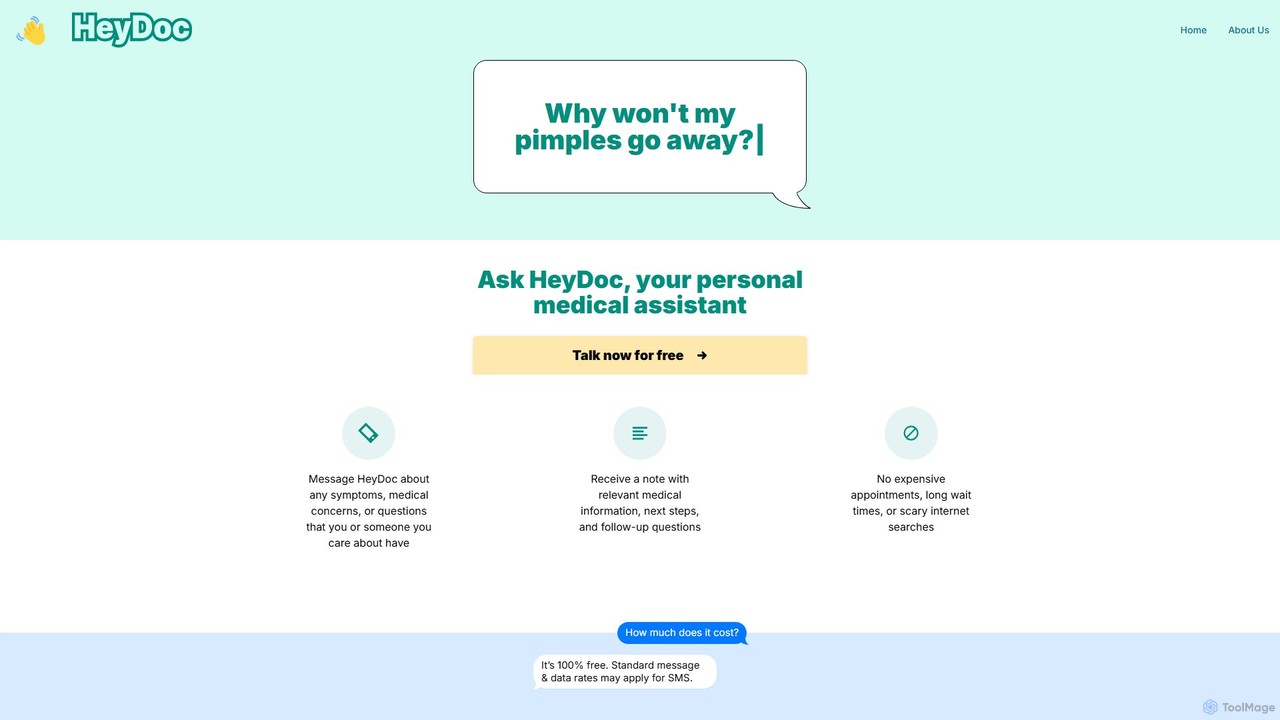
HeyDoc is a free AI-powered personal medical assistant. Engage in a confidential chat about any health symptoms or concerns for yourself or a loved one. It provides a clear summary with relevant medical information, potential next steps, and questions to ask a doctor, helping you navigate health issues without long waits or alarming internet searches.
About Wellness
AI Wellness tools are applications that leverage artificial intelligence to support and enhance mental, emotional, and physical health. These tools often use machine learning to analyze user data from inputs and wearables, providing personalized guidance, tracking progress, and offering real-time feedback. Their primary value lies in making personalized health management more accessible, adaptive, and engaging for daily life. They can act as digital coaches, therapists, or health assistants, helping users build healthier habits and manage stress effectively.
Core Features
- Personalized Plans: Generates custom fitness, nutrition, or meditation plans based on individual goals, biometrics, and progress.
- Mood & Habit Tracking: Utilizes AI to identify patterns in mood, sleep, and daily activities, offering insights for improvement.
- AI-Powered Chatbots: Provides conversational support for mental health, often using principles from Cognitive Behavioral Therapy (CBT).
- Biofeedback Analysis: Integrates with wearables to analyze physiological data like heart rate variability (HRV) to assess stress and recovery.
- Guided Sessions: Offers interactive, AI-guided sessions for meditation, breathing exercises, workouts, and mindfulness.
Use Cases
These tools are widely used by individuals seeking to proactively manage their well-being, from busy professionals managing stress to fitness enthusiasts optimizing performance. They are also valuable in corporate wellness programs to support employee mental health. In clinical settings, they can supplement traditional therapy by providing continuous support and data for practitioners.
How to Choose
When selecting an AI Wellness tool, consider the following: First, evaluate the scientific backing and the credibility of the methods used. Second, review its data privacy policy to understand how your personal health information is handled. Third, assess the level of personalization and its ability to adapt to your changing needs. Finally, check for compatibility with your existing devices and wearables for seamless data integration.

WellnessUse Cases
AI-Guided Meditation for Stress Reduction
A busy professional experiencing high levels of work-related stress uses an AI wellness app to build a consistent meditation practice. Based on their daily mood check-ins and heart rate data from a smartwatch, the AI recommends specific guided meditation sessions. For instance, after a stressful day, it might suggest a 10-minute session focused on 'letting go of work thoughts'. The AI adapts the session length and focus over time as it learns the user's patterns, helping them reduce their average stress levels and improve sleep quality significantly within a few weeks.
Adaptive Fitness Plan Generation
A fitness enthusiast wants to train for a half-marathon but isn't sure how to structure their training. They use an AI coaching app that creates a personalized 12-week training plan based on their current fitness level, goals, and available time. After each workout, the user provides feedback on the difficulty. The AI uses this data, along with performance metrics like pace and heart rate, to dynamically adjust future workouts. If a run was too easy, the next one might be longer or faster. This adaptive approach ensures the user is consistently challenged but not overworked, optimizing their training and reducing the risk of injury.
Mental Health Support via CBT Chatbot
A university student feeling overwhelmed by academic pressure and social anxiety uses an AI chatbot grounded in Cognitive Behavioral Therapy (CBT) principles. When feeling anxious before an exam, they can interact with the chatbot. The bot guides them through exercises to identify negative thought patterns, challenge them, and reframe them in a more positive light. It also provides on-demand breathing exercises. This provides immediate, accessible support 24/7, helping the student develop coping mechanisms and manage anxiety symptoms without having to wait for a therapy appointment.
Personalized Nutrition and Meal Planning
An individual with specific dietary goals, such as weight loss and increased protein intake, uses an AI nutrition planner. They input their goals, dietary restrictions (e.g., gluten-free), and food preferences. The AI generates a weekly meal plan complete with recipes and a corresponding grocery list. It tracks their daily intake through photo food logging or manual entry, analyzing macronutrient and micronutrient levels. Based on this data, the AI provides real-time suggestions, like 'add a protein source to your lunch,' to help them stay on track with their health objectives effortlessly.
Sleep Cycle Analysis for Better Rest
A user struggling with daytime fatigue wears a smartwatch to bed, which syncs with an AI wellness app. The app analyzes sleep data, including sleep stages (light, deep, REM), duration, and interruptions. The AI identifies patterns, such as a lack of deep sleep on days with late-night caffeine consumption. It then provides actionable insights and personalized recommendations, like suggesting a 'wind-down' routine an hour before bed and setting an optimal bedtime based on the user's natural circadian rhythm. This data-driven approach helps the user make specific lifestyle changes to improve their sleep quality and energy levels.
Real-time Stress Monitoring and Intervention
An employee in a high-pressure job uses a wellness platform that integrates with their smartwatch to monitor stress levels via Heart Rate Variability (HRV). When the AI detects a sustained drop in HRV, indicating rising stress, it sends a discreet notification to the user's phone or watch. The notification suggests a brief, 2-minute guided breathing exercise to help regulate their physiological response. By providing this real-time, proactive intervention, the tool helps the user manage stress in the moment, preventing it from escalating and improving their overall resilience and focus at work.