Lifestyle Best in category 1 results Consumer Goods AI Tool

Popular AI tools in the Consumer Goods field of Lifestyle include LoveShop, etc., helping you quickly improve efficiency.

LoveShop

LoveShop

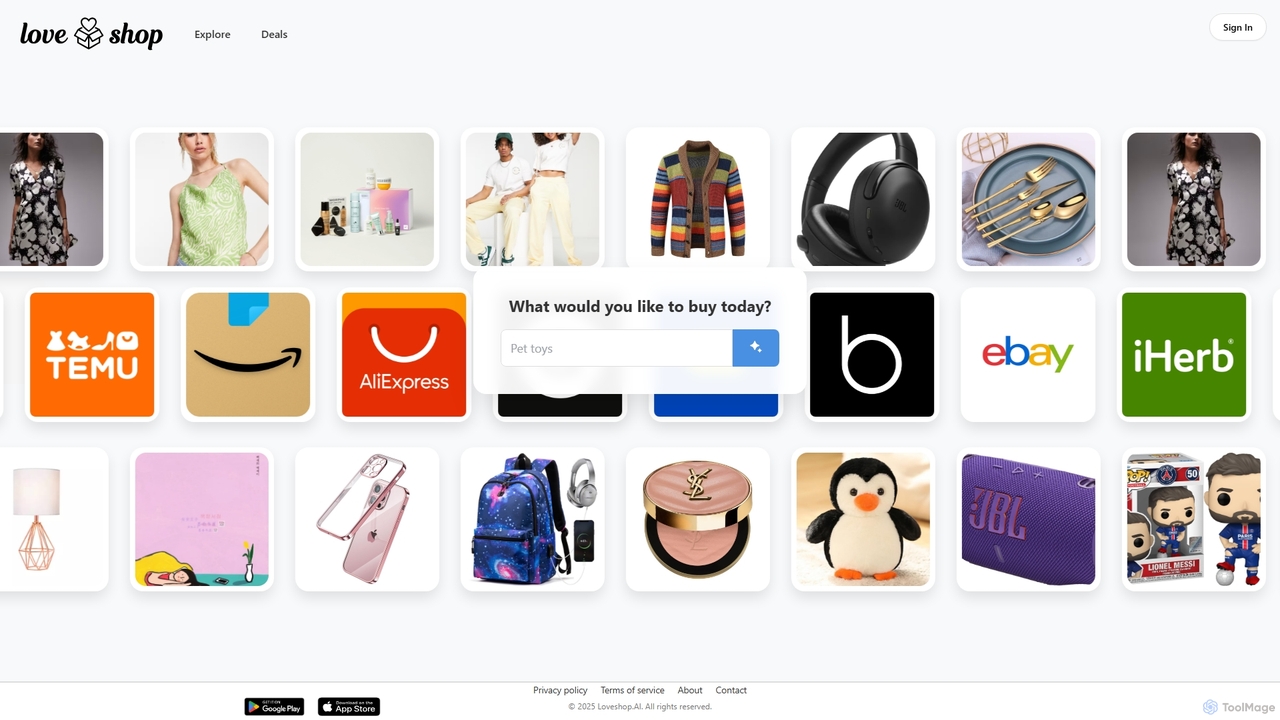
LoveShop is an AI-powered smart shopping assistant designed to simplify and enhance your online shopping experience. It aggregates …

3.2K

About Consumer Goods

AI tools for Consumer Goods are specialized platforms leveraging artificial intelligence to enhance the entire lifecycle of consumer products, from design and manufacturing to marketing and customer service. These tools utilize machine learning, computer vision, and natural language processing to analyze market trends, personalize consumer experiences, and optimize operational efficiencies. They empower brands to innovate faster, respond to consumer demands more effectively, and build stronger customer relationships in a competitive market.

Core Features

  • AI-driven Product Design: Generates new product concepts, designs, or material combinations based on market trends and consumer preferences.
  • Personalized Marketing & Sales: Creates highly targeted campaigns and product recommendations for individual consumers across various channels.
  • Demand Forecasting & Inventory Optimization: Predicts future product demand with high accuracy, optimizing stock levels and reducing waste.
  • Automated Quality Control: Uses computer vision to inspect products for defects during manufacturing, ensuring consistent quality.
  • Customer Service Automation: Deploys AI chatbots and virtual assistants to handle inquiries, provide support, and gather feedback efficiently.

Use Cases

These tools are invaluable for consumer brands, retailers, and manufacturers. They enable fashion brands to rapidly prototype new collections, food and beverage companies to predict seasonal demand, and electronics manufacturers to streamline quality assurance. E-commerce platforms leverage them for hyper-personalized shopping experiences, while marketing teams use them to create dynamic, data-driven advertising campaigns that resonate with specific consumer segments.

How to Choose

When selecting AI tools for Consumer Goods, consider the specific stage of the product lifecycle you aim to optimize (e.g., design, marketing, supply chain). Evaluate the tool's integration capabilities with existing systems, its data privacy and security features, and the scalability of its AI models. Assess the level of customization offered and the vendor's expertise in the consumer goods sector to ensure a tailored and effective solution.

Consumer GoodsUse Cases

1

AI-Powered Fashion Design & Prototyping

Fashion designers and product developers utilize AI tools to generate innovative apparel designs, patterns, and material combinations. By inputting current trends, desired aesthetics, or historical sales data, the AI can rapidly create numerous design variations, significantly accelerating the prototyping phase and reducing time-to-market for new collections.

2

Personalized E-commerce Product Recommendations

E-commerce platforms deploy AI to analyze individual customer browsing history, purchase patterns, and demographic data. This enables the system to provide highly personalized product recommendations, dynamically adjust website content, and send targeted promotions, leading to increased conversion rates and an enhanced shopping experience for consumers.

3

Optimizing Supply Chain & Demand Forecasting for Retail

Retailers and consumer goods manufacturers leverage AI for precise demand forecasting, especially for seasonal or perishable products. AI algorithms analyze historical sales, weather patterns, social media trends, and economic indicators to predict future demand, allowing for optimized inventory management, reduced waste, and improved supply chain efficiency.

4

Automated Quality Control in Manufacturing

Manufacturers of consumer electronics, food products, or textiles integrate AI-powered computer vision systems into their production lines. These systems automatically detect defects, inconsistencies, or packaging errors in real-time, ensuring that only high-quality products reach the market and significantly reducing manual inspection costs and errors.

5

Generating Hyper-Personalized Marketing Campaigns

Marketing teams for consumer brands use AI to create and optimize advertising content tailored to specific consumer segments or even individuals. AI can generate varied ad copy, visuals, and calls-to-action, then test and refine them across platforms like social media and email, maximizing engagement and return on ad spend for consumer products.

6

AI-Driven Customer Service & Feedback Analysis

Consumer brands implement AI chatbots and virtual assistants to provide instant 24/7 customer support, answer FAQs, and guide purchasing decisions. Beyond service, these AI tools analyze customer interactions and feedback from various channels to identify common issues, product preferences, and emerging trends, informing future product development and service improvements.

Consumer GoodsFrequently Asked Questions