LoveShop
LoveShop is an AI-powered smart shopping assistant designed to simplify and enhance your online shopping experience. It aggregates …
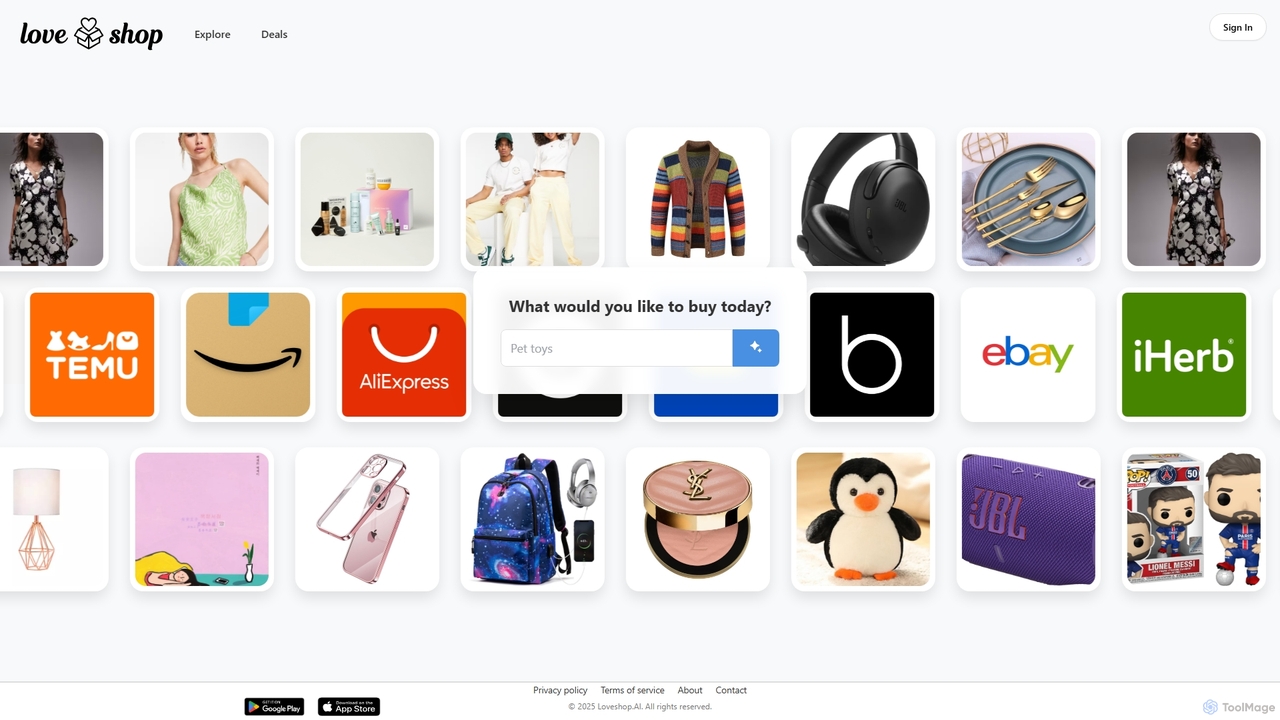
LoveShop is an AI-powered smart shopping assistant designed to simplify and enhance your online shopping experience. It aggregates millions of products from major retailers like Amazon, eBay, and BestBuy, offering price comparisons, product reviews, and personalized recommendations. LoveShop acts as your ultimate shopping buddy, helping you find the best deals across various categories from fashion to tech, making confident purchasing decisions effortless and enjoyable.
About Retail Tools
Retail Tools are AI-powered solutions specifically designed to optimize various aspects of the retail value chain, from inventory management to customer experience. Leveraging advanced algorithms and machine learning, these tools enable retailers to enhance operational efficiency, personalize customer interactions, and make data-driven decisions. As a specialized segment within the broader Ecommerce category, AI Retail Tools empower businesses to stay competitive and responsive in a rapidly evolving market by automating complex processes and providing actionable insights.
Core Features
- AI-powered Inventory Optimization: Utilizes predictive analytics to forecast demand, manage stock levels, and prevent overstocking or stockouts across multiple sales channels.
- Personalized Customer Engagement: Deploys AI chatbots, recommendation engines, and targeted marketing automation to deliver tailored shopping experiences and improve customer satisfaction.
- Dynamic Pricing Strategies: Adjusts product prices in real-time based on market demand, competitor pricing, inventory levels, and customer behavior to maximize revenue and profit margins.
- Sales Forecasting & Analytics: Provides accurate sales predictions and deep insights into purchasing patterns, helping retailers plan promotions and product assortments more effectively.
- Fraud Detection & Security: Identifies and flags suspicious transactions or activities to minimize financial losses and enhance the security of online and in-store operations.
Applicable Scenarios
AI Retail Tools are indispensable for modern retail businesses, including online e-commerce stores, brick-and-mortar shops, and multi-channel brands. Operations managers use them to streamline supply chains and optimize warehouse logistics. Marketing teams leverage these tools to create hyper-targeted campaigns and personalize customer journeys. Customer service departments deploy AI for instant support and efficient query resolution, ultimately driving sales and improving customer loyalty across all touchpoints.
How to Choose
When selecting AI Retail Tools, consider their integration capabilities with existing POS, ERP, or e-commerce platforms to ensure seamless data flow. Evaluate the specific AI functionalities offered, such as advanced NLP for chatbots or computer vision for in-store analytics, and assess the tool's scalability to match your business growth. Prioritize vendors with strong commitments to data security and privacy, and ensure the tool provides actionable insights with an intuitive user interface for your team.

Retail ToolsUse Cases
Optimizing Inventory Levels with AI
Retail operations managers utilize AI retail tools to predict future demand for products based on historical sales data, seasonal trends, and external factors. By accurately forecasting demand, these tools help in optimizing stock levels across warehouses and stores, reducing instances of overstocking or stockouts. This leads to significant cost savings from reduced carrying costs and lost sales, ensuring products are available when and where customers want them.
Personalizing Customer Shopping Experiences
E-commerce platforms and online retailers deploy AI tools to analyze individual customer browsing and purchase history. Based on this data, AI generates highly personalized product recommendations, tailored promotions, and customized content. This enhances the customer journey, increases engagement, and significantly boosts conversion rates and average order value by presenting relevant offers at the right time.
Automating Customer Service for Retail
Retail businesses implement AI-powered chatbots and virtual assistants to handle a high volume of customer inquiries 24/7. These tools can answer common questions about products, order status, returns, and store locations, freeing up human agents for more complex issues. This automation improves response times, enhances customer satisfaction, and reduces operational costs for support departments.
Dynamic Pricing for Competitive Advantage
Retail strategists use AI retail tools to implement dynamic pricing models. These tools continuously monitor competitor prices, market demand fluctuations, inventory levels, and customer willingness to pay. They then automatically adjust product prices in real-time to maximize profitability and maintain competitiveness, ensuring optimal pricing strategies for every product at any given moment.
Enhancing In-Store Analytics and Operations
Physical retail stores leverage AI tools, often combined with computer vision, to analyze customer behavior within the store environment. This includes tracking foot traffic patterns, dwell times in specific aisles, and product interactions. Insights gained help optimize store layouts, product placement, and staffing levels, leading to improved sales performance and a better in-store shopping experience.
Streamlining Order Fulfillment and Logistics
Retail logistics teams employ AI to optimize the entire order fulfillment process, from warehouse management to last-mile delivery. AI algorithms can determine the most efficient picking routes, optimize packing processes, and plan delivery schedules to minimize costs and delivery times. This ensures faster, more reliable order delivery, enhancing customer satisfaction and operational efficiency.