Lollipuff
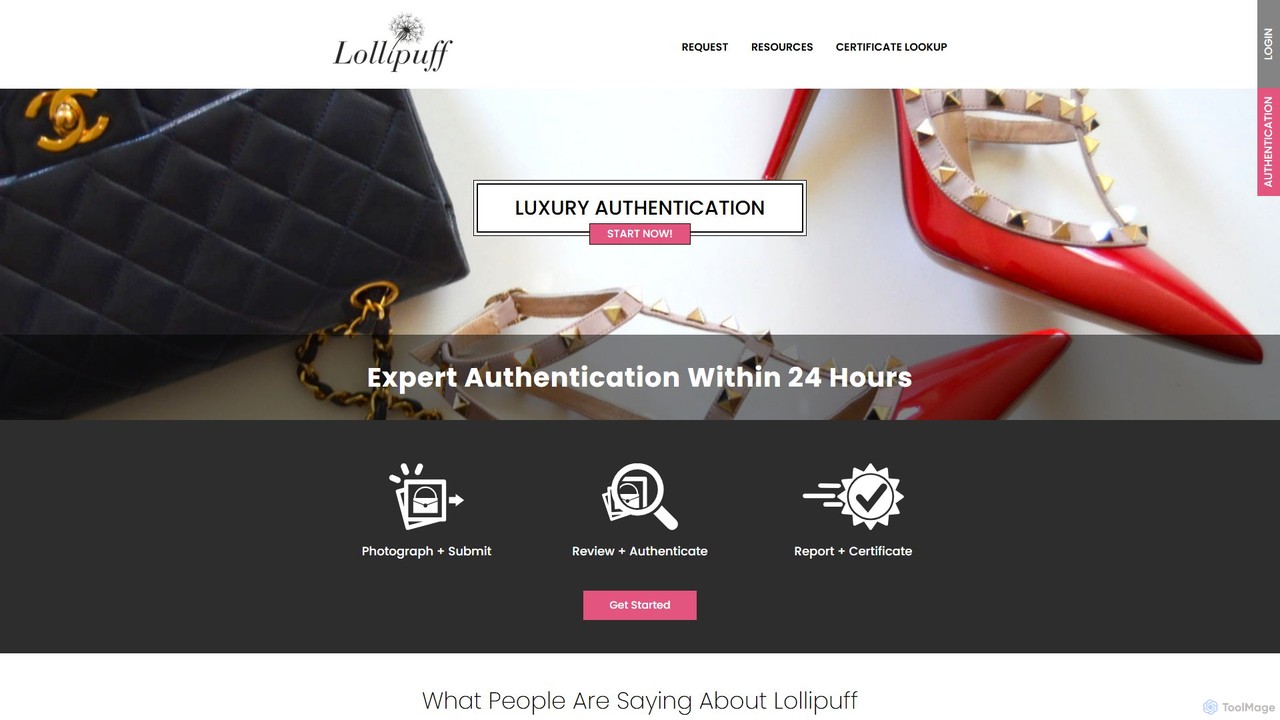
Lollipuff is an expert-driven, tech-enabled authentication service for luxury designer goods. It provides fast, reliable authenticity reports and …
Lollipuff is an expert-driven, tech-enabled authentication service for luxury designer goods. It provides fast, reliable authenticity reports and certificates for brands like Chanel, Louis Vuitton, and Hermès, helping buyers and sellers trade with confidence and avoid costly counterfeits.
About Authentication Service
Authentication Service tools are specialized solutions designed to verify the identity of users and the authenticity of products within ecommerce platforms. They employ technologies like multi-factor authentication (MFA), biometrics, and digital signatures to secure accounts and prevent unauthorized access. By confirming that users and products are legitimate, these services play a critical role in reducing fraud, protecting sensitive customer data, and building trust. This enhanced security is fundamental for maintaining a safe and reliable online shopping environment.
Core Features
- Multi-Factor Authentication (MFA): Adds an extra layer of security by requiring two or more verification methods to grant user access.
- Biometric Verification: Uses unique biological characteristics like fingerprints or facial recognition for secure and convenient login.
- Product Authenticity Verification: Employs technologies like NFC or secure QR codes to allow customers to verify that a product is genuine.
- Fraud Detection & Risk Analysis: Analyzes user behavior and transaction patterns in real-time to identify and block suspicious activities.
Applicable Scenarios
These services are essential for online retailers, especially those dealing in high-value goods, digital products, or regulated items. Ecommerce platform managers, security officers, and brand protection specialists use them to secure customer accounts, verify transactions, and combat counterfeiting. They are particularly valuable in industries like luxury fashion, electronics, and pharmaceuticals where authenticity and security are paramount.
Selection Criteria
When choosing an Authentication Service, consider its integration capabilities with your ecommerce platform (e.g., Shopify, Magento). Evaluate the range of authentication methods offered and whether they align with your customers' needs. Assess the service's scalability to handle traffic growth and its compliance with data protection regulations like GDPR. Finally, review the pricing model to ensure it fits your business's budget and transaction volume.

Authentication ServiceUse Cases
Securing Customer Account Logins with MFA
An ecommerce manager for an online electronics store notices a rise in account takeover incidents. To combat this, they integrate an authentication service to enforce Multi-Factor Authentication (MFA) for all customer logins. Now, when a user signs in, they must provide their password and a one-time code sent to their phone. This simple extra step significantly reduces unauthorized access, protecting customer data and preventing fraudulent orders placed from compromised accounts. The result is a sharp decline in chargebacks and an increase in customer trust.
Verifying Authenticity of Luxury Goods
A brand protection manager for a luxury watch company implements a product authentication service to fight counterfeits. Each watch is now equipped with a discreet NFC tag. Customers can tap the tag with their smartphone to open a secure webpage that verifies the watch's serial number and authenticity against the company's database. This empowers customers to confirm they are buying a genuine product, enhances the brand's reputation for quality, and provides valuable data on where products are being scanned, helping to track grey market distribution.
Implementing Age Verification for Regulated Products
An online store selling craft beer needs to ensure compliance with local laws by verifying customer age. The compliance officer integrates an authentication service that provides an age verification workflow. During checkout, customers are prompted to upload a photo of their government-issued ID. The service uses AI to verify the ID's authenticity and extract the date of birth to confirm the customer is of legal age. This automated process replaces manual checks, reduces legal risk, and ensures a responsible and compliant sales process without significantly slowing down the purchase journey.
Securing High-Value B2B Transactions
A B2B ecommerce platform for medical supplies needs to ensure that only authorized hospital procurement officers can place large orders. The IT director implements an authentication service that requires biometric verification (fingerprint or facial scan) via a mobile app for any transaction over $10,000. This step-up authentication ensures that even if an officer's password is compromised, a fraudulent order cannot be completed. It provides a high level of assurance for critical transactions, protecting both the supplier and the hospital from significant financial loss and supply chain disruption.
Streamlining User Onboarding with Social Logins
A direct-to-consumer (D2C) fashion brand wants to reduce friction during the account creation process to increase conversions. The marketing team decides to use an authentication service that supports social logins. New customers can now create an account in one click using their existing Google, Facebook, or Apple credentials. This eliminates the need to fill out long forms and remember a new password. The authentication service securely handles the token exchange, creating a seamless and fast onboarding experience that leads to a higher rate of completed registrations and first-time purchases.
Preventing Bot Attacks on Promotions
An online sneaker retailer is launching a limited-edition shoe, which attracts malicious bots trying to buy up all the stock for resale. The fraud prevention team uses an authentication service with advanced bot detection capabilities. During the high-traffic launch, the service analyzes behavioral signals like mouse movements, typing speed, and device fingerprints to distinguish human users from automated scripts. It presents challenges (like CAPTCHA) only to suspicious traffic, ensuring genuine customers have a fair chance to purchase while blocking bots. This protects the brand's integrity and improves customer satisfaction.