ToolMage
Sign in

Best 1 Family Organization AI tools for Lifestyle

Popular Family Organization AI tools in Lifestyle include Larna, helping you work more efficiently.

Larna
Freemium

Larna

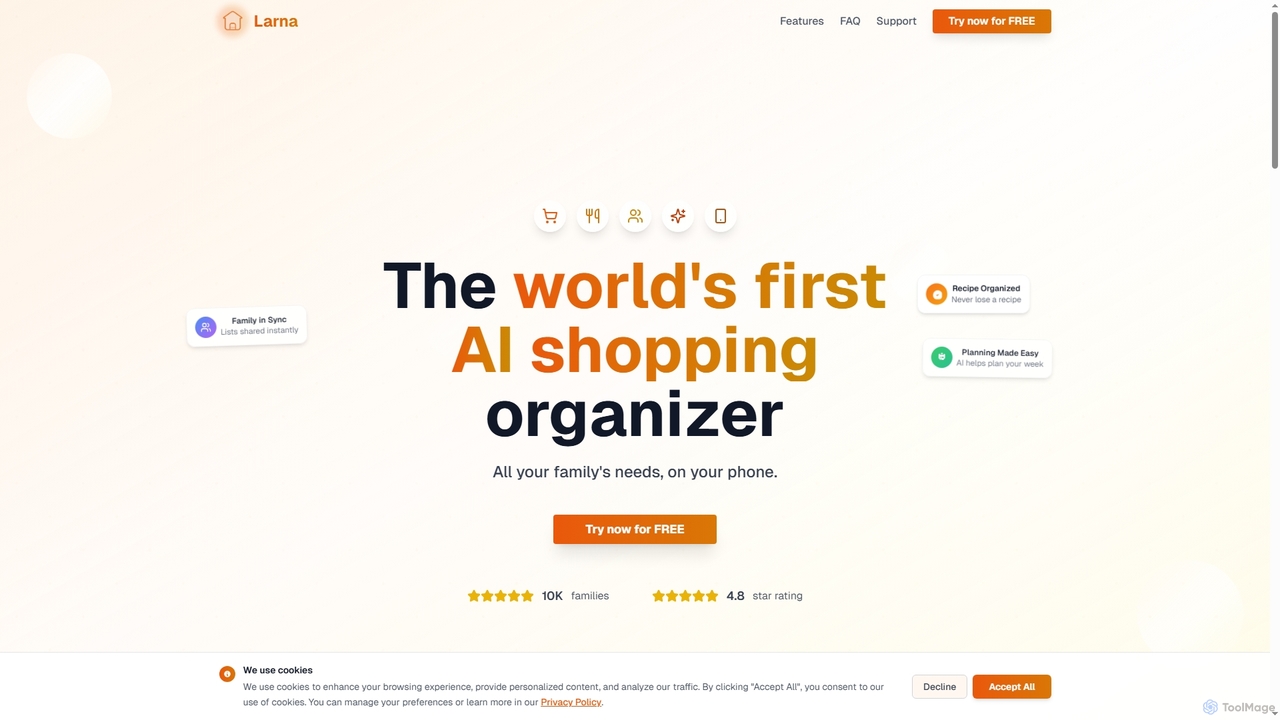
Larna is an AI-powered household manager designed to simplify family organization. It centralizes meal planning, recipe management, and smart grocery lists, helping families stay in sync, save time, reduce waste, and eat better. Experience effortless home management with personalized AI assistance.

Meal Planning
Visits 8.6KFavorites 133Likes 160

About Family Organization

AI Family Organization tools are specialized platforms using artificial intelligence to streamline household management and coordination. They leverage machine learning to analyze family routines, automate scheduling, and predict needs, moving beyond simple shared calendars. These tools help families manage tasks, finances, and communication more efficiently, reducing mental load and fostering collaboration. Their primary value lies in proactively organizing family life rather than just passively recording events.

Core Features

  • Smart Calendar & Scheduling: Automatically suggests event times, resolves conflicts, and integrates school, work, and personal calendars.
  • AI-Powered Task Management: Intelligently assigns and rotates chores, sends predictive reminders, and tracks completion.
  • Automated Meal Planning: Generates weekly meal plans based on dietary preferences and creates smart shopping lists.
  • Centralized Information Hub: Securely stores and organizes contacts, medical records, and documents with AI-powered search.
  • Collaborative Budgeting: Tracks shared expenses, categorizes spending automatically, and helps set and monitor family financial goals.

Use Cases

These tools are ideal for busy families with multiple children, co-parenting situations, or households managing complex schedules. They are used by parents to coordinate after-school activities, medical appointments, and social events, ensuring everyone is informed. They also serve as a central platform for managing household responsibilities, from daily chores to long-term projects like planning a vacation.

How to Choose

When selecting a tool, consider the scope of features—do you need just scheduling or also finance and meal planning? Evaluate its cross-platform availability (iOS, Android, Web) and ease of use for all family members. Also, review the privacy policy and security measures for protecting sensitive family data. Finally, compare pricing models, from free versions to subscription plans for advanced AI capabilities.

Family Organization use cases

1

Automating Weekly Meal and Grocery Planning

For parents managing a busy household, planning meals and shopping can be a constant chore. An AI Family Organization tool simplifies this process. Users input family dietary preferences, allergies, and budget. The AI then generates a complete weekly meal plan with recipes and automatically compiles a categorized shopping list. It can even suggest meals based on what's already in the pantry, reducing food waste and saving hours of planning time each week.

2

Coordinating Complex Children's Schedules

Families with multiple children often juggle a chaotic mix of school events, sports practices, music lessons, and doctor's appointments. These tools act as a central command center. Parents input all activities, and the AI calendar automatically detects scheduling conflicts and suggests alternative times. It sends smart, role-based reminders to parents and older children, ensuring no appointment is missed and transportation is arranged in advance.

3

Managing Chores and Allowances Fairly

Teaching responsibility through chores can be challenging. AI tools gamify and automate this process. Parents can create a list of household tasks, and the AI assigns them based on age-appropriateness and a fair rotation system. The tool tracks completion, allowing parents to link chores to a digital allowance system. This automates payments upon completion, eliminating manual tracking and potential disputes.

4

Centralizing Critical Family Information

In emergencies or when dealing with caregivers, having quick access to vital information is crucial. These platforms provide a secure digital vault for storing medical records, emergency contacts, insurance details, and important documents. The AI-powered search allows users to instantly find information like a child's allergy information or a pediatrician's phone number, providing peace of mind and enhanced safety.

5

Collaborative Family Vacation Planning

Planning a family trip involves numerous details, from booking flights to creating an itinerary. An AI organization tool can act as a collaborative project manager. The family can create shared packing lists, a vacation budget with real-time expense tracking, and a day-by-day itinerary. The AI can suggest family-friendly activities based on the destination and children's ages, keeping all travel documents and confirmations in one accessible place.

6

Streamlining Co-Parenting Communication

For separated or divorced parents, maintaining consistent communication and scheduling is key. These tools offer a neutral, shared platform for managing custody schedules, tracking shared expenses like medical bills or school fees, and communicating about the children's needs. The AI helps document everything, creating a clear record that minimizes misunderstandings and promotes a more organized co-parenting relationship.

Family Organization FAQ

What are AI Family Organization tools?

AI Family Organization tools are applications that use artificial intelligence to help families manage their daily lives. Unlike simple digital calendars, they proactively analyze schedules to prevent conflicts, automate chore assignments, suggest meal plans, and centralize important information. Their main goal is to reduce the mental load of running a household through intelligent automation and coordination.

How do AI Family Organization tools differ from a shared digital calendar?

A shared digital calendar is a passive tool for recording events. AI Family Organization tools are active assistants. They offer intelligent features that a standard calendar lacks, such as:

  • Conflict Resolution: Automatically identifying and suggesting solutions for scheduling clashes.
  • Task Automation: Assigning chores based on fairness and sending predictive reminders.
  • Data Integration: Connecting schedules, tasks, shopping lists, and budgets into one cohesive system.
  • Personalized Suggestions: Recommending activities or meals based on family habits and preferences.

How should I choose the right AI Family Organization tool for my family?

To choose the right tool, evaluate these four key areas. First, assess your core needs: is it primarily for scheduling, chore management, or all-in-one household organization? Second, check for user-friendliness and ensure it has a simple interface that even kids can use. Third, prioritize security and privacy, especially since you'll be storing sensitive family data. Finally, compare the pricing and features of the free versus paid versions to find one that fits your budget and requirements.

Are these tools secure for storing sensitive family information?

Reputable AI Family Organization tools prioritize security. They typically use end-to-end encryption to protect data like medical records, contacts, and financial information. When choosing a tool, it's important to review its privacy policy to understand how your data is used and stored. Look for features like two-factor authentication (2FA) and clear data ownership policies to ensure your family's information is kept private and secure.

Who can benefit most from using an AI Family Organization tool?

These tools are particularly beneficial for busy parents with school-aged children, as they excel at managing complex schedules and activities. They are also highly useful for families with multiple caregivers, co-parenting arrangements, or members with specific dietary or medical needs. Essentially, any household looking to reduce chaos, improve communication, and automate routine organizational tasks can find significant value in using one of these platforms.