
Ohai.ai
Ohai.ai is an AI-powered personal assistant designed to simplify family life and reduce the mental load for parents. …
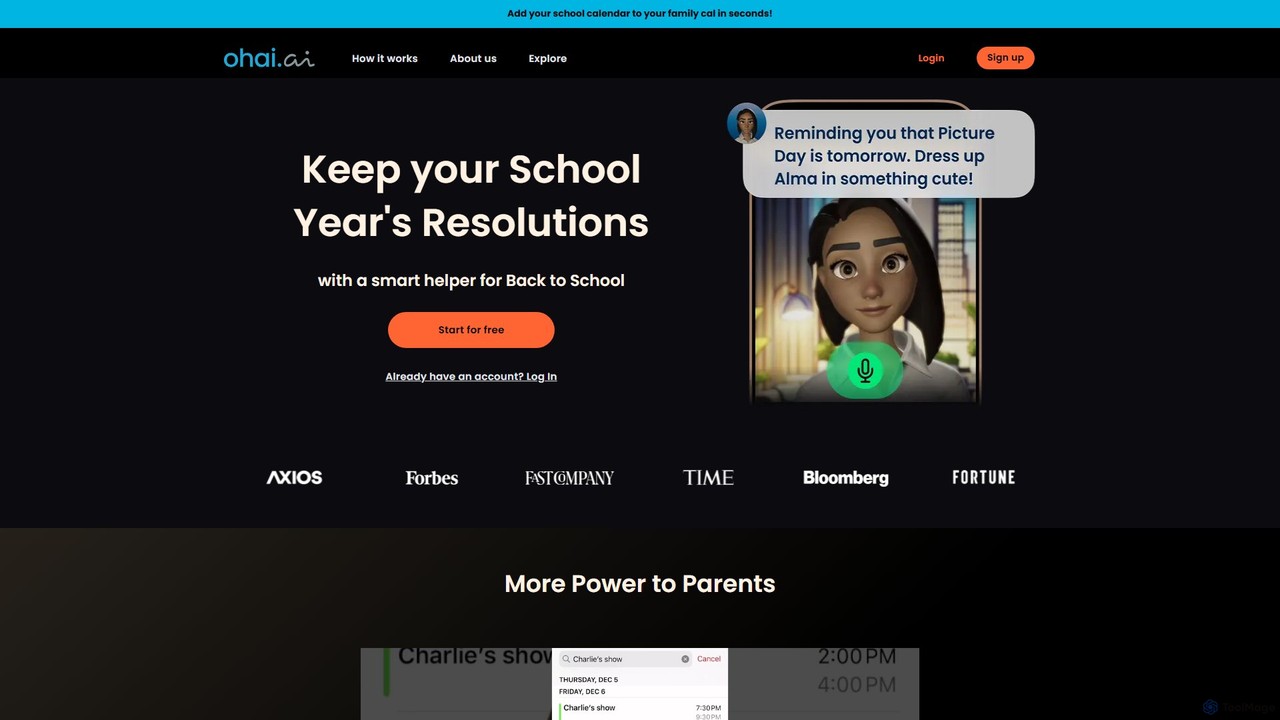
Ohai.ai is an AI-powered personal assistant designed to simplify family life and reduce the mental load for parents. It automates scheduling by syncing school and work calendars, manages to-do lists, plans meals, coordinates social events, and sends thoughtful reminders. By centralizing household management, Ohai helps families stay organized, connected, and on top of their busy lives, giving them more time to focus on what matters.
About Family & Parenting
Family & Parenting AI tools are applications designed to assist with the complexities of modern family life and child-rearing. These tools leverage artificial intelligence to offer personalized support, from managing schedules to enhancing children's education. They analyze user inputs, developmental data, and preferences to provide tailored recommendations, automated planning, and interactive learning experiences. This technology empowers parents with data-driven insights and engaging resources to support their child's growth and streamline household management.
Core Features
- Personalized Activity Planning: Suggests age-appropriate educational games, crafts, and outings based on a child's interests and developmental stage.
- Child Development Tracking: Monitors key milestones in areas like speech, motor skills, and social interaction, offering insights and progress reports.
- AI-Powered Homework Help: Provides interactive, step-by-step guidance for school subjects without giving direct answers, fostering problem-solving skills.
- Smart Family Scheduling: Coordinates appointments, chores, and activities for all family members, automatically resolving conflicts and sending reminders.
- Content Filtering & Safety: Uses AI to monitor online activity, block inappropriate content, and ensure a safe digital environment for children.
Use Cases
These tools are widely used by new parents seeking guidance on developmental milestones, families with school-aged children managing busy schedules, and caregivers looking for creative educational activities. For instance, a parent can use an AI tool to generate a weekly meal plan that caters to picky eaters or get instant, reliable answers to common parenting questions in the middle of the night.
How to Choose
When selecting a Family & Parenting AI tool, consider the following: First, verify its data privacy and security policies to ensure your family's information is protected. Second, assess the age-appropriateness of the content and features. Third, evaluate the scope of its functions—whether you need a comprehensive family organizer or a specialized learning aid. Finally, consider the user interface's ease of use for both parents and children.
Family & ParentingUse Cases
Generate Personalized Bedtime Stories
Parents of young children often look for new ways to engage their kids at bedtime. Using an AI story generator, a parent can input key elements like their child's name, favorite animal (e.g., a brave lion), and a desired moral (e.g., the importance of sharing). The AI then crafts a unique, age-appropriate story incorporating these elements. This process not only provides a fresh narrative each night but also helps children see themselves in positive stories, reinforcing values and sparking their imagination before sleep.
Plan Nutritious Meals for Picky Eaters
A common challenge for families is planning meals that are both healthy and appealing to children, especially picky eaters. A family manager can use an AI meal planner by inputting dietary restrictions (e.g., gluten-free), a list of preferred foods, and nutritional goals. The AI algorithm generates a week's worth of recipes that meet these criteria, along with a corresponding grocery list. This automates a time-consuming task, reduces food waste by planning ingredient usage, and helps ensure children receive a balanced diet without daily mealtime battles.
Provide AI-Assisted Homework Support
When a child is stuck on a math problem or needs to brainstorm ideas for an essay, parents may not always have the time or subject matter expertise to help. An AI homework assistant can serve as a patient, on-demand tutor. The student can input their question, and the AI provides step-by-step explanations, hints, and related examples rather than the direct answer. This approach empowers the child to understand the underlying concepts and develop critical thinking skills, fostering academic independence while reducing parental stress.
Track and Support Child's Developmental Milestones
For new parents, tracking a baby's development can be both exciting and nerve-wracking. An AI-powered developmental tracking app allows parents to log key milestones, such as first words, crawling, or social smiles. Based on this data, the AI provides personalized insights, compares progress against standard developmental ranges, and suggests age-appropriate activities to encourage the next stage of growth. This gives parents peace of mind and a structured way to engage in their child's development, flagging potential concerns for discussion with a pediatrician early on.
Create a Fair and Automated Chore Schedule
In households with multiple children, distributing chores fairly can be a constant source of conflict. A parent can use an AI scheduling tool to manage this task. They input each child's age, capabilities, and the list of household chores. The AI then generates a balanced, rotating schedule that is age-appropriate for everyone. It can automatically send reminders to a family app and track completion. This system reduces arguments, teaches responsibility, and frees parents from the mental load of constantly managing and delegating tasks.
Find and Vet Local Childcare Providers
Finding a trustworthy babysitter or daycare can be a stressful process for parents. AI-powered platforms can streamline this search. A parent inputs their specific needs, such as location, hours required, and special skills (e.g., CPR certified). The AI matches these criteria with a database of vetted local caregivers, presenting a shortlist of the most suitable candidates. Some platforms use AI to analyze reviews and profiles to highlight key strengths and potential red flags, significantly simplifying the decision-making process and increasing parental confidence.