mymealplan.ai
mymealplan.ai is an AI-powered platform that generates personalized meal plans based on your dietary goals, preferences, and restrictions. …
mymealplan.ai is an AI-powered platform that generates personalized meal plans based on your dietary goals, preferences, and restrictions. It creates custom recipes, automatically generates shopping lists, and provides detailed nutritional information to help you achieve your health and fitness objectives effortlessly.
mairecipe
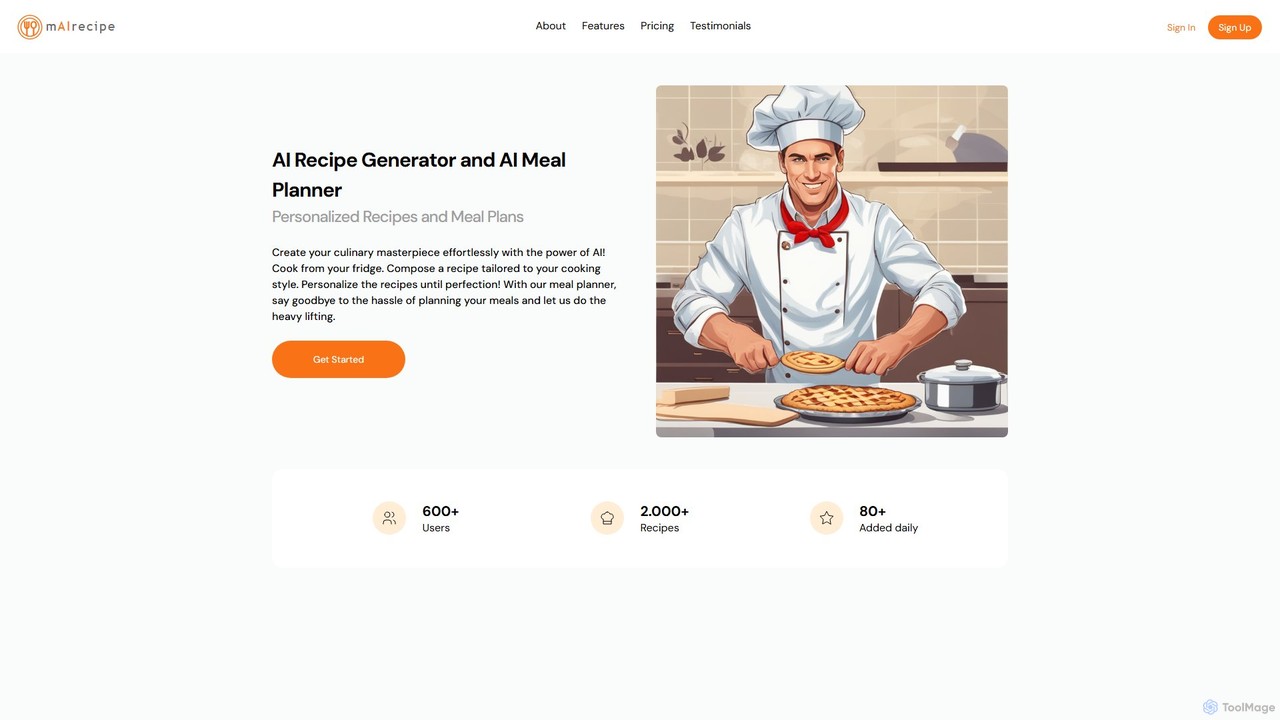
mairecipe is an AI-powered recipe generator and meal planner that creates personalized dishes from ingredients you already have. …
mairecipe is an AI-powered recipe generator and meal planner that creates personalized dishes from ingredients you already have. It helps you discover new culinary ideas, plan meals according to your dietary needs (like Keto, Paleo, Gluten-free), and reduce food waste, making cooking effortless and exciting.
About Food
AI Food tools are applications that leverage artificial intelligence to assist with culinary tasks, meal planning, and nutritional management. These tools utilize machine learning models, natural language processing, and computer vision to generate recipes, analyze ingredients, and create personalized diet plans. They provide users with a powerful way to enhance their cooking creativity, manage dietary goals, and reduce food waste. Unlike static recipe databases, AI Food tools can dynamically create new meal ideas based on user preferences, available ingredients, and health objectives.
Core Features
- Recipe Generation: Creates unique recipes from scratch based on specified ingredients, cuisines, or dietary needs.
- Nutritional Analysis: Calculates macronutrients, calories, and vitamins from a meal photo or ingredient list.
- Personalized Meal Planning: Develops weekly or monthly meal plans tailored to individual health goals, allergies, and tastes.
- Ingredient Substitution: Suggests alternative ingredients for a recipe based on what is available in the user's pantry.
- Food Recognition: Identifies food items and estimates portion sizes from an image using computer vision.
Use Cases
These tools are valuable for home cooks seeking inspiration, individuals with specific dietary restrictions (like gluten-free or vegan), fitness enthusiasts tracking their nutritional intake, and families looking to streamline their meal preparation process. Food bloggers and professional chefs also use them for creative brainstorming and menu development.
How to Choose
When selecting an AI Food tool, consider the scope of its features—whether you need simple recipe generation or comprehensive meal planning with nutritional tracking. Evaluate the accuracy of its nutritional database and food recognition capabilities. Also, consider the user interface's ease of use and its ability to integrate with other health apps or smart kitchen appliances.
FoodUse Cases
Personalized Weekly Meal Planning
A busy professional with specific dietary needs, such as a gluten-free diet and a daily calorie target of 2000 kcal, uses an AI food tool to simplify their life. They input their restrictions, goals, and food preferences (e.g., enjoys Mediterranean cuisine, dislikes bell peppers). The AI instantly generates a complete 7-day meal plan, including breakfast, lunch, and dinner. The plan comes with detailed recipes and an automatically generated shopping list, saving hours of planning and helping them adhere to their health goals consistently.
Creative Recipe Generation for Food Bloggers
A food blogger wants to create a unique dish for their next post using seasonal ingredients: pumpkin, sage, and cranberries. Instead of browsing through hundreds of existing recipes, they use an AI recipe generator. They input the core ingredients and specify the desired course (e.g., 'main course, vegetarian'). The AI provides several innovative options, such as 'Pumpkin and Cranberry Risotto with Crispy Sage' or 'Sage-infused Pumpkin Gnocchi with a Cranberry Brown Butter Sauce'. This allows the blogger to quickly find inspiration for novel content that stands out.
Nutritional Analysis for Athletes
A marathon runner needs to closely monitor their macronutrient intake to optimize performance and recovery. After each meal, they simply take a photo of their plate with their smartphone. An AI food tool with computer vision capabilities analyzes the image, identifies each food item (e.g., grilled chicken breast, quinoa, broccoli), estimates the portion sizes, and provides an instant breakdown of protein, carbohydrates, fats, and total calories. This visual logging method is faster than manual entry and helps the athlete make informed dietary adjustments throughout their training cycle.
Smart Ingredient Substitution for Home Cooks
A home cook is preparing a cake and discovers they are out of buttermilk. Instead of abandoning the recipe or making a trip to the store, they use an AI food tool. They input 'buttermilk' and the quantity needed. The AI analyzes the context of the recipe (baking) and suggests several viable substitutes from common household items, such as '1 cup of milk mixed with 1 tablespoon of lemon juice' or 'plain yogurt thinned with milk'. It also provides instructions on how to prepare the substitute, ensuring the cake's texture and flavor remain consistent.
Restaurant Menu Optimization
A restaurant owner wants to refresh their menu to increase profitability and appeal to current trends. They use an AI tool that analyzes sales data, ingredient costs, and online customer reviews. The AI identifies the most profitable and popular dishes, as well as underperforming items that could be removed. Furthermore, it suggests new menu concepts by analyzing food trend data, such as 'plant-based comfort food' or 'fusion tacos', providing sample recipes and projecting potential profit margins. This data-driven approach helps the owner make strategic decisions rather than relying on guesswork.
Reducing Food Waste at Home
A family wants to minimize food waste and use up ingredients before they expire. They use an AI tool where they can log the contents of their fridge and pantry. As items near their expiration date, the tool sends a notification. More importantly, the user can select several items that need to be used soon (e.g., 'half a head of cabbage, leftover chicken, and carrots') and ask the AI to generate recipes that incorporate all of them. This turns potential waste into a creative and delicious meal, saving money and promoting sustainability.