ToolMage
Sign in

Best 3 Local Discovery AI tools for Lifestyle

Popular Local Discovery AI tools in Lifestyle include aimaps, thebigfoot, and hermeso, helping you work more efficiently.

thebigfoot
Free

thebigfoot

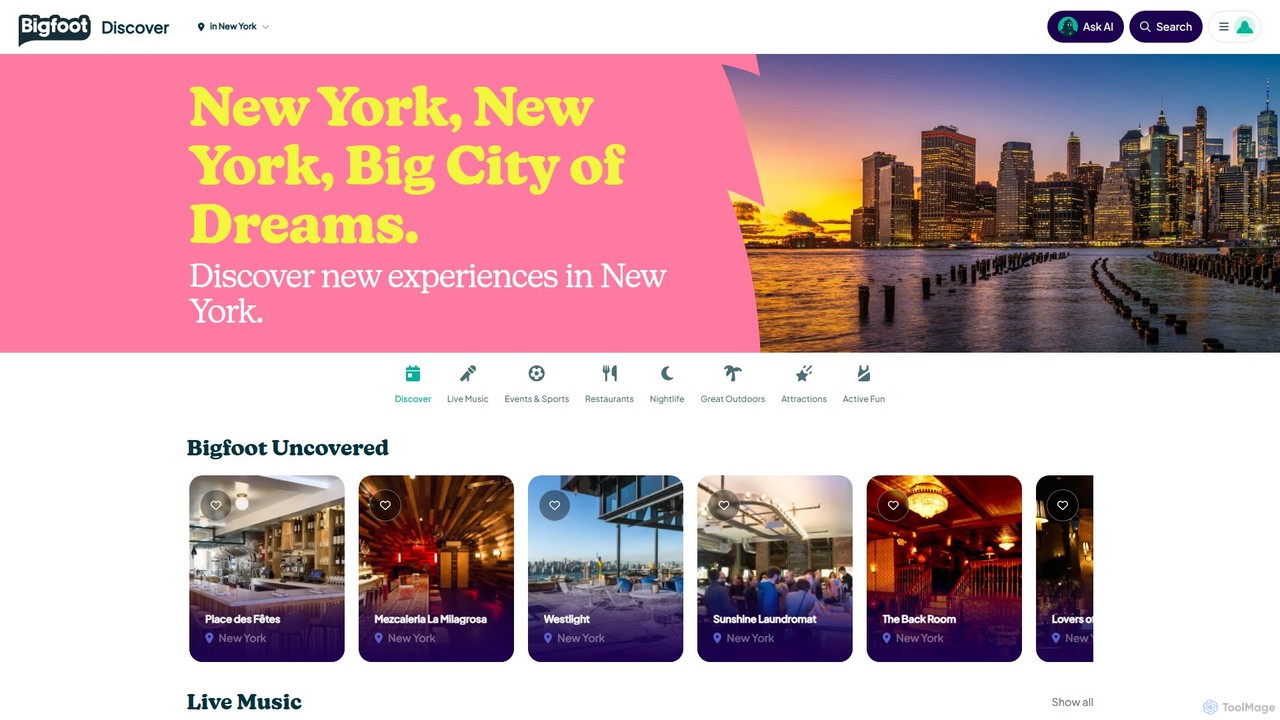
thebigfoot is an AI-powered local discovery platform that acts as your personal city guide. It helps you uncover unique experiences, events, restaurants, and hidden gems in over 160 cities worldwide. Using AI, it provides personalized recommendations and can instantly create a full day's itinerary, making local exploration fun and effortless.

Local Discovery
Visits 6.8KFavorites 118Likes 123
hermeso
Freemium

hermeso

hermeso is your AI-powered travel guide, designed to provide hyper-personalized recommendations for places and activities. Simply describe what you're looking for—from specific dietary needs to budget and ambiance—and hermeso finds the perfect spots in your area. Ditch generic search results and discover hidden gems tailored just for you, whether you're exploring a new city or your own neighborhood.

Local Discovery
Visits 6.3KFavorites 145Likes 124
aimaps
Freemium

aimaps

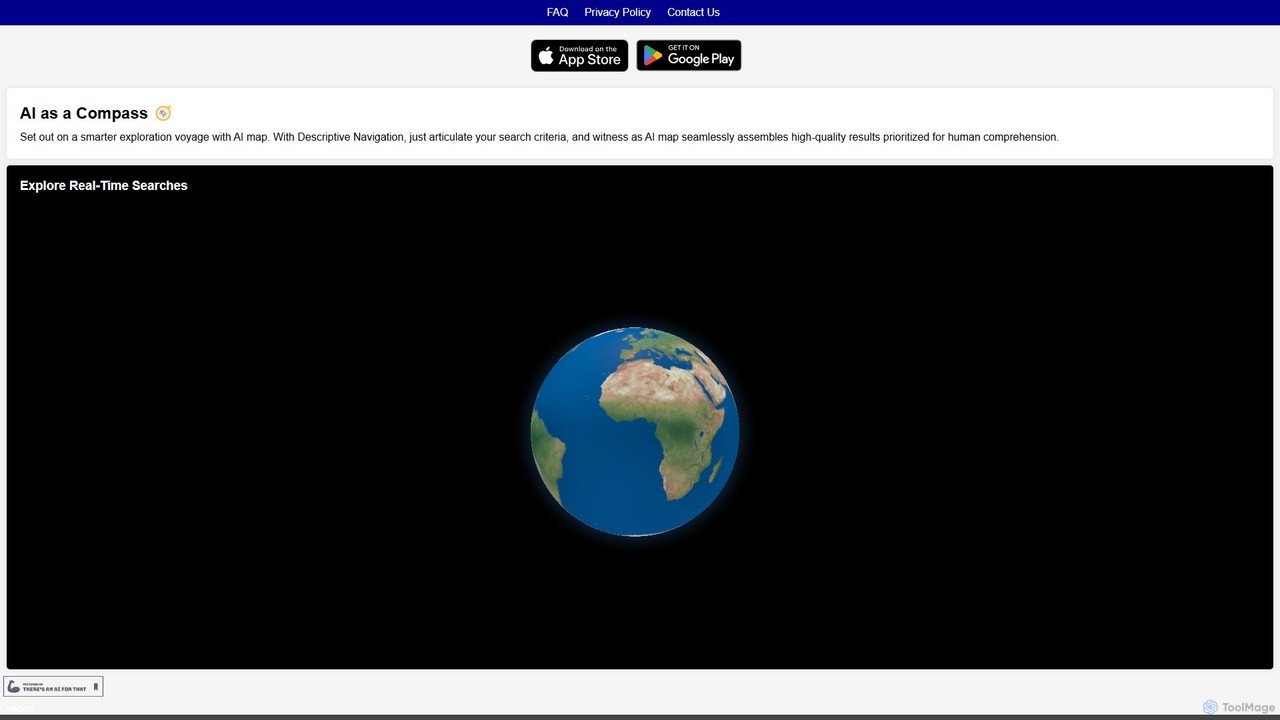
aimaps is an AI-powered map application that revolutionizes local discovery. Instead of keywords, use natural language to describe what you're looking for, like "a quiet spot for stargazing." The app provides high-quality, ranked recommendations with detailed reasons, acting as your personal compass for exploration.

Local Discovery
Visits 8.5KFavorites 127Likes 145

About Local Discovery

Local Discovery tools are AI-powered applications designed to help users find personalized and relevant places, events, and services in their immediate vicinity. They utilize machine learning to analyze user preferences, real-time data, and community feedback, offering recommendations that go beyond standard search results. These tools enhance the experience of exploring a city or neighborhood, connecting users with unique local businesses and activities that align with their specific tastes. As a specialized category within Lifestyle AI, they focus specifically on hyperlocal, context-aware exploration.

Core Features

  • Personalized Recommendations: Analyzes user behavior, ratings, and stated interests to suggest tailored local spots.
  • Context-Aware Suggestions: Considers factors like time of day, weather, and real-time events to provide timely and relevant options.
  • Sentiment Analysis of Reviews: Aggregates and summarizes public opinion from reviews to give a quick overview of a place's atmosphere and quality.
  • AI-Powered Itinerary Planning: Automatically generates optimized travel plans or daily schedules based on user interests and location constraints.
  • Hidden Gem Discovery: Uncovers lesser-known but highly-rated venues that traditional search algorithms might overlook.

Use Cases

These tools are ideal for travelers seeking authentic experiences, residents looking to explore new parts of their own city, and food enthusiasts searching for unique culinary adventures. They are used by individuals for personal planning and can be integrated by local tourism platforms to enhance visitor engagement and promote local businesses.

How to Choose

When selecting a Local Discovery tool, evaluate the quality of its recommendation algorithm and how well it matches your tastes. Consider the breadth and accuracy of its local database, the intuitiveness of its user interface, and whether it offers useful integrations with mapping or booking services. Also, check its privacy policy regarding location and user data.

Local Discovery use cases

1

Planning a Spontaneous Weekend Outing

A local resident feeling bored with their usual routine wants to discover something new in their city. They use a Local Discovery tool and input their interests, such as 'live music' and 'craft coffee'. The AI analyzes their preferences and current location, then suggests a walking route that includes a newly opened cafe with high ratings for its espresso, a park hosting a free jazz concert in the afternoon, and a lesser-known bookstore with a cozy atmosphere. This provides a complete, personalized itinerary, saving hours of manual research.

2

Creating a Themed Food Tour for Tourists

A travel blogger visiting a new city wants to create content about its 'authentic street food' scene. Instead of relying on generic travel guides, they use a Local Discovery app. The AI identifies highly-rated food stalls and trucks favored by locals by analyzing recent reviews and social media check-ins, filtering out tourist traps. It then generates an optimized walking route connecting five distinct culinary spots, considering their opening hours and peak times to avoid long queues. The result is an authentic and efficient food tour experience.

3

Finding a Last-Minute Business Meeting Spot

A sales professional needs to find a suitable location for an impromptu client meeting near their current location. They require a place that is quiet, has reliable Wi-Fi, and available seating. Using a Local Discovery tool, they filter for 'cafes with Wi-Fi' and 'low noise level'. The AI scans real-time data and analyzes recent reviews mentioning terms like 'quiet' or 'good for work'. It recommends a nearby hotel lobby cafe that fits all criteria and indicates it is currently not crowded, allowing the professional to secure an appropriate meeting spot in minutes.

4

Discovering Family-Friendly Weekend Activities

A parent is looking for new and engaging activities to do with their young children over the weekend. They use a Local Discovery app and set their preferences to 'family-friendly' and 'outdoors'. The AI cross-references this with local event listings and venue data. It suggests a visit to a nearby botanical garden that has a special 'kids' discovery trail' event this weekend, highlights a playground with recently upgraded equipment based on community posts, and recommends a family-owned ice cream shop nearby that reviews praise for being welcoming to children.

5

Planning a Night Out Based on a Specific Vibe

A group of friends wants to find a bar for Saturday night that has a 'lively atmosphere' but also serves 'great craft cocktails'. A simple search might yield bars that are either lively or have good cocktails, but not both. By using a Local Discovery tool, they can input these nuanced preferences. The AI performs sentiment analysis on thousands of recent customer reviews, identifying venues frequently described with words like 'energetic', 'buzzing', and 'expert mixology'. It then recommends two or three top matches, complete with recent photos and review snippets that confirm the desired vibe.

6

Exploring a New Neighborhood After Relocating

Someone who has just moved to a new area uses a Local Discovery tool to quickly get acquainted with their surroundings. Instead of just finding the nearest supermarket, they can ask for the 'best local butcher', 'most reliable dry cleaner', or 'community-favorite coffee shop'. The AI aggregates data from local forums, review sites, and social media to provide recommendations based on strong, consistent positive feedback from residents. This helps the new mover integrate faster and discover high-quality local businesses that form the fabric of the neighborhood.

Local Discovery FAQ

What are AI Local Discovery tools?

AI Local Discovery tools are applications that use artificial intelligence to provide personalized recommendations for nearby places, events, and services. Unlike traditional search engines or map apps, they analyze your personal preferences, context (like time and weather), and community sentiment to suggest experiences tailored specifically to you. Their main goal is to help you discover new and relevant things in your local environment that you might otherwise miss.

How do AI Local Discovery tools differ from standard map apps?

Standard map apps primarily focus on navigation and search. They excel at getting you from point A to point B and finding specific places you already know you're looking for. AI Local Discovery tools, on the other hand, focus on recommendation and exploration. Their strength lies in answering the question 'What should I do here?' by suggesting new places and activities based on a deep understanding of your tastes and the local context, helping you find experiences you didn't even know to search for.

How do I choose the right Local Discovery tool?

To choose the right tool, consider these factors:

  • Recommendation Quality: Does the tool consistently suggest places that match your personal taste? A good tool learns and adapts to your preferences over time.
  • Data Freshness and Accuracy: Check if the information (like opening hours and reviews) is up-to-date. The tool should have a comprehensive and reliable database for your area.
  • User Interface: The app should be intuitive and easy to navigate, allowing you to find what you need without frustration.
  • Specialized Features: Look for features that suit your needs, such as itinerary planning, booking integrations, or filters for specific criteria like 'pet-friendly' or 'outdoor seating'.
What kind of data do these tools use for recommendations?

AI Local Discovery tools typically use a combination of data sources to generate personalized recommendations. This includes: explicit data you provide (e.g., interests you select, ratings you give), implicit data from your behavior (e.g., places you view or save), contextual data (e.g., your current location, time of day, weather), and aggregated public data (e.g., customer reviews, social media trends, event listings, and business information). By synthesizing these different inputs, the AI can build a nuanced profile of your preferences.

Who can benefit most from using Local Discovery tools?

While anyone can use these tools, they are particularly beneficial for certain groups. Travelers can use them to find authentic, non-touristy experiences. New residents can quickly get acquainted with the best local spots in their neighborhood. Foodies can uncover hidden culinary gems. Even long-time residents can benefit by breaking out of their routine and discovering new activities and businesses in their own city that they never knew existed.