TheLegacy
TheLegacy is an AI-powered platform designed to help you preserve your family's history. It allows you to capture …
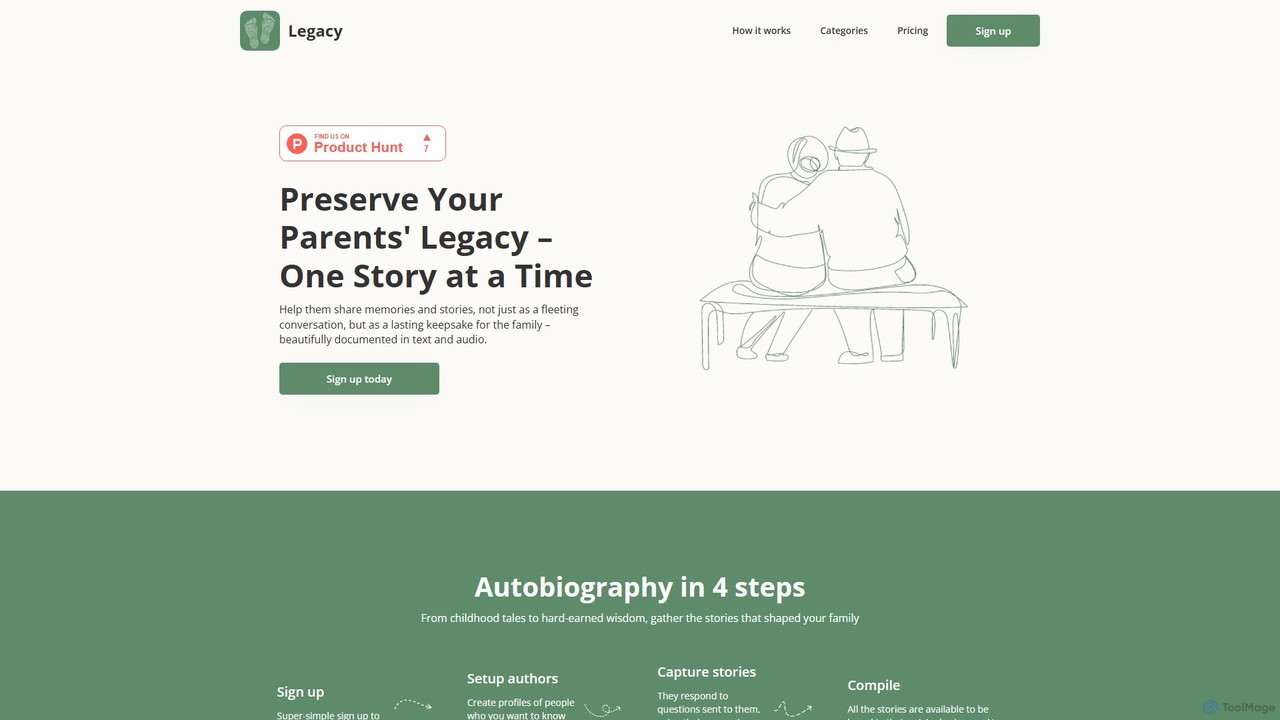
TheLegacy is an AI-powered platform designed to help you preserve your family's history. It allows you to capture the memories and stories of your parents and grandparents through guided questions, receiving their responses in both audio and text. AI technology enhances the audio quality, creating a lasting, beautifully documented keepsake for future generations.
About Memory Preservation
Memory Preservation tools are a class of AI applications designed to digitally capture, organize, and enrich personal histories. These tools leverage artificial intelligence for tasks like photo restoration, automated tagging, and transforming scattered data into coherent narratives. They provide a powerful way for individuals and families to safeguard precious moments, connect with their heritage, and create lasting digital legacies. Unlike simple cloud storage, these platforms focus on adding context and interactivity to memories.
Core Features
- AI-Powered Restoration: Automatically colorizes black-and-white photos, repairs scratches, and enhances the quality of old or damaged images and videos.
- Intelligent Organization: Uses facial recognition and object detection to automatically tag, categorize, and create searchable archives of media.
- Narrative Generation: Compiles photos, notes, and recordings into interactive timelines, digital storybooks, or even AI-powered conversational avatars.
- Digital Legacy Creation: Consolidates a person's life stories, wisdom, and key moments into a secure, shareable format for future generations.
Applicable Scenarios
These tools are ideal for families looking to build a digital archive of their history, genealogists researching and visualizing ancestral lines, and individuals wanting to create a personal memoir. They are also used to create meaningful digital tributes for loved ones, preserving their voice and stories in an interactive format.
How to Choose
When selecting a Memory Preservation tool, prioritize data privacy and security, as you are entrusting it with sensitive personal information. Evaluate the range of supported media types (photos, videos, audio, text). Consider the specific AI features you need, such as restoration versus interactive storytelling. Finally, check the options for exporting your data and sharing it with family members.

Memory PreservationUse Cases
Creating a Digital Family Archive
A family historian uses a memory preservation tool to digitize decades of old photo albums and home videos. The AI automatically sorts thousands of files by identifying recurring faces, tagging locations from metadata, and grouping events like birthdays and holidays. It also enhances faded photos and stabilizes shaky video clips. The result is a fully searchable, interactive family timeline that can be securely shared with relatives worldwide, ensuring the family's legacy is preserved and accessible for new generations.
Building an Interactive Digital Legacy
An individual wants to preserve their life stories for their grandchildren. They use a platform to record audio anecdotes, upload key documents, and write down memories. The AI transcribes the audio, organizes all content by life stages (e.g., childhood, career, family), and creates a conversational AI avatar. This avatar can answer questions in the person's voice and style, allowing future generations to interact with their ancestor's story in a deeply personal and engaging way, asking questions like 'Grandpa, what was your first job like?'
Restoring Damaged Heritage Photos
A genealogist discovers a box of old, damaged family photographs from the 19th century, many of which are torn, faded, and monochrome. Using an AI restoration tool, they upload scans of these photos. The AI algorithm intelligently repairs tears and creases, sharpens blurry faces, and applies historically plausible colorization. Within minutes, portraits of ancestors are brought back to life with stunning clarity and color, providing invaluable visual context for their genealogical research and family tree.
Compiling a Digital Memoir
An author working on their autobiography uses an AI-powered journaling tool to structure their thoughts. The tool provides daily prompts to jog their memory about specific life events. As they write or dictate entries, the AI automatically tags themes (e.g., 'career milestones', 'travel', 'family relationships') and organizes them chronologically. This creates a structured, searchable database of their life's memories, significantly simplifying the research and writing process for their book by allowing them to easily find and connect related stories.
Creating a Digital Memorial Tribute
After a loved one passes away, their family uses a memory preservation platform to create a collaborative tribute. They invite friends and relatives to upload photos, share written stories, and record video messages. The AI tool organizes all these contributions into a beautiful, cohesive digital space. It can even create a highlight reel video set to music, automatically selecting the most impactful photos and clips. This creates a living, shared memorial that celebrates the person's life and provides a space for collective grieving and remembrance.
Interactive Journaling for Self-Reflection
A user maintains a daily digital journal to track personal growth. They use an AI-powered app that not only stores their text entries but also analyzes them for sentiment and recurring themes. The AI can generate summaries, such as 'You mentioned 'anxiety' most frequently in March,' or create word clouds of their most used terms. This provides the user with objective insights into their own mental and emotional patterns over time, turning a simple journal into a powerful tool for self-discovery and reflection without manual analysis.