
ToolMage
Sign in

Best 1 Psychology AI tools for Lifestyle

Popular Psychology AI tools in Lifestyle include TypeWhisperer, helping you work more efficiently.

TypeWhisperer
Freemium

TypeWhisperer

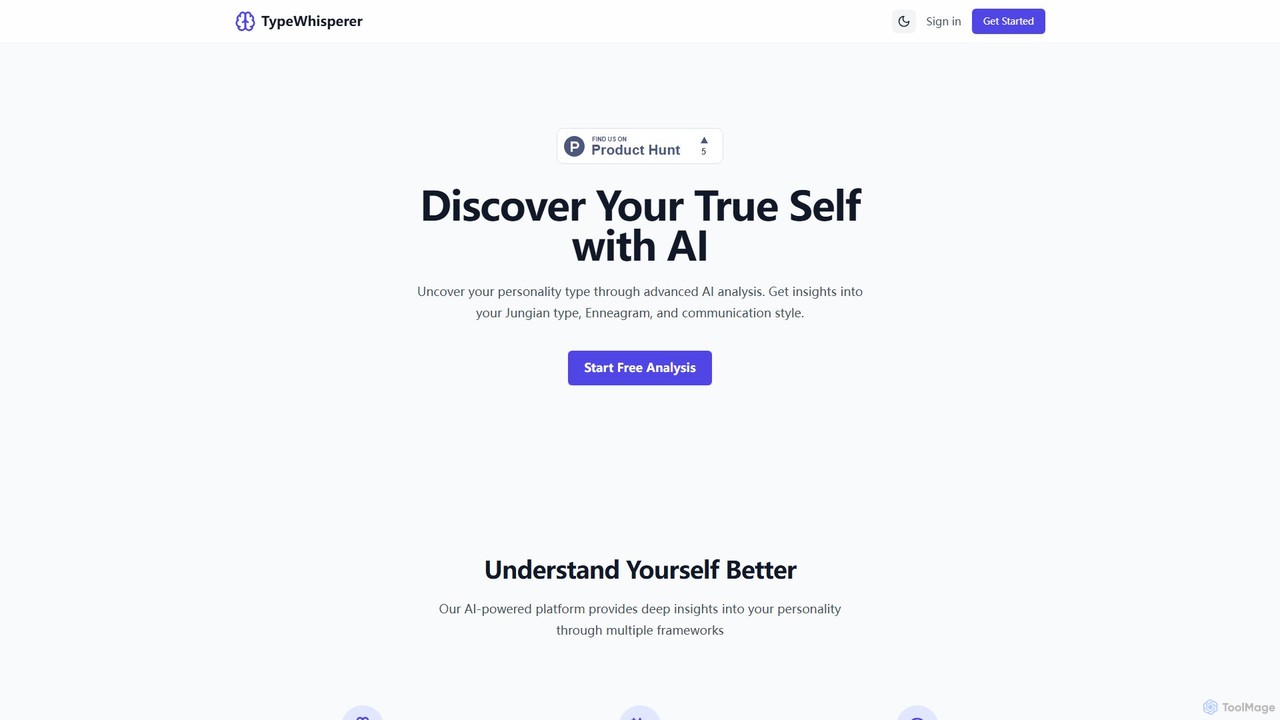
TypeWhisperer is an AI-powered personality decoder that analyzes your writing to reveal deep insights into your character. By processing your thoughts and experiences, it identifies your Jungian type, Enneagram, and communication style, offering a comprehensive understanding of your true self for personal growth and self-discovery.

Assessment
Visits 7.7KFavorites 117Likes 105

About Psychology

AI Psychology tools are applications designed to support mental well-being and provide psychological insights using artificial intelligence. These tools often leverage Natural Language Processing (NLP) and machine learning to analyze user inputs, such as journal entries or chat conversations. They offer accessible, on-demand support for managing stress, understanding emotions, and practicing cognitive techniques. By providing personalized feedback and guided exercises, these tools empower users to proactively work on their mental health as part of their daily lifestyle.

Core Features

  • AI-Powered Chatbots: Engage in supportive, text-based conversations to practice techniques like Cognitive Behavioral Therapy (CBT).
  • Mood and Emotion Tracking: Analyze journal entries and user data to identify emotional patterns and potential triggers.
  • Personalized Exercises: Generate customized mental wellness plans, guided meditations, and mindfulness exercises.
  • Behavioral Pattern Recognition: Detect recurring negative thought cycles or habits from user inputs to raise self-awareness.
  • Data-Driven Insights: Provide reports and visualizations of emotional trends over time to help users understand their mental state.

Use Cases

These tools are valuable for individuals seeking self-help resources for mental wellness, students managing academic stress, and professionals looking to improve focus and emotional resilience. They are also used as supplementary support alongside traditional therapy, offering a convenient way to practice skills learned in sessions.

How to Choose

When selecting an AI Psychology tool, prioritize those based on established scientific principles like CBT or mindfulness. Critically evaluate their data privacy and security policies, as you will be sharing sensitive information. Also, consider the user interface and the specific focus of the tool—whether it's for general mood tracking, anxiety management, or guided therapy exercises.

Psychology use cases

1

Daily Mood Journaling and Analysis

A user looking to better understand their emotional fluctuations uses an AI journaling app. Each day, they write about their experiences and feelings. The AI analyzes the text to identify recurring themes, sentiment shifts, and potential triggers. For example, it might generate a report showing that feelings of anxiety often correlate with mentions of work deadlines. This provides the user with actionable insights to manage their emotional responses more effectively.

2

Guided CBT for Social Anxiety

An individual preparing for a public speaking event uses an AI chatbot to manage social anxiety. The bot guides them through a structured Cognitive Behavioral Therapy (CBT) exercise called 'thought reframing.' The user inputs their anxious thoughts, such as 'I will mess up and everyone will judge me.' The AI then asks probing questions to help them challenge this thought and formulate a more balanced, realistic alternative, building their confidence before the event.

3

On-Demand Stress and Anxiety Relief

A busy professional experiencing high-pressure situations at work uses an AI mental wellness app for immediate support. During a short break, they can initiate a 5-minute guided breathing exercise or a mindfulness session through the app. If they need to vent, they can engage in a brief, confidential chat with an AI companion that offers supportive and non-judgmental responses, helping to de-escalate stress in the moment.

4

Building Positive Habits and Routines

Someone aiming to improve their overall well-being uses an AI coach to establish a consistent mental health routine. Based on their goals, the tool helps schedule daily activities like meditation, journaling, and physical exercise. It sends personalized reminders and motivational messages. By tracking completion rates, the AI provides positive reinforcement and adjusts the plan to help the user build lasting, healthy habits.

5

Analyzing and Improving Sleep Patterns

A user struggling with poor sleep quality connects their AI psychology app with their wearable device. The tool analyzes sleep data (duration, stages, interruptions) alongside their daily journal entries and mood logs. It identifies correlations, such as how late-night screen time or stressful events impact sleep. Based on this, the app provides personalized recommendations, like a 'wind-down' routine or mindfulness exercises before bed, to improve sleep hygiene.

6

Enhancing Self-Awareness with Personality Insights

An individual interested in personal development uses an AI tool to gain deeper insights into their personality. After completing a series of interactive questions and scenarios, the AI generates a comprehensive report based on psychological frameworks like the Big Five model. The report details their core traits, strengths, and areas for growth, offering practical advice on how these traits might influence their career choices, relationships, and decision-making processes.

Psychology FAQ

What are AI Psychology tools?

AI Psychology tools are software applications that use artificial intelligence to provide mental health support and psychological insights. They typically employ technologies like machine learning and natural language processing to offer features such as conversational chatbots for therapy exercises, mood tracking, and personalized wellness plans. These tools are designed to make mental health support more accessible, but they are not a replacement for professional medical advice or therapy.

How do I choose a reliable AI Psychology tool?

To choose a reliable tool, consider these factors:

  • Scientific Basis: Check if the tool's methods are based on evidence-based practices like Cognitive Behavioral Therapy (CBT) or Mindfulness-Based Stress Reduction (MBSR).
  • Data Privacy: Read the privacy policy carefully to understand how your sensitive personal data is collected, stored, and used.
  • User Reviews: Look for reviews from other users, but be mindful of authenticity and potential biases.
  • Expert Involvement: See if the app was developed with input from mental health professionals, such as psychologists or therapists.
Can AI Psychology tools replace a human therapist?

No, AI Psychology tools cannot replace a human therapist. They are best viewed as supplementary tools for self-help, skill-building, and support between therapy sessions. A human therapist provides nuanced understanding, empathy, and clinical judgment that AI cannot replicate. These tools can be excellent for managing daily stress, tracking moods, or practicing specific techniques, but they are not equipped to handle complex mental health conditions or crises.

What are the main features of AI-powered mental wellness apps?

Key features often include AI chatbots that simulate supportive conversations and guide users through therapeutic exercises (like CBT). Many offer mood and emotion tracking by analyzing journal entries. Other common features are personalized content delivery, such as guided meditations or articles based on the user's current emotional state, and behavioral pattern recognition to help users identify and change negative thought cycles.

Who can benefit from using AI Psychology tools?

A wide range of individuals can benefit. This includes people looking for accessible, low-cost ways to manage everyday stress and anxiety, those interested in self-improvement and emotional awareness, and individuals who want a supplementary tool to support their ongoing therapy. They are also useful for people in areas with limited access to mental health professionals or those who prefer the privacy and convenience of a digital solution for initial support.