
ToolMage
Sign in

Best 1 Assessment AI tools for Human Resources

Popular Assessment AI tools in Human Resources include TypeWhisperer, helping you work more efficiently.

TypeWhisperer
Freemium

TypeWhisperer

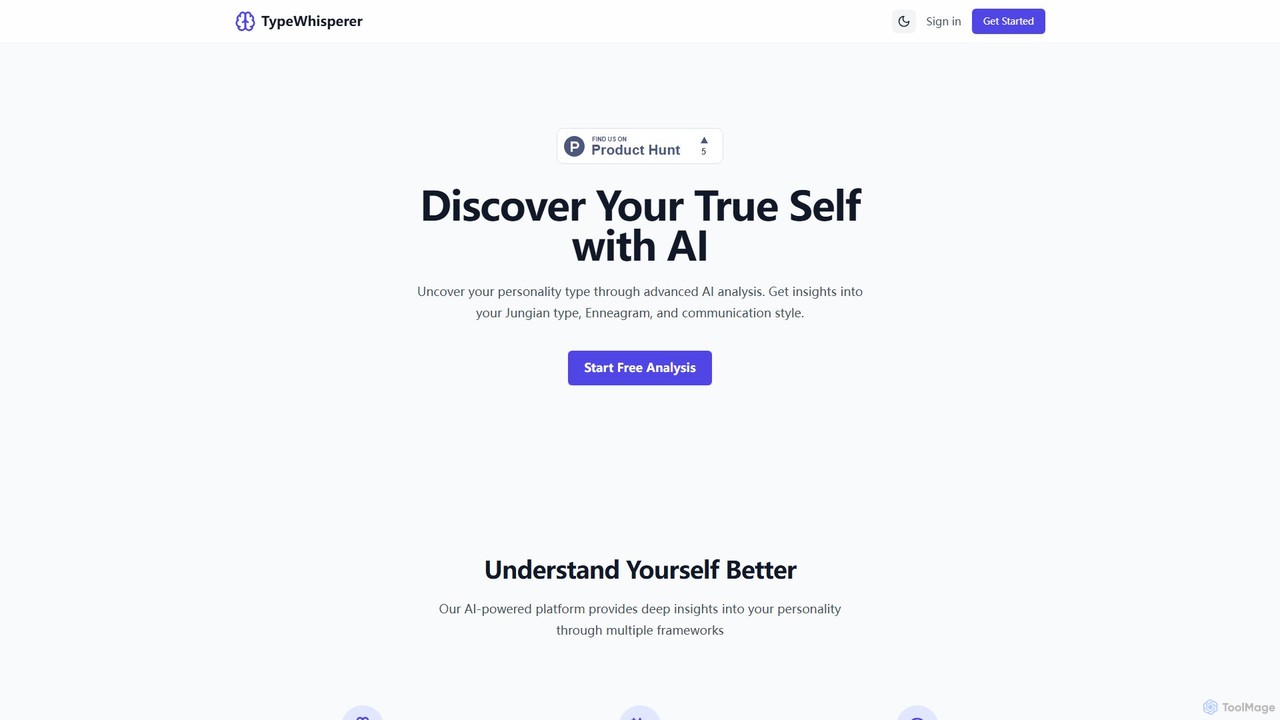
TypeWhisperer is an AI-powered personality decoder that analyzes your writing to reveal deep insights into your character. By processing your thoughts and experiences, it identifies your Jungian type, Enneagram, and communication style, offering a comprehensive understanding of your true self for personal growth and self-discovery.

Assessment
Visits 6.6KFavorites 104Likes 95

About Assessment

AI Assessment tools are a specialized category of Human Resources software that uses artificial intelligence to objectively evaluate a candidate's skills, personality, and potential. These platforms leverage machine learning, natural language processing (NLP), and psychometric data to analyze everything from coding abilities to communication styles. Their primary value lies in providing data-driven insights that streamline the hiring process, reduce unconscious bias, and improve the quality of hires. This technology enables organizations to make more informed talent decisions based on performance metrics rather than just resume keywords.

Core Features

  • Automated Skills Testing: Automatically administers and grades technical, cognitive, or language proficiency tests.
  • Behavioral & Personality Analysis: Uses psychometric models and AI to analyze responses from questionnaires, games, or video interviews to predict job performance and cultural fit.
  • Video Interview Analysis: Evaluates candidates' verbal cues, language patterns, and responses in pre-recorded video interviews to assess soft skills.
  • Bias Reduction Algorithms: Actively identifies and mitigates biases related to gender, ethnicity, or age by focusing on objective skill and competency data.
  • Predictive Performance Modeling: Uses data from top-performing current employees to create a benchmark for assessing new candidates' potential for success.

Use Cases

These tools are most impactful in high-volume recruiting environments, such as for customer service or entry-level roles, where they can efficiently screen thousands of applicants. They are also critical for specialized technical hiring (e.g., developers, data scientists) where objective skill validation is paramount. Furthermore, organizations use them for leadership development to identify high-potential employees for internal promotion.

How to Choose

When selecting an AI Assessment tool, first verify the scientific validity and fairness of its assessment models. Ensure it can seamlessly integrate with your existing Applicant Tracking System (ATS). Prioritize platforms that offer a positive and engaging candidate experience to protect your employer brand. Finally, confirm the tool's compliance with local labor laws and data privacy regulations like GDPR.

Assessment use cases

1

Automated Technical Skill Screening for Developers

A tech company's recruitment team needs to hire 50 software developers in one quarter. Manually reviewing resumes and conducting initial technical screenings is time-consuming for their senior engineers. By using an AI Assessment tool, they automate the process. Candidates receive a link to a standardized coding challenge relevant to the job. The AI platform automatically grades the code for correctness, efficiency, and style, providing a ranked list of top performers. This allows recruiters to focus on the most qualified candidates, saving hundreds of engineering hours and reducing time-to-hire by 40%.

2

Assessing Cultural Fit for Sales Roles

A fast-growing company wants to ensure new sales hires align with its collaborative and proactive culture. Traditional interviews can be subjective. They implement an AI assessment tool that uses a combination of situational judgment tests and personality questionnaires. Candidates are presented with realistic workplace scenarios and their responses are analyzed by the AI to generate a 'cultural fit' score. This data, used alongside interview feedback, helps hiring managers make more holistic decisions, leading to a 25% increase in first-year retention for the sales team.

3

High-Volume Screening for Customer Service Agents

A large call center receives over 1,000 applications per week for customer service roles. Manually screening this volume is impossible. They use an AI assessment platform that includes a simulated chat environment. Applicants interact with an AI-powered 'customer' to resolve common issues. The tool analyzes their typing speed, tone, empathy, and problem-solving skills in real-time. It automatically filters and advances the top 20% of candidates to the next stage, ensuring that only those with strong communication and service skills are considered, dramatically improving hiring efficiency.

4

Identifying Internal Leadership Potential

An enterprise wants to promote managers from within but struggles to objectively identify employees with leadership potential. They deploy an AI assessment tool for internal talent mobility. Interested employees complete a series of game-based assessments that measure cognitive abilities, strategic thinking, and emotional intelligence. The AI analyzes the results against a pre-defined leadership competency model. This provides HR and department heads with a data-backed shortlist of high-potential individuals for their management training program, fostering employee growth and ensuring a strong leadership pipeline.

5

Reducing Bias in Graduate Recruitment Programs

A large financial firm aims to increase diversity in its graduate recruitment program. They recognize that traditional resume screening can introduce unconscious bias. To counter this, they use an AI assessment platform where candidate details are anonymized. All applicants complete a set of gamified challenges that assess numerical reasoning, problem-solving, and risk assessment abilities. The platform ranks candidates purely on their performance in these objective tasks. This approach has led to a more diverse pool of candidates reaching the final interview stage and has strengthened the firm's commitment to fair hiring practices.

6

Language Proficiency Testing for Global Teams

A multinational corporation needs to verify the English proficiency of candidates for a new global support center. Traditional tests can be costly and difficult to schedule across time zones. They adopt an AI-powered language assessment tool. Candidates can take the test online at any time. The AI evaluates their speaking, writing, reading, and listening skills through interactive exercises, including analyzing pronunciation and grammar in spoken responses. The system provides a standardized CEFR score instantly, allowing the HR team to quickly identify candidates who meet the communication requirements for the role.

Assessment FAQ

What are AI Assessment tools in Human Resources?

AI Assessment tools are sophisticated software used in HR to evaluate job candidates' skills, cognitive abilities, and personality traits. Unlike traditional methods, they use artificial intelligence, such as machine learning and NLP, to analyze data from tests, games, or video interviews. This provides a more objective, data-driven, and scalable way to screen applicants, predict job performance, and reduce hiring bias. They are a key component of modern, data-centric talent acquisition strategies.

How do you choose the right AI Assessment tool?

Choosing the right tool involves several key considerations:

  • Scientific Validity: Ensure the tool's methodology is backed by psychometric research and is proven to predict job performance accurately and fairly.
  • Candidate Experience: Select a platform that is engaging, intuitive, and respectful of the candidate's time to protect your employer brand.
  • ATS Integration: Check for seamless integration with your existing Applicant Tracking System to ensure a smooth workflow for your recruitment team.
  • Bias and Fairness: Inquire about the steps the provider takes to audit and mitigate algorithmic bias to ensure equitable outcomes.
  • Customization: Look for tools that allow you to tailor assessments to the specific competencies required for different roles in your organization.
What is the difference between AI Assessment and traditional psychometric tests?

The main difference lies in dynamism and data richness. Traditional psychometric tests are often static, multiple-choice questionnaires. AI Assessments are more interactive and adaptive, using formats like games, coding simulations, or analyzing video responses. They capture a wider range of data points beyond simple right/wrong answers, such as response time, problem-solving strategies, and communication nuances. This allows for a more holistic and predictive evaluation of a candidate's potential.

Can AI Assessment tools completely eliminate hiring bias?

While AI Assessment tools are powerful in reducing human bias, they cannot completely eliminate it. Their primary advantage is focusing on objective, skill-based data rather than demographic information like name, age, or gender, which can trigger unconscious biases in human reviewers. However, if the AI model is trained on biased historical data, it can inadvertently learn and perpetuate those same biases. Therefore, it's crucial to choose providers who are transparent about their methods for auditing and mitigating algorithmic bias to ensure the fairest possible process.

Who are AI Assessment tools best suited for?

AI Assessment tools are particularly beneficial for:

  • Large Enterprises: Companies that handle a high volume of applications and need an efficient, scalable way to screen candidates.
  • Tech Companies: Organizations hiring for roles that require specific, measurable technical skills like coding or data analysis.
  • Global Organizations: Businesses that need to standardize their hiring process across different regions and languages.
  • Companies Focused on Diversity & Inclusion: Organizations actively working to reduce unconscious bias and create a more equitable hiring process.

Essentially, any organization looking to make its recruitment more data-driven, efficient, and fair can benefit from these tools.