ToolMage
Sign in

Best 2 Applicant Tracking System AI tools for Human Resources

Popular Applicant Tracking System AI tools in Human Resources include Tacitbase and Recruit Page, helping you work more efficiently.

Tacitbase
Freemium

Tacitbase

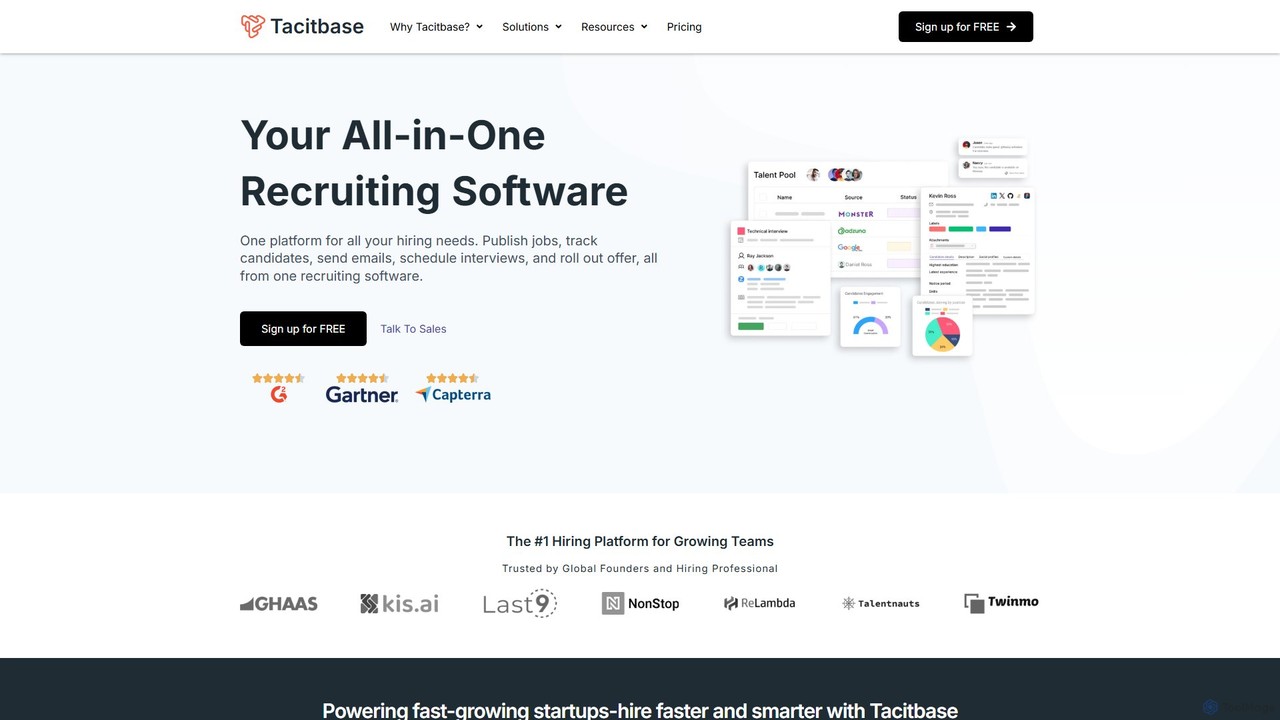
Tacitbase is an all-in-one, AI-powered recruiting software designed for growing teams. It streamlines the entire hiring process, from generating job descriptions and posting to multiple job boards, to AI-driven resume screening, collaborative interviews, and offer letter management. It helps companies hire faster, smarter, and more efficiently.

Applicant Tracking System
Visits 5.3KFavorites 128Likes 137
Recruit Page
Paid

Recruit Page

Recruit Page is an all-in-one, AI-powered recruiting platform designed to simplify and accelerate your hiring process. It enables you to create fully customizable career sites, automatically screen CVs with AI, and manage the entire applicant pipeline through an intuitive dashboard. Ideal for businesses of all sizes, it streamlines communication, provides data-driven insights, and helps you attract and hire top talent more efficiently.

Applicant Tracking System
Visits 5.2KFavorites 143Likes 143

About Applicant Tracking System

An Applicant Tracking System (ATS) is a software application that automates and manages the entire recruitment process, from job posting to hiring. Leveraging AI, these systems parse resumes, match candidates to job requirements, and streamline communication workflows. This enables HR teams and recruiters to handle high volumes of applications efficiently, identify top talent faster, and maintain a consistent, compliant hiring process. Modern AI-powered ATS tools often include features like predictive analytics for hiring success and automated interview scheduling to enhance the candidate experience.

Core Features

  • AI Resume Parsing: Automatically extracts and categorizes key information from resumes, such as skills, experience, and contact details.
  • Candidate Matching & Scoring: Uses algorithms to score and rank applicants based on their relevance to the job description, prioritizing the best fits.
  • Automated Communication: Sends personalized, automated emails for acknowledgements, updates, and rejections, improving candidate engagement.
  • Workflow Automation: Manages the entire hiring pipeline, moving candidates through stages like screening, interviewing, and offering.
  • Reporting & Analytics: Provides data-driven insights into key recruitment metrics like time-to-hire, cost-per-hire, and source effectiveness.

Use Cases

Applicant Tracking Systems are essential for companies of all sizes, particularly those with high-volume hiring needs, such as in the retail, hospitality, and tech industries. HR departments use them to centralize their talent pool, ensure compliance with hiring regulations, and collaborate effectively on candidate evaluation. Recruiting agencies also rely on ATS to manage multiple clients and candidate pipelines simultaneously.

How to Choose

When selecting an Applicant Tracking System, consider its integration capabilities with job boards and existing HR software (like HRIS). Evaluate the sophistication of its AI-powered parsing and matching features. Assess its scalability to grow with your company's hiring needs and ensure it provides robust reporting tools to measure recruitment performance. Finally, consider the user interface for both recruiters and candidates to ensure a positive experience.

Applicant Tracking System use cases

1

Streamlining High-Volume Retail Hiring

A recruitment manager for a national retail chain needs to fill hundreds of positions across various locations quickly. By using an AI-powered Applicant Tracking System, they can post a single job opening to multiple job boards simultaneously. The ATS then automatically screens and ranks thousands of incoming resumes based on predefined criteria like availability and customer service experience. This reduces manual screening time by over 80%, allowing the manager to focus on interviewing the most qualified candidates and accelerating the time-to-hire.

2

Sourcing Specialized Tech Talent

A tech recruiter is searching for a software engineer with a rare combination of skills in machine learning and blockchain. Instead of manually searching job boards, the recruiter uses the ATS to scan their existing talent pool of past applicants. The AI-powered search function identifies several qualified candidates who were previously overlooked. The system then automates outreach emails to re-engage these candidates, saving the recruiter hours of sourcing time and helping fill a difficult role with a high-quality internal candidate.

3

Ensuring a Fair and Compliant Hiring Process

An HR department in a large corporation must adhere to strict equal opportunity employment (EEO) regulations. Their ATS is configured to anonymize resumes by removing names, photos, and other identifying information during the initial screening phase. This helps mitigate unconscious bias among hiring managers. The system also automatically tracks all candidate interactions and hiring decisions, creating a detailed audit trail. This ensures the company can easily demonstrate compliance during regulatory reviews and fosters a more equitable hiring environment.

4

Improving Candidate Communication and Experience

A startup wants to build a strong employer brand by providing an excellent candidate experience. They use their ATS to set up automated email workflows. Every applicant instantly receives a confirmation email. Candidates who move to the next stage get automated updates and interview scheduling links. Those who are not selected receive a polite, personalized rejection email. This consistent communication prevents candidates from feeling ignored, improves the company's reputation, and encourages even unsuccessful applicants to reapply in the future.

5

Collaborative Hiring Team Decision-Making

A hiring manager, a department head, and an HR specialist are all involved in hiring a new marketing director. They use the ATS as a central hub for collaboration. Each team member can view candidate profiles, watch recorded video interviews, and leave private feedback and ratings within the system. The ATS compiles this feedback, providing a consolidated view of each candidate. This eliminates messy email chains and spreadsheets, ensures all stakeholders' opinions are considered, and leads to more informed and data-driven hiring decisions.

6

Analyzing Recruitment Funnel Effectiveness

An HR analyst wants to optimize the company's recruitment spending. Using the ATS analytics dashboard, they can track the performance of different sourcing channels. The data reveals that while a premium job board generates many applications, a niche industry blog yields candidates who are more likely to be hired. Based on this insight, the analyst reallocates the budget towards more effective channels, improving the overall quality of applicants and reducing the cost-per-hire without increasing the total recruitment budget.

Applicant Tracking System FAQ

What is an Applicant Tracking System (ATS)?

An Applicant Tracking System (ATS) is a software solution that helps businesses manage their recruitment process from start to finish. Its primary function is to serve as a centralized database for all job applications and candidate information. AI-powered ATS tools automate repetitive tasks like screening resumes, scheduling interviews, and communicating with candidates, allowing recruiters to focus on more strategic activities like engaging with top talent.

How do I choose the right Applicant Tracking System?

Choosing the right ATS depends on your specific needs. Consider the following factors:

  • Company Size: Small businesses might need a simple, affordable solution, while large enterprises require a scalable system with advanced features like compliance management.
  • Integration: Ensure the ATS integrates smoothly with your existing tools, such as job boards, HRIS, and calendar applications.
  • Key Features: Identify your must-have features. Do you need advanced AI for resume scoring, video interviewing capabilities, or robust analytics?
  • User Experience: The system should be intuitive for your recruiting team and provide a simple, positive application experience for candidates.
What's the difference between an ATS and an HRIS?

An Applicant Tracking System (ATS) and a Human Resource Information System (HRIS) serve different primary purposes within HR. An ATS is a specialized tool focused on the pre-hire lifecycle: sourcing, attracting, screening, and tracking candidates. In contrast, an HRIS is a broader system that manages employee data from the moment they are hired, covering areas like payroll, benefits, time off, and performance management. While some HRIS platforms include a basic ATS module, a dedicated ATS typically offers more advanced and robust features specifically for talent acquisition.

Can an ATS help reduce bias in hiring?

Yes, an Applicant Tracking System can be a powerful tool for reducing hiring bias. Many modern systems offer features like blind screening, which anonymizes resumes by removing names, photos, and other demographic indicators that could trigger unconscious bias. By using AI to score candidates based on objective criteria like skills and experience, an ATS helps ensure that all applicants are evaluated fairly. This promotes a more diverse and equitable hiring process.

Who typically uses an Applicant Tracking System?

Applicant Tracking Systems are used by a wide range of professionals involved in talent acquisition. This includes:

  • Corporate Recruiters & HR Departments: To manage their company's entire hiring pipeline, from posting jobs to making offers.
  • Recruiting Agencies: To manage candidates and job orders for multiple clients in a centralized system.
  • Hiring Managers: To review shortlisted candidates, provide feedback, and collaborate with the recruitment team.
  • Small Business Owners: To organize and streamline their hiring process as their company grows.