Human Resources Best in category 1 results Attendance Tracking AI Tool

Popular AI tools in the Attendance Tracking field of Human Resources include 360facevision, etc., helping you quickly improve efficiency.

360facevision

360facevision

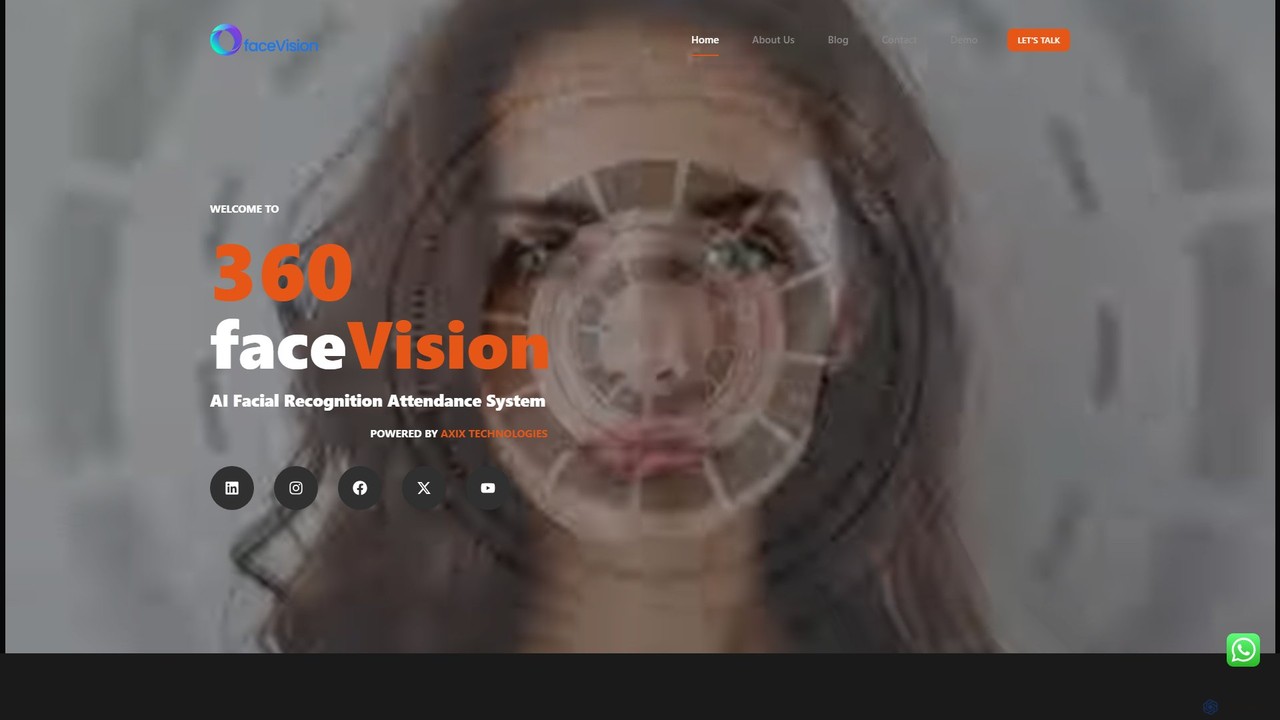
360facevision is an advanced AI-powered facial recognition system designed for comprehensive attendance tracking, access control, and HR management. …

2.8K

About Attendance Tracking

AI Attendance Tracking tools are a class of software that automates the monitoring and management of employee work hours, presence, and leave. These systems leverage technologies like facial recognition, geofencing, and machine learning algorithms to ensure accuracy and prevent time theft. They streamline payroll processes, enhance workforce management, and provide data-driven insights into attendance patterns. As a key component of modern Human Resources systems, they replace manual timesheets and traditional punch-card methods with greater efficiency and reliability.

Core Features

  • Biometric & GPS Clock-in: Utilizes facial recognition, fingerprints, or geofencing for secure and accurate time stamping.
  • Real-time Monitoring Dashboard: Provides a live overview of who is present, absent, on break, or working remotely.
  • Automated Leave Management: Allows employees to request time off and managers to approve it directly within the system.
  • Payroll Integration: Automatically calculates work hours, overtime, and deductions for seamless export to payroll software.
  • Anomaly Detection: AI algorithms identify and flag unusual patterns, such as frequent tardiness or potential buddy punching.

Applicable Scenarios

These tools are widely used across industries like manufacturing, retail, construction, and healthcare, where tracking hourly workers is critical. They are essential for HR managers, payroll administrators, and team leads responsible for managing hybrid/remote teams, ensuring compliance with labor laws, and optimizing staff scheduling. For instance, a retail chain can use it to manage complex shift schedules, while a tech company can monitor its hybrid workforce seamlessly.

Selection Criteria

When choosing an AI Attendance Tracking tool, consider its integration capabilities with your existing HRIS and payroll systems. Evaluate the supported tracking methods (e.g., mobile app, biometric terminal, web browser) to ensure they fit your work environment. Assess the tool's scalability to accommodate company growth and its compliance with local labor laws and data privacy regulations like GDPR.

Attendance TrackingUse Cases

1

Managing a Hybrid Workforce

An operations manager at a tech company needs to track the attendance of both in-office and remote employees accurately. Using an AI attendance tracking tool, they implement geofencing for the office, automatically clocking employees in and out as they enter or leave the premises. Remote employees use a mobile app or web portal to log their hours. The system provides a unified dashboard showing real-time status for the entire team, simplifying payroll and ensuring all hours are accounted for, regardless of location.

2

Preventing Time Theft in Retail

A retail store manager faces challenges with 'buddy punching,' where one employee clocks in for another. By installing a biometric terminal that uses facial recognition, the store ensures that employees must be physically present to clock in or out. The AI system instantly verifies the identity of each employee, eliminating time theft. This leads to more accurate payroll, reduced labor costs, and fairer timekeeping for all staff members.

3

Ensuring Compliance on Construction Sites

A project manager for a construction company must comply with strict labor laws regarding work hours and breaks. They use a mobile-first AI attendance app that allows workers to clock in and out from their smartphones within a designated geofenced area. The system automatically flags overtime and enforces mandatory break periods, generating detailed reports for compliance audits. This not only ensures legal adherence but also provides accurate data for project labor costing.

4

Automating Leave Management for HR

An HR administrator spends hours each week manually tracking employee leave requests from emails and spreadsheets. By implementing an AI attendance system with an integrated leave management module, employees can now submit requests via a self-service portal. The system automatically checks for scheduling conflicts and leave balance. Managers receive notifications to approve or deny requests, and once approved, the employee's attendance calendar is updated instantly, saving the HR department significant administrative time.

5

Optimizing Staffing in a Hospital

A hospital scheduling coordinator needs to ensure adequate nurse staffing for every shift to maintain patient care standards. They use an AI attendance system that provides a real-time dashboard of all on-duty staff. The system's predictive analytics feature analyzes historical attendance data to forecast potential understaffing on upcoming shifts. This allows the coordinator to proactively arrange for cover, ensuring optimal staffing levels and preventing service disruptions.

6

Streamlining Payroll for a Manufacturing Plant

A payroll administrator at a manufacturing plant with hundreds of hourly workers struggles with complex calculations for overtime and shift differentials. The AI attendance tracking system integrates directly with their payroll software. It automatically captures exact clock-in/out times, calculates regular hours, overtime, and applies correct pay rates for different shifts. At the end of the pay period, the administrator simply generates a report and exports it, reducing payroll processing time from days to hours and minimizing costly errors.

Attendance TrackingFrequently Asked Questions