Lifestyle Best in category 1 results Relaxation AI Tool

Popular AI tools in the Relaxation field of Lifestyle include Chillify, etc., helping you quickly improve efficiency.

Chillify

Chillify

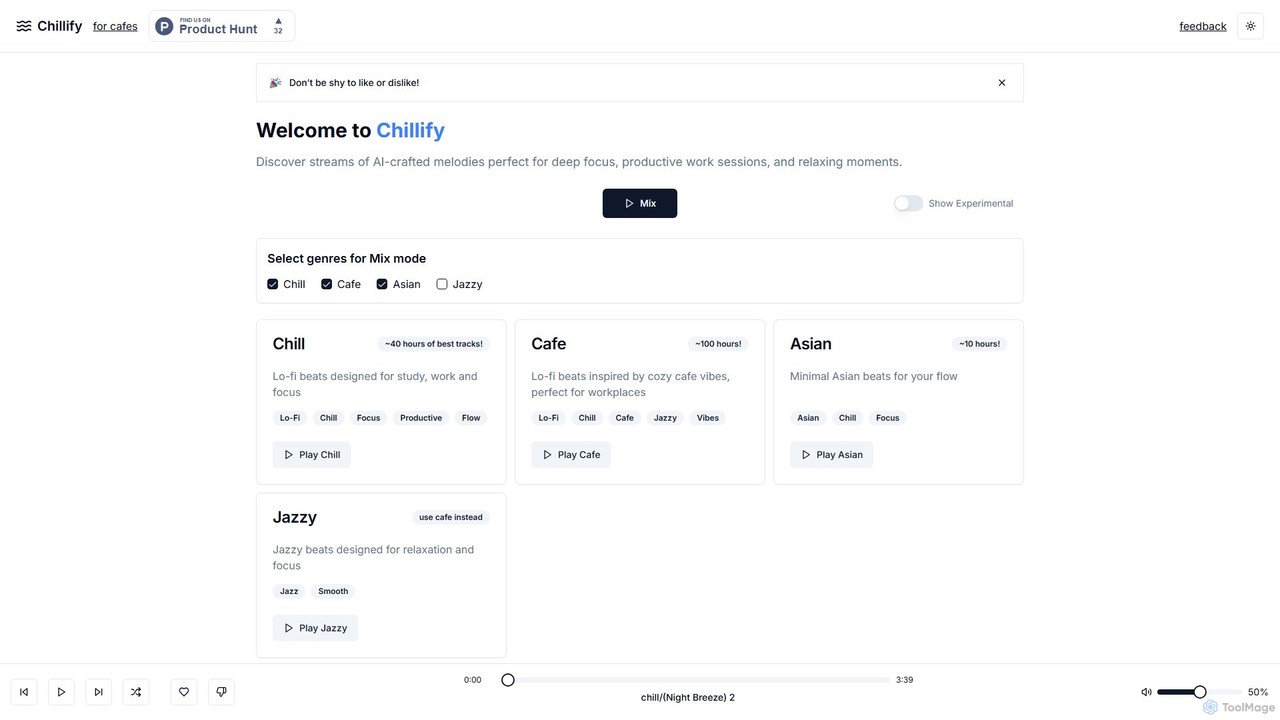
Chillify is an AI-powered music generator that creates endless streams of lo-fi beats. It's designed to enhance focus, …

3.8K

About Relaxation

AI Relaxation tools are applications that leverage artificial intelligence to create personalized experiences for stress reduction, mindfulness, and improved sleep. These tools often use generative AI to produce adaptive soundscapes or guided meditations tailored to a user's real-time biometric data or stated mood. Their primary value lies in providing accessible, on-demand support for mental well-being, helping users manage anxiety and cultivate a state of calm. Unlike static content libraries, these AI-driven platforms can dynamically adjust their content for a more effective and engaging relaxation session.

Core Features

  • Personalized Soundscapes: AI generates calming audio environments, such as rain or ambient music, that adapt to user preferences or physiological signals.
  • Adaptive Guided Meditations: Narration, pacing, and focus of meditation sessions are adjusted by AI based on user feedback, progress, or stress levels.
  • Biofeedback Integration: Utilizes data from wearables (like smartwatches) to analyze stress indicators such as heart rate variability (HRV) and suggests targeted relaxation exercises.
  • Intelligent Mood Tracking: Analyzes journal entries or mood inputs using natural language processing to identify emotional patterns and recommend relevant content.

Use Cases

These tools are widely used by individuals seeking to manage daily stress, anxiety, or sleep difficulties. In corporate wellness programs, they provide employees with accessible mental health resources. They are also valuable for students needing to improve focus or anyone looking to establish a consistent mindfulness practice with personalized guidance.

How to Choose

When selecting an AI Relaxation tool, consider its primary focus—whether it's sleep, meditation, or anxiety relief. Evaluate the level of personalization and whether it supports biofeedback from your devices. Also, examine the variety of techniques offered (e.g., CBT, breathing exercises, sound therapy) and the subscription model to ensure it aligns with your needs and budget.

RelaxationUse Cases

1

Improving Sleep Quality with Adaptive Soundscapes

A professional experiencing inconsistent sleep uses an AI relaxation app nightly. By connecting to their smartwatch, the app analyzes sleep stages in real-time. The AI generates a dynamic soundscape—shifting from gentle rain during deep sleep to soft ambient tones during lighter sleep phases. This adaptive audio helps mask disruptive noises and guides the user's brain into more stable sleep cycles, resulting in waking up feeling more refreshed and a measurable improvement in sleep quality scores over weeks.

2

Managing Workday Stress with Biofeedback

An office worker uses an AI relaxation tool integrated with their company's wellness platform. During a stressful afternoon, their wearable device detects a sustained high heart rate. The AI tool proactively sends a notification suggesting a 5-minute guided breathing exercise. The app provides real-time visual feedback on their breathing pace, helping them sync with the guide. After the session, they can see a chart showing their heart rate variability (HRV) improving, providing tangible proof of stress reduction and helping them return to work with a clearer mind.

3

Personalized Mindfulness Practice for Beginners

A student new to meditation finds it difficult to stay focused. They use an AI relaxation app that offers an adaptive learning path. Initially, the AI suggests short, 3-minute guided sessions focusing on simple breath awareness. Based on post-session feedback where the student notes a wandering mind, the AI adjusts the next session to include more frequent gentle reminders to return to the breath. This personalization helps the student build their focus gradually, making the practice feel achievable and encouraging them to establish a consistent daily habit.

4

Creating a Generative Focus Environment for Deep Work

A software developer needs to eliminate distractions for a deep work session. Instead of using a static playlist, they use an AI relaxation tool to generate a continuous, non-repeating ambient soundscape. The user sets parameters like 'rainy day' and 'low complexity'. The AI then composes an endless stream of audio that is calming but not distracting, helping the developer enter a state of flow. The sound never loops, which prevents the brain from latching onto patterns, thus maintaining a high level of concentration for several hours.

5

Emotional Regulation through AI-Suggested Interventions

A user feeling overwhelmed logs their feelings in an AI relaxation app's journal, writing, 'I'm so stressed about the upcoming deadline.' Using Natural Language Processing (NLP), the AI identifies keywords like 'stressed' and 'deadline'. Instead of offering a generic meditation, it suggests a targeted 10-minute session on 'Managing Performance Anxiety'. This specific, context-aware recommendation is more effective because it directly addresses the user's stated problem, helping them reframe their thoughts and calm their immediate anxiety more efficiently.

6

Preparing for a High-Pressure Event with Guided Visualization

An athlete uses an AI relaxation tool to prepare for a major competition. The day before the event, they select a 'Pre-Competition Focus' module. The AI generates a guided visualization session with a calming voiceover and ambient sounds of a cheering crowd. The narration is dynamically paced to match the user's breathing rate, detected via their phone's microphone. This immersive, personalized experience helps the athlete mentally rehearse success, reduce pre-game jitters, and enter the competition with a calm, focused mindset.

RelaxationFrequently Asked Questions