
AIGiftIdeas
AIGiftIdeas is an AI-powered tool that revolutionizes gift finding by providing hyper-personalized recommendations in seconds. Its AI Muse …
AIGiftIdeas is an AI-powered tool that revolutionizes gift finding by providing hyper-personalized recommendations in seconds. Its AI Muse engages in deep conversation to understand your gifting needs, generating unique ideas and mood boards. It aims to eliminate gift-giving stress with thoughtful, spot-on suggestions for any occasion, combining AI creativity with human expert realization.

Hakko
Hakko is an advanced AI game companion leveraging Visual Language Models (VLMs) to provide real-time voice guidance, emotional …
Hakko is an advanced AI game companion leveraging Visual Language Models (VLMs) to provide real-time voice guidance, emotional companionship, and intelligent assistance across various games. It enhances your gaming experience with scene recognition, knowledge search, and personalized interactions, extending its support to daily life scenarios for a truly integrated AI partnership.
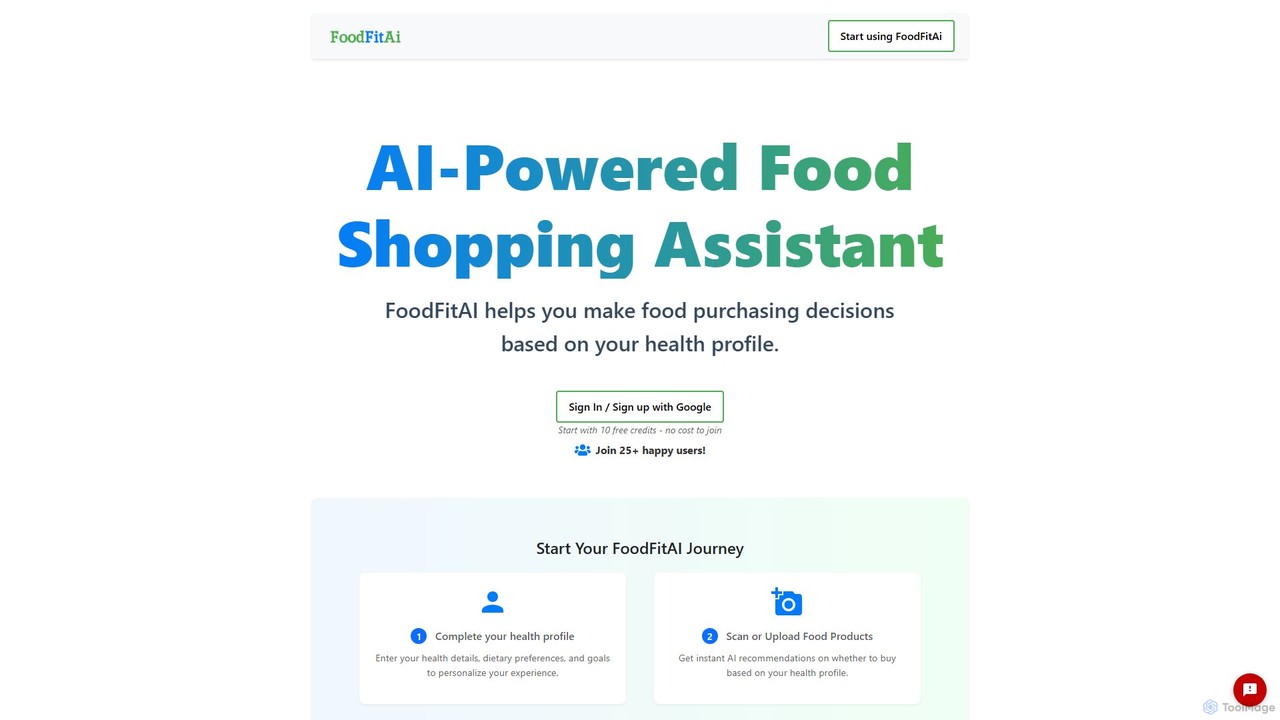
FoodFitAi
FoodFitAi is an AI-powered food shopping assistant that provides personalized recommendations based on your unique health profile. Simply …
FoodFitAi is an AI-powered food shopping assistant that provides personalized recommendations based on your unique health profile. Simply scan a food product or search its database to get instant advice on whether it aligns with your dietary goals, preferences, and restrictions, making healthy eating simple and informed.

Luxi
Luxi is an AI-powered fashion assistant designed to revolutionize your shopping experience. It offers personalized style recommendations, virtual …
Luxi is an AI-powered fashion assistant designed to revolutionize your shopping experience. It offers personalized style recommendations, virtual try-ons, and trend analysis. By leveraging advanced AI, Luxi helps you discover outfits that match your style, body type, and budget, while also promoting sustainable fashion choices. It's your personal stylist, helping you find and visualize the perfect look with ease.
Coora AI - Discovery Shopping
Coora AI is an intelligent shopping assistant that simplifies product discovery and comparison. It uses AI to help …
Coora AI is an intelligent shopping assistant that simplifies product discovery and comparison. It uses AI to help you find and compare a vast range of products, from electronics to vehicles, by sorting them into high-end, mid-tier, and low-cost categories, ensuring you make informed purchasing decisions effortlessly.
About Shopping Assistant
Shopping Assistant tools are AI-powered applications designed to streamline and personalize the online purchasing experience. They leverage machine learning algorithms to analyze user behavior, product data, and market trends, offering tailored recommendations and price comparisons. These assistants act as intelligent guides, helping users discover products, find the best deals, and make informed decisions with greater efficiency. Their primary value lies in automating the tedious aspects of shopping, such as tracking prices and searching for coupons.
Core Features
- Personalized Recommendations: Analyzes browsing history and preferences to suggest products that match a user's style and needs.
- Price Comparison & Tracking: Scans multiple online retailers to find the best price for an item and sends alerts when prices drop.
- Automated Coupon Application: Automatically finds and applies the best available discount codes and coupons at checkout.
- Review Summarization: Aggregates and condenses customer reviews to provide a quick overview of a product's pros and cons.
- Visual and Semantic Search: Allows users to search for products using images or descriptive natural language queries beyond simple keywords.
Use Cases
AI Shopping Assistants are widely used by individual consumers looking to save time and money. They are particularly valuable for frequent online shoppers, deal hunters, and anyone undertaking significant purchases like electronics or travel. E-commerce businesses also utilize this technology on their platforms to enhance user experience and guide customers through their product catalogs, increasing conversion rates.
How to Choose
When selecting a Shopping Assistant, consider its platform compatibility (browser extension, mobile app), the breadth of its retailer network, and its primary focus—some excel at price tracking while others specialize in fashion discovery. Also, review its data privacy policy to understand how your shopping data is handled. Finally, evaluate the user interface for ease of use and non-intrusive integration into your browsing experience.
Shopping AssistantUse Cases
Automated Deal Hunting for Electronics
A tech enthusiast plans to buy a new high-end graphics card. Instead of manually checking multiple websites daily, they use an AI Shopping Assistant. They set a target price and add the specific model to a watchlist. The assistant continuously scans dozens of online retailers and marketplaces. Within two weeks, it detects a 24-hour flash sale on a major retail site and immediately sends a notification. At checkout, the assistant's browser extension automatically applies an additional 5% discount coupon, resulting in a total saving of 20% off the original price, far exceeding the user's initial target.
Discovering a Personal Fashion Style
A user wants to refresh their wardrobe but is unsure of their personal style. They use a fashion-focused AI Shopping Assistant. By providing access to their social media style boards and answering a few questions about their preferences (colors, occasions, brands), the AI builds a style profile. The assistant then curates personalized daily outfits and suggests individual clothing items from various stores that fit this new profile. The user can browse these suggestions, discover new brands, and purchase items directly, effectively building a cohesive and personalized wardrobe over time without extensive research.
Finding the Perfect Gift with Vague Ideas
Someone needs to buy a birthday gift for a colleague. They only know the colleague enjoys 'gardening and reading'. They input these interests into an AI Shopping Assistant along with a budget. The AI interprets these broad categories and provides a curated list of potential gifts, such as a 'smart indoor garden kit', a 'subscription box for book lovers', or 'high-quality ergonomic gardening tools'. Each suggestion includes a summary of reviews and price comparisons. This transforms a vague idea into a concrete, well-researched list of options, saving the user hours of brainstorming and browsing.
Aggregating Reviews for a Major Purchase
A family is looking to buy a new refrigerator, a significant investment. They are overwhelmed by the hundreds of models and thousands of reviews online. Using an AI Shopping Assistant, they filter for refrigerators with specific features (e.g., French doors, ice maker). The assistant then aggregates reviews for the top 5 models, summarizing the most frequently mentioned pros (e.g., 'quiet operation', 'spacious interior') and cons (e.g., 'ice maker prone to jamming', 'fingerprints show easily'). This condensed analysis allows the family to quickly compare real-world user experiences and make a confident decision in under an hour, avoiding potential buyer's remorse.
Planning and Booking Travel on a Budget
A student is planning a multi-city trip across Europe with a strict budget. They use an AI Shopping Assistant that specializes in travel. They input their desired cities, travel dates, and maximum budget. The AI assistant scans hundreds of airlines and hotel booking sites simultaneously. It identifies the most cost-effective travel sequence, suggests budget-friendly accommodations with good reviews, and sets up price alerts for all flight segments. When a flight price drops, the user gets an instant alert and books it, securing the entire trip for 30% less than if they had booked manually through conventional sites.
Comparing Grocery Prices Across Multiple Stores
A household manager aims to reduce their monthly grocery bill. They use an AI Shopping Assistant app to create a weekly shopping list. Before heading out, they input the list into the app. The assistant compares the real-time prices of each item across several local supermarkets and online grocery services. It generates a comparative report showing which store offers the lowest total cost for the entire list. It also highlights specific items that are significantly cheaper at one store versus another, allowing the user to either visit one optimal store or split their shopping for maximum savings, consistently cutting their grocery expenses by 15-20%.