
ToolMage
Sign in

Best 1 Social Skills AI tools for Lifestyle

Popular Social Skills AI tools in Lifestyle include HarpidonAI, helping you work more efficiently.

HarpidonAI

HarpidonAI

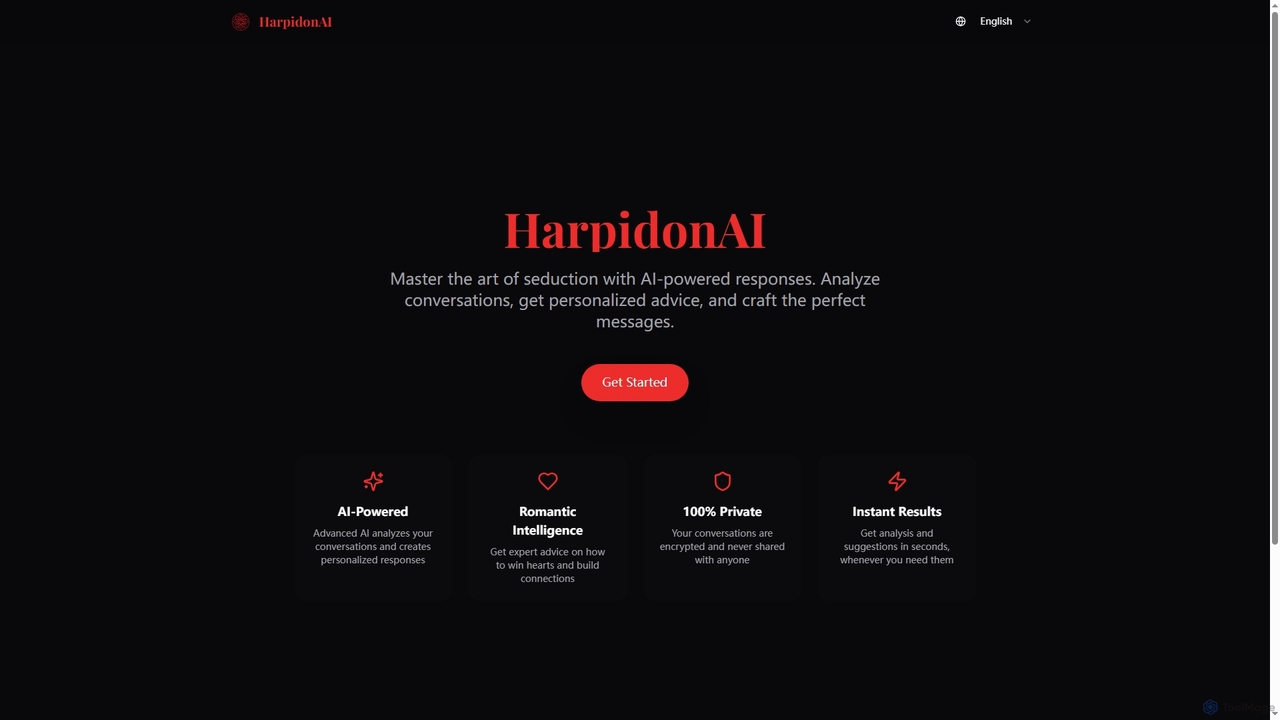
HarpidonAI is an advanced AI-powered tool designed to help users master the art of seduction and improve romantic communication. It analyzes conversations, provides personalized advice, and crafts perfect messages to build stronger connections.

Relationship Coaching
Visits 5.9KFavorites 150Likes 141

About Social Skills

Social Skills AI tools are designed to enhance human interaction and communication abilities through artificial intelligence. These platforms leverage advanced natural language processing and behavioral analytics to provide personalized feedback and training. They help users improve areas like public speaking, empathy, negotiation, and networking, ultimately fostering more effective and confident social engagement within the broader lifestyle context.

Core Features

  • Personalized Feedback: AI analyzes communication patterns and provides tailored suggestions for improvement in areas like clarity, tone, and body language.
  • Role-Playing Simulations: Offers interactive scenarios to practice conversations, interviews, or difficult discussions in a safe, private environment.
  • Emotion Recognition: Tools that help users understand and respond appropriately to emotional cues, both in themselves and others, enhancing empathy.
  • Speech Analysis: Evaluates vocal delivery, including tone, pace, clarity, and the presence of filler words, for better verbal communication.
  • Conversation Prompts: Generates ideas and frameworks for initiating and maintaining engaging dialogues, useful for networking or social gatherings.

Use Cases

Individuals preparing for high-stakes job interviews or critical presentations can refine their delivery. Professionals aiming to improve client communication, team leadership, or negotiation skills benefit from targeted practice. Anyone looking to enhance daily social interactions, build confidence, or develop specific interpersonal abilities will find these tools valuable.

How to Choose

Consider the specific skill focus: does it target public speaking, empathy, negotiation, or general conversation? Evaluate the quality and actionability of the AI feedback. Look for realistic interactive elements and simulation capabilities. Finally, assess the platform's privacy policy and data security measures, especially concerning personal communication data.

Social Skills use cases

1

Preparing for a High-Stakes Job Interview

An individual uses an AI social skills coach to simulate interview scenarios, receiving real-time feedback on their answers, body language, and vocal delivery. This helps them refine their responses, manage anxiety, and project confidence, significantly increasing their chances of success in a competitive job market.

2

Improving Public Speaking Confidence

A professional utilizes AI tools to practice presentations, getting detailed analysis on their speech clarity, pacing, use of filler words, and audience engagement. The AI identifies areas for improvement, suggests vocal exercises, and helps structure compelling narratives, transforming nervous speakers into confident presenters for various events.

3

Enhancing Cross-Cultural Communication

An international business professional employs AI to learn nuances of communication in different cultures. The tool provides insights into appropriate greetings, negotiation styles, and non-verbal cues, preventing misunderstandings and fostering stronger global relationships, crucial for expanding international business operations and cultural understanding.

4

Developing Empathy and Active Listening

A team leader uses AI-powered simulations to practice empathetic responses and active listening techniques. The tool presents various emotional scenarios and evaluates their ability to acknowledge feelings, ask clarifying questions, and summarize effectively, building stronger team cohesion and trust within the workplace environment.

5

Mastering Networking and Small Talk

An entrepreneur leverages AI to generate conversation starters and practice engaging in small talk for networking events. The AI offers feedback on maintaining flow, asking open-ended questions, and making memorable connections, helping them expand their professional network effectively and confidently in various social settings.

6

Practicing Difficult Conversations

An individual prepares for a sensitive discussion with a friend or colleague using an AI role-playing tool. The AI simulates the other person's potential reactions based on pre-set parameters, allowing the user to practice different approaches and responses in a safe environment, leading to more constructive outcomes in real-life interactions.

Social Skills FAQ

What are AI Social Skills tools?

AI Social Skills tools are applications that use artificial intelligence to help individuals develop and improve their interpersonal communication and interaction abilities. They typically provide personalized feedback, simulate social scenarios, analyze communication patterns, and offer targeted training. Common use cases include public speaking, interview preparation, empathy training, and general confidence building in social settings.

How do AI Social Skills tools work?

These tools typically employ natural language processing (NLP) to understand speech and text, computer vision for analyzing body language and facial expressions, and machine learning algorithms to provide personalized feedback. Users interact with the AI through voice, text, or video, and the AI processes this input to identify strengths and weaknesses, offering actionable advice for improvement in social interactions.

Who can benefit from using AI Social Skills tools?

A wide range of individuals can benefit, including students preparing for academic presentations, job seekers practicing interviews, and professionals aiming to enhance leadership or client relations. Anyone looking to boost their confidence in daily social interactions, improve specific interpersonal skills, or seeking structured, private practice will find these tools particularly useful for personal growth.

What specific social skills can these AI tools help improve?

These tools can target a variety of skills such as public speaking, active listening, negotiation, empathy, conflict resolution, networking, interview techniques, and even basic conversational fluency. Many tools allow users to focus on specific areas based on their personal development goals, offering tailored exercises and feedback for each skill set.

Are AI Social Skills tools effective compared to human coaching?

While human coaching offers nuanced, real-time emotional intelligence and adaptability, AI tools provide scalable, consistent, and private practice opportunities. AI can offer objective data-driven feedback on measurable aspects like speech patterns and body language. They are often a cost-effective and accessible complement to human coaching, especially for initial practice, self-assessment, and repetitive skill refinement.

How to choose the right AI Social Skills tool?

When selecting an AI Social Skills tool, consider its specific skill focus (e.g., public speaking, empathy, negotiation) to match your needs. Evaluate the quality and actionability of the AI feedback, ensuring it provides clear, practical advice. Look for realistic interactive elements and simulation capabilities, and finally, assess the platform's privacy policy and data security measures, especially concerning personal communication data, to ensure your information is protected.