
ToolMage
Sign in

Best 1 Relationship Coaching AI tools for Communication

Popular Relationship Coaching AI tools in Communication include HarpidonAI, helping you work more efficiently.

HarpidonAI

HarpidonAI

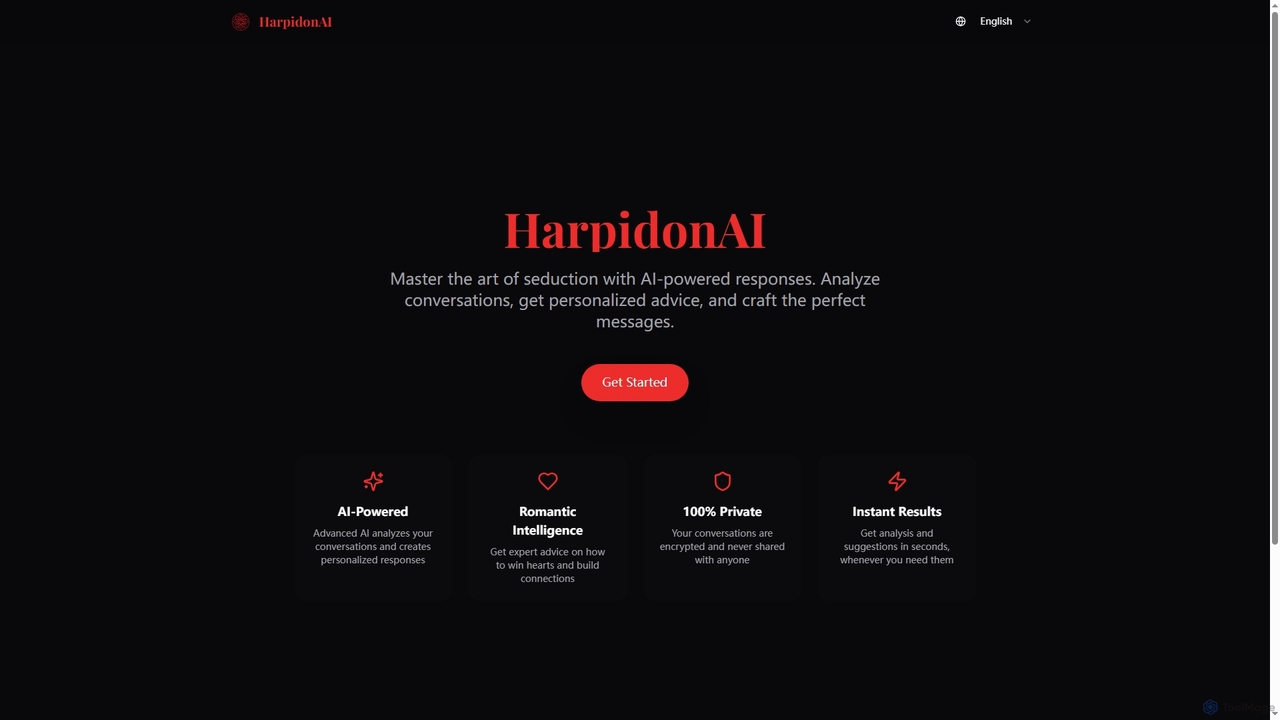
HarpidonAI is an advanced AI-powered tool designed to help users master the art of seduction and improve romantic communication. It analyzes conversations, provides personalized advice, and crafts perfect messages to build stronger connections.

Relationship Coaching
Visits 4.7KFavorites 138Likes 133

About Relationship Coaching

Relationship Coaching tools are AI-powered platforms designed to help individuals and couples improve their interpersonal dynamics and communication skills. These tools leverage advanced natural language processing and behavioral psychology models to offer personalized guidance, conflict resolution strategies, and emotional intelligence development. Falling under the broader category of communication tools, they aim to foster healthier, more fulfilling relationships by providing actionable insights and structured exercises.

Core Features

  • Personalized Relationship Insights: Analyzes user input to provide tailored advice on communication patterns, attachment styles, and conflict triggers.
  • Communication Skill Development: Offers interactive exercises and role-playing scenarios to practice active listening, empathy, and constructive expression.
  • Conflict Resolution Guidance: Provides step-by-step frameworks and prompts to navigate disagreements effectively and find common ground.
  • Emotional Intelligence Enhancement: Includes modules and assessments to help users understand and manage their own emotions and those of others.
  • Relationship Health Tracking: Allows users to set goals, track progress, and monitor the overall well-being of their relationships over time.

Use Cases

Individuals seeking self-improvement in their romantic or familial relationships often use these tools to gain self-awareness and develop healthier interaction habits. Couples can utilize them for guided conversations, conflict mediation, and strengthening their bond. Professionals might also find value in applying these principles to improve team dynamics and client interactions.

How to Choose

When selecting an AI relationship coaching tool, consider its focus (individual vs. couples, specific relationship types), the depth of its psychological models, and its approach to privacy and data security. Evaluate the personalization level of its advice, the interactivity of its exercises, and whether it offers progress tracking and goal setting features that align with your needs.

Relationship Coaching use cases

1

Improving Couple Communication Patterns

Couples can use AI relationship coaching tools to identify and address recurring communication breakdowns. By inputting details about recent disagreements or daily interactions, the AI analyzes conversational dynamics, suggests alternative phrasing, and provides exercises to practice active listening and empathetic responses. This helps partners understand each other better, reduce misunderstandings, and build a more constructive dialogue, leading to stronger emotional bonds.

2

Developing Personal Emotional Intelligence

Individuals can leverage AI relationship coaching tools to enhance their emotional intelligence, which is crucial for all relationships. The AI provides self-assessment quizzes, guided journaling prompts, and feedback on emotional responses based on user input. This helps users recognize their own emotional triggers, understand the impact of their reactions on others, and develop healthier coping mechanisms, fostering greater self-awareness and empathy.

3

Preparing for Difficult Conversations

Before engaging in sensitive discussions, individuals can use AI relationship coaching tools to rehearse and strategize. Users can input the context of the conversation, their concerns, and desired outcomes. The AI can then simulate potential responses from the other party, suggest effective opening lines, and provide feedback on tone and word choice. This preparation helps reduce anxiety, ensures clarity of message, and increases the likelihood of a positive resolution.

4

Understanding Attachment Styles and Their Impact

Individuals can use AI relationship coaching to explore their attachment styles (e.g., secure, anxious, avoidant) and understand how these patterns influence their relationships. By completing assessments and reflecting on past experiences, the AI provides insights into the origins of these styles and offers tailored strategies for developing more secure attachment behaviors. This self-discovery process empowers users to break negative cycles and build healthier connections.

5

Setting and Achieving Relationship Goals

Whether it's spending more quality time together, improving intimacy, or resolving a specific long-standing issue, AI relationship coaching tools can help users define clear, achievable relationship goals. The AI assists in breaking down large goals into smaller, manageable steps, provides prompts for action, and tracks progress over time. This structured approach keeps users accountable and motivated, fostering consistent effort towards desired relationship improvements.

6

Navigating Family Dynamics and Parenting Challenges

Parents and family members can utilize AI relationship coaching to gain insights into complex family dynamics and address parenting challenges. The AI can offer strategies for effective communication with children, conflict resolution among siblings, or managing intergenerational differences. By providing objective perspectives and evidence-based advice, these tools help foster a more harmonious and supportive family environment, improving overall family well-being.

Relationship Coaching FAQ

What are AI Relationship Coaching tools?

AI Relationship Coaching tools are digital platforms that use artificial intelligence to provide personalized guidance and support for improving interpersonal relationships. They analyze communication patterns, emotional responses, and behavioral tendencies to offer insights, exercises, and strategies for individuals and couples. These tools aim to enhance communication skills, resolve conflicts, and foster stronger emotional connections, acting as a virtual guide for relationship development.

How do AI Relationship Coaching tools differ from traditional human coaching?

AI Relationship Coaching tools offer instant, on-demand access and often lower costs compared to traditional human coaching. They provide data-driven insights based on algorithms, ensuring consistency and anonymity. While human coaches offer nuanced empathy, personalized interaction, and the ability to adapt to complex emotional situations in real-time, AI tools excel in providing structured exercises, objective analysis, and scalability. AI can complement human coaching by offering continuous support and practice between sessions.

Who can benefit most from AI Relationship Coaching tools?

Individuals and couples seeking to proactively improve their communication, resolve minor conflicts, or enhance emotional intelligence can benefit greatly. These tools are particularly useful for those who prefer privacy, flexible scheduling, or a more structured, data-driven approach to self-improvement. They can also serve as a valuable resource for people who are new to relationship coaching or want to supplement existing therapy or counseling with practical exercises and insights.

What are the key features to look for in an AI Relationship Coaching tool?

When choosing an AI relationship coaching tool, prioritize features like personalized insights based on your input, interactive communication exercises (e.g., role-playing), and guided conflict resolution frameworks. Look for tools that offer emotional intelligence development modules, progress tracking for relationship goals, and robust data privacy measures. The ability to customize advice for individual or couple-specific needs is also a significant advantage.

Can AI Relationship Coaching tools replace professional therapy or counseling?

AI Relationship Coaching tools are designed to complement, not replace, professional therapy or counseling. They are excellent for self-improvement, skill development, and addressing common relationship challenges. However, for deep-seated psychological issues, severe relationship distress, trauma, or mental health conditions, professional human therapists offer the nuanced support, clinical expertise, and ethical framework necessary for effective treatment. AI tools can be a valuable adjunct for ongoing practice and support.