ToolMage
Sign in

Best 1 Travel Assistant for Lifestyle

Popular Travel Assistant in Lifestyle include KAYAK, helping you work more efficiently.

KAYAK
Free

KAYAK

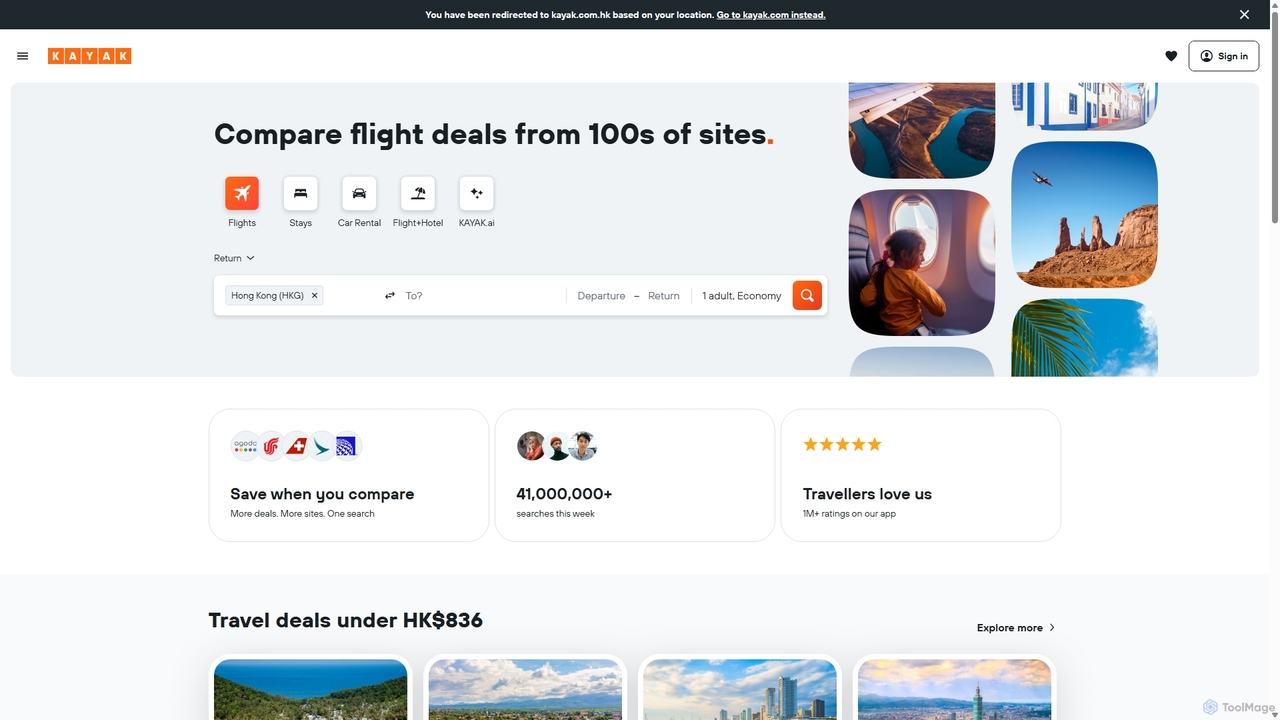
KAYAK is an AI-powered travel search engine that processes billions of queries to help users find the best deals on flights, hotels, and rental cars. It compares prices from hundreds of travel sites at once, offering tools like Price Alerts, itinerary management with Trips, and a new conversational AI feature, KAYAK.ai, to simplify travel planning and ensure confident booking decisions.

Travel Assistant
Visits 36.6MFavorites 125Likes 125

About Travel Assistant

AI Travel Assistants are specialized tools that use artificial intelligence to streamline and personalize the entire travel experience, from planning to booking and in-trip management. They leverage machine learning and natural language processing to understand user preferences, budget, and travel style. This enables them to generate custom itineraries, find optimal flight and accommodation deals, and provide real-time assistance. Unlike generic search platforms, these assistants act as a proactive, intelligent agent to simplify complex travel logistics.

Core Features

  • Personalized Itinerary Generation: Creates detailed, day-by-day travel plans based on your interests, pace, and budget.
  • Dynamic Deal Finding: Continuously scans multiple sources to find the best real-time prices for flights, hotels, and car rentals.
  • Real-time Trip Assistance: Provides live updates on flight delays, gate changes, traffic conditions, and local recommendations.
  • Automated Expense Tracking: Simplifies business or group travel by automatically categorizing expenses and generating reports.

Use Cases

AI Travel Assistants are valuable for frequent business travelers managing complex schedules, families planning detailed vacations, and solo adventurers seeking spontaneous, budget-friendly trips. They are also used by corporate travel managers to ensure policy compliance and optimize travel spending for entire teams.

How to Choose

When selecting an AI Travel Assistant, consider the scope of its services—does it cover flights, hotels, activities, or all-in-one? Evaluate the depth of its personalization and how well it learns your preferences over time. Also, assess its real-time alert capabilities and its integration with other apps like calendars and expense management software.

Travel Assistant use cases

1

Automated Itinerary for a Family Vacation

A busy parent planning a 10-day family trip to Italy needs an itinerary that caters to different interests: history for the adults and interactive activities for the children. Instead of spending hours on research, they input their destination, dates, traveler ages, interests (e.g., Roman history, pizza making), and budget into an AI Travel Assistant. The tool generates a balanced, day-by-day schedule with pre-booked museum tickets to skip lines, a family-friendly cooking class, and restaurant suggestions that appeal to all ages. This saves significant planning time and ensures a more enjoyable trip for everyone.

2

Optimizing Complex Business Travel Logistics

A consultant needs to visit three cities in five days, adhering to a strict corporate travel policy on flight class and hotel budget. Using an AI Travel Assistant, they input the destinations and meeting times from their calendar. The AI instantly calculates the most efficient travel sequence, finds policy-compliant flights that minimize layover time, and books hotels near each meeting location. It also tracks all expenses, automatically forwarding e-receipts to the company's expense system. This process reduces booking time from hours to minutes and eliminates the risk of non-compliant spending.

3

Real-time Assistance During Travel Disruptions

A traveler is at the airport when they receive a notification from their AI Travel Assistant that their connecting flight has been canceled due to weather. Before the airline makes a public announcement, the assistant has already found and presented three alternative flight options on different carriers, one of which will still get them to their destination on the same day. With two taps, the traveler books the new flight. The assistant then automatically updates their linked hotel reservation and ground transportation, preventing a cascade of logistical problems and minimizing travel stress.

4

Discovering Local Experiences Beyond Tourist Traps

A traveler visiting Tokyo wants to experience authentic local culture, not just the major tourist sites. They use their AI Travel Assistant's 'discovery' feature. Based on their previously expressed interest in craft coffee and independent bookstores, the AI suggests a walking tour through the Shimokitazawa neighborhood, known for its vintage shops and cafes. It provides a map, highlights specific highly-rated local spots, and even offers Japanese phrases for ordering coffee. This provides a curated, personalized experience that would be difficult to assemble quickly using generic travel guides.

5

Coordinating Group Trips and Splitting Expenses

A group of friends is planning a ski trip. Coordinating everyone's flight preferences and budget is challenging. They use a collaborative AI Travel Assistant where each person can input their departure airport and budget constraints. The AI finds a set of flight and lodging options that work for the entire group and highlights the best compromise. During the trip, one person pays for a group dinner. They upload the receipt to the assistant, which automatically calculates each person's share and adds it to a running tally, simplifying the reimbursement process at the end of the trip.

6

Planning a Spontaneous Weekend Getaway

A user wants to go on a last-minute weekend trip but has no specific destination in mind, only a budget of $400 and a preference for a 'beach' or 'city break' experience. They input these criteria into an AI Travel Assistant. The AI scans real-time flight and hotel data to find affordable, available destinations. It presents three complete package options: a flight and hotel deal to Miami Beach, a train and boutique hotel package in a nearby city, and a budget flight to a coastal town. This transforms a vague idea into a bookable, concrete plan within minutes, facilitating spontaneous travel.

Travel Assistant FAQ

What is an AI Travel Assistant?

An AI Travel Assistant is a software tool that uses artificial intelligence to automate and personalize travel planning. Unlike traditional booking websites where you manually search and filter options, an AI assistant learns your preferences (like budget, airline choices, and travel style) to proactively suggest and build entire itineraries. Key features often include personalized trip generation, real-time deal finding, flight status alerts, and in-trip recommendations, acting like a digital travel agent.

How do AI Travel Assistants differ from booking sites like Expedia or Kayak?

The main difference is the approach: booking sites are reactive search engines, while AI assistants are proactive planners.

  • Booking Sites: You provide specific inputs (destination, dates), and they return a list of options for you to manually sort through. They are excellent for price comparison on known routes.
  • AI Travel Assistants: They can start with vague ideas (e.g., 'a warm beach vacation in March under $1000') and build a complete plan, including suggesting destinations. They personalize results based on your past behavior and stated preferences, aiming to reduce your decision-making effort.
In short, you 'use' a booking site, but you 'collaborate' with an AI assistant.

How should I choose the right AI Travel Assistant for my needs?

Choosing the right tool depends on your travel style. Consider these factors:

  • Travel Type: Are you a business traveler needing expense integration, or a leisure traveler looking for inspiration? Some tools specialize in one or the other.
  • Comprehensiveness: Check if the tool handles all aspects you need—flights, hotels, car rentals, and activities—or if it focuses only on one area.
  • Personalization Engine: Look for reviews on how well the AI learns and adapts to your preferences. A good assistant should get better at predicting your needs over time.
  • User Interface: The tool should be intuitive and easy to use, especially on a mobile device when you are on the go.

Can AI Travel Assistants handle complex, multi-city trips?

Yes, this is a significant strength of many AI Travel Assistants. They are designed to solve complex logistical puzzles. You can input multiple destinations, specific date constraints, and meeting schedules, and the AI will work to find the most optimal sequence of flights and ground transport. It can optimize for cost, travel time, or a balance of both, which is a task that would be very time-consuming to do manually across different booking platforms.

Is my personal and payment data safe with AI Travel Assistants?

Reputable AI Travel Assistants prioritize user security and employ industry-standard measures to protect your data. This typically includes end-to-end encryption for all communication and secure storage for sensitive information like passport details and credit card numbers. However, it is always crucial to choose well-established providers with transparent privacy policies. Before using a service, check for information on their data protection practices and ensure they comply with regulations like GDPR or CCPA.