Weatherman AI
Weatherman AI is an intelligent lifestyle assistant that provides personalized recommendations based on your location's weather. It goes …
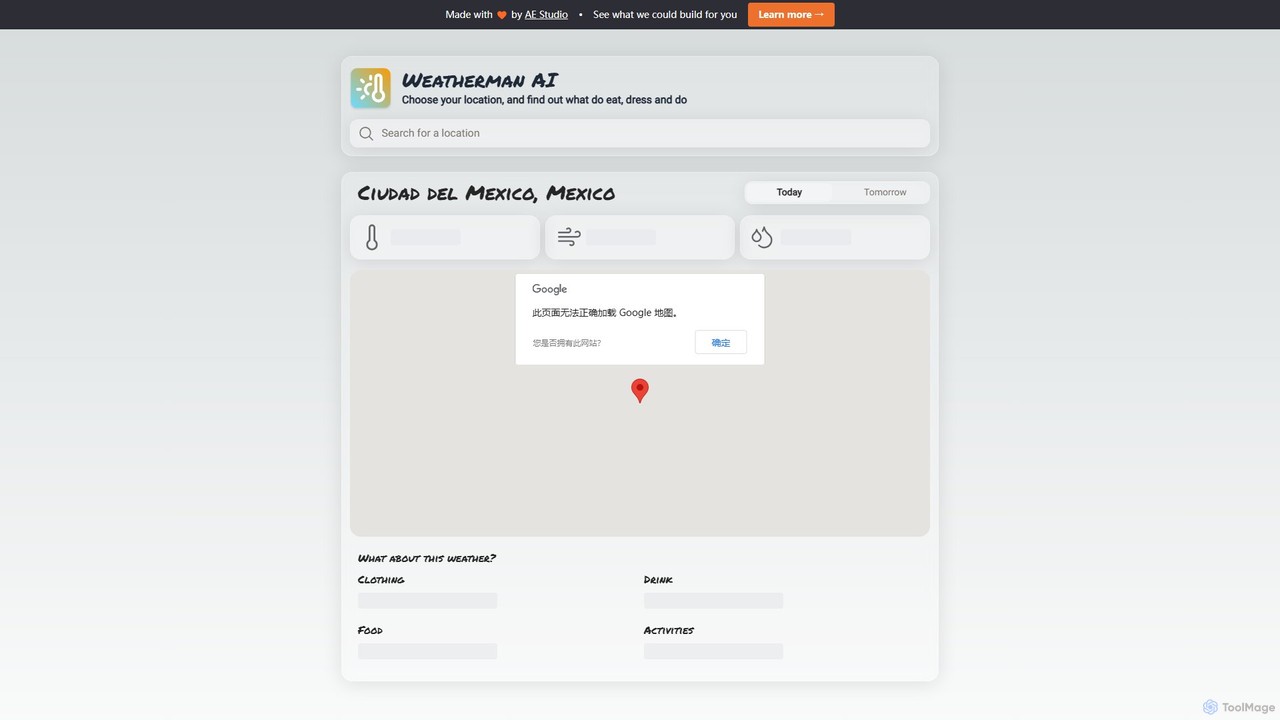
Weatherman AI is an intelligent lifestyle assistant that provides personalized recommendations based on your location's weather. It goes beyond a simple forecast, suggesting what to wear, eat, drink, and do, helping you plan your day perfectly. Ideal for daily use, travel planning, and making the most of any weather condition.
About Weather
AI Weather tools are applications that use machine learning and vast datasets to provide highly accurate, predictive, and hyperlocal weather forecasts. They analyze complex atmospheric patterns, historical data, and real-time sensor inputs to identify trends that traditional models might miss. This enables precise forecasting crucial for weather-sensitive industries like agriculture, energy, and logistics, as well as for advanced personal planning. Their key advantage is the ability to generate probabilistic forecasts and detailed risk assessments for specific events.
Core Features
- Hyperlocal Forecasting: Delivers precise weather predictions for a specific location, such as a single farm field or street address, rather than just a city.
- Predictive Anomaly Detection: Identifies the likelihood of extreme weather events like storms, floods, or heatwaves well in advance.
- Industry-Specific Impact Analysis: Models how weather conditions will affect specific operations, such as crop yields, energy grid demand, or supply chain routes.
- AI-Powered Climate Modeling: Utilizes machine learning to analyze long-term climate data and predict future trends with greater accuracy.
- Real-time Data Integration: Continuously learns and refines forecasts by processing live data from satellites, radar, and IoT sensors.
Use Cases
These tools are essential for professionals in weather-dependent sectors. For example, farmers use them to optimize irrigation and harvest schedules, logistics companies to reroute shipments around severe weather, and energy grid operators to anticipate demand spikes. They also serve event planners, insurance underwriters, and outdoor enthusiasts requiring high-precision forecasts.
How to Choose
When selecting an AI Weather tool, consider the forecast resolution (e.g., hyperlocal vs. regional), the availability of industry-specific APIs, and the data sources used to train the model. Also, evaluate the model's update frequency, the clarity of the user interface for interpreting complex data, and whether the pricing model (e.g., subscription or per-API-call) aligns with your usage needs.

WeatherUse Cases
Optimize Crop Yields with Precision Agriculture
An agronomist for a large farm needs to maximize crop yield while conserving water. Using an AI Weather tool, they access hyperlocal forecasts for each specific field, predicting rainfall, soil moisture, and evapotranspiration rates with high accuracy. The tool's AI model analyzes this data to recommend precise irrigation schedules, preventing overwatering and reducing disease risk. This data-driven approach allows the farm to increase its yield by up to 15% and cut water consumption by 20%, directly improving profitability and sustainability.
Manage Renewable Energy Grid Stability
An energy grid operator manages a network with a high percentage of solar and wind power. They use an AI Weather tool to generate precise forecasts for solar irradiance and wind speed at the exact locations of their farms. The AI model predicts power generation output for the next 48 hours, allowing the operator to anticipate shortfalls or surpluses. This enables them to proactively schedule energy storage charging or purchase power from other sources, ensuring grid stability and preventing blackouts during periods of low renewable generation.
De-risk Logistics and Supply Chain Routes
A logistics company plans a cross-country shipment of sensitive goods. The route planning team uses an AI Weather tool that integrates with their mapping software. The tool analyzes the entire route, predicting severe weather events like blizzards, flash floods, or high winds with a 72-hour lead time. It automatically suggests alternative, safer routes and provides probabilistic risk scores for each segment. This proactive rerouting prevents costly delays, protects cargo from damage, and significantly improves driver safety, saving the company thousands in potential losses.
Enhance Safety for Outdoor Events and Venues
An operations manager for a large outdoor music festival is responsible for guest safety. They use an AI Weather tool to monitor hyperlocal conditions across the festival grounds in real-time. The system is set to send automated alerts for lightning strikes within a 10-mile radius or wind gusts exceeding 40 mph. When the AI predicts a fast-moving thunderstorm, the manager receives an alert 30 minutes in advance, providing enough time to issue a public warning and guide attendees to safety shelters, preventing potential injuries and ensuring operational readiness.
Conduct Climate Risk Assessment for Insurance
An insurance underwriter needs to assess the long-term flood risk for a coastal property. Instead of relying solely on historical flood maps, they use an AI Weather tool with advanced climate modeling capabilities. The AI analyzes decades of climate data and runs thousands of simulations based on future climate change projections. It generates a detailed report showing the increased probability of storm surges and extreme rainfall events over the next 30 years for that specific location, allowing the underwriter to price the insurance policy accurately based on future risk, not just past events.
Plan Personal Outdoor Activities with High Precision
A mountaineer is planning a challenging climb. Standard weather apps provide a general forecast for the nearest town, which is insufficient. They use a specialized AI Weather app that provides hyperlocal forecasts for specific altitudes and aspects of the mountain. The app predicts wind gusts at the summit, the exact time a weather front will arrive, and the risk of avalanches based on new snowfall and temperature changes. This level of detail allows the climber to choose the safest window for their ascent, pack appropriate gear, and make informed decisions on the trail to mitigate risk.