ToolMage
Sign in

Best 3 Ad Intelligence AI tools for Marketing

Popular Ad Intelligence AI tools in Marketing include Peeksta, Diffshop, and Minea, helping you work more efficiently.

Minea
Freemium

Minea

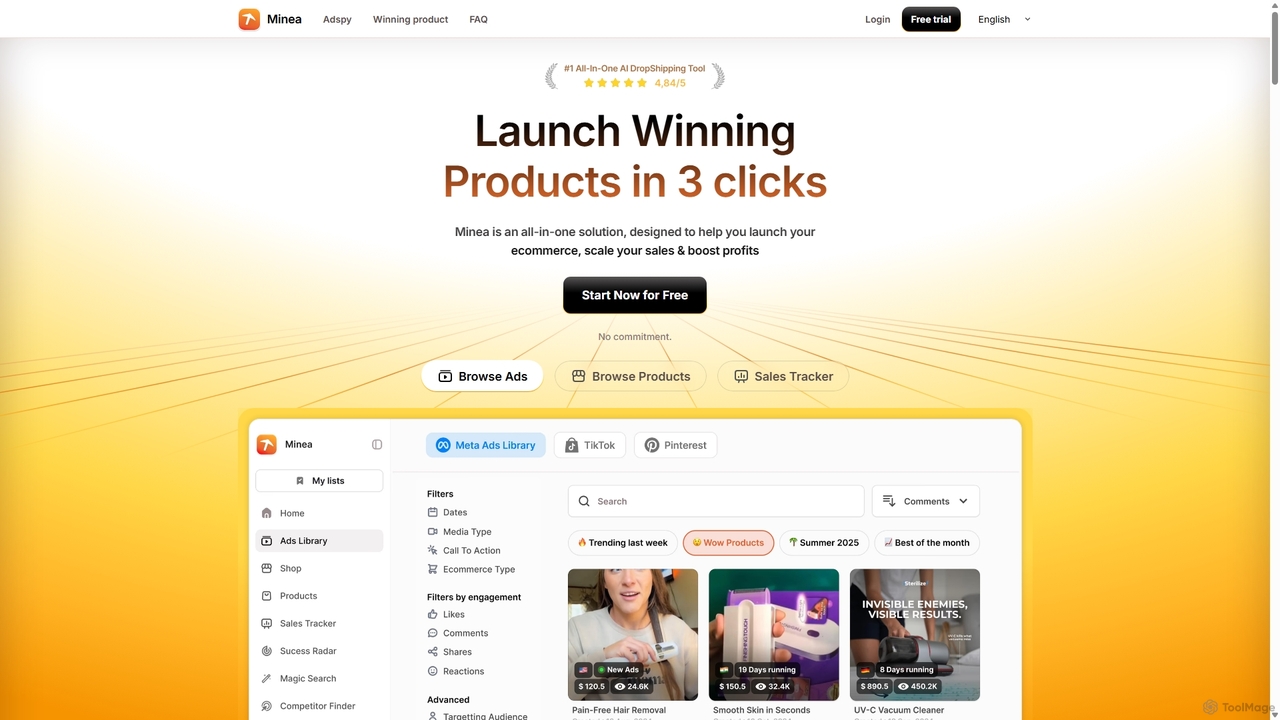
Minea is an all-in-one AI-powered ad spy tool designed for e-commerce and dropshipping. It helps users discover winning products by analyzing millions of ads across Facebook, TikTok, and Pinterest. With features like competitor analysis, AI-generated product descriptions, and supplier discovery, Minea streamlines product research and helps scale online businesses by minimizing ad testing costs and identifying market trends before they explode.

Dropshipping
Visits 8.5KFavorites 121Likes 134
Peeksta
Freemium

Peeksta

Peeksta is an AI-powered e-commerce intelligence platform designed for dropshippers and online store owners. It helps users discover winning products, analyze competitor advertising strategies on Facebook and TikTok, and track real-time sales data to make informed business decisions and accelerate growth.

Product Research
Visits 11.6KFavorites 151Likes 156
Diffshop
Freemium

Diffshop

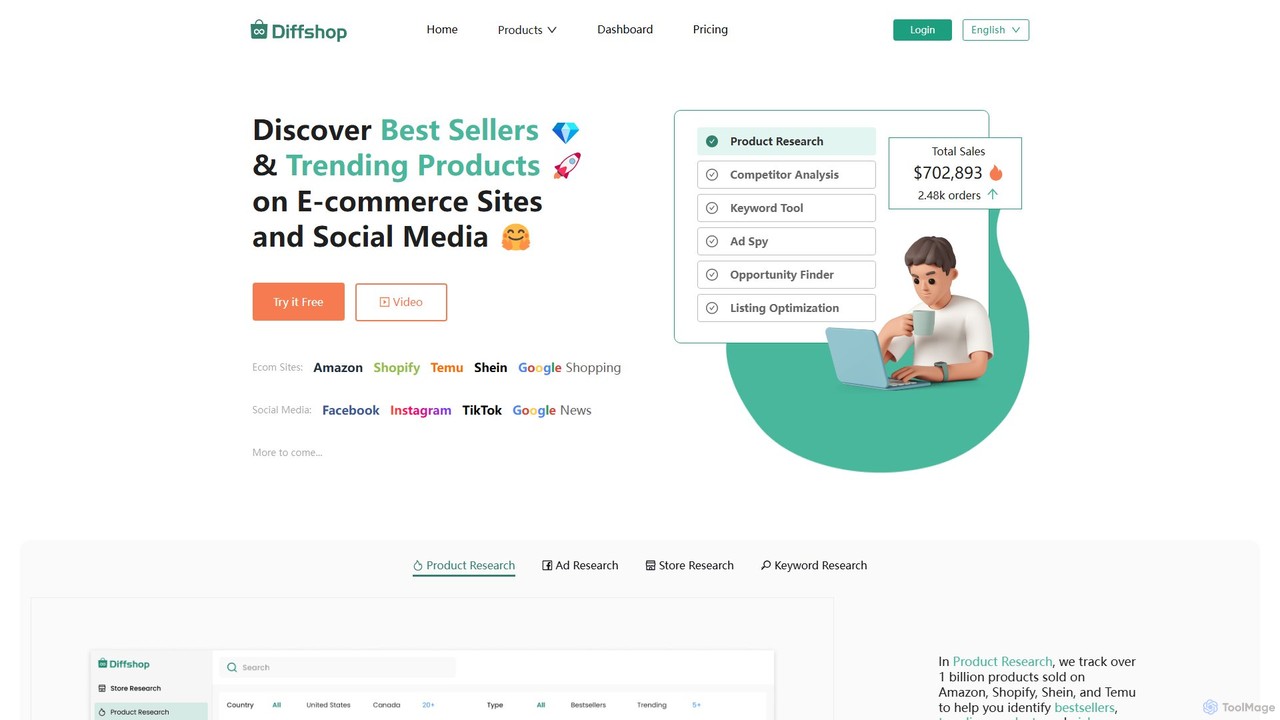
Diffshop is an all-in-one e-commerce intelligence platform for product research, trend discovery, and ad spying. It tracks billions of products and millions of ads across Shopify, Amazon, Shein, Temu, TikTok, and more, helping sellers find winning products and analyze competitor strategies.

Dropshipping
Visits 9.1KFavorites 135Likes 125

About Ad Intelligence

Ad Intelligence tools are AI-powered platforms designed to collect, analyze, and interpret advertising data from competitors and the broader market. These tools leverage advanced algorithms to monitor ad creatives, spending patterns, targeting strategies, and performance metrics across various digital channels. By providing deep insights into competitor activities and market trends, Ad Intelligence empowers businesses to optimize their own marketing strategies, identify new opportunities, and gain a significant competitive edge within the dynamic landscape of digital advertising.

Core Features

  • Competitor Ad Monitoring: Track and analyze competitor ad campaigns across platforms like social media, search engines, and display networks.
  • Ad Creative Analysis: Evaluate the design, copy, and messaging of top-performing ads to understand effective creative strategies.
  • Ad Spend Estimation: Estimate competitor advertising budgets and spending allocation across different channels and regions.
  • Target Audience Insights: Uncover the demographic and psychographic targeting strategies used by competitors.
  • Market Trend Identification: Detect emerging advertising trends, popular ad formats, and shifts in consumer engagement.

Use Cases

Ad Intelligence is crucial for marketing professionals, media buyers, and strategists aiming to refine their digital campaigns. It helps businesses benchmark their performance against rivals, discover untapped market segments, and proactively adapt to changes in the advertising ecosystem. This enables more informed decision-making for budget allocation and creative development.

How to Choose

When selecting an Ad Intelligence tool, consider its data coverage (platforms, geographies), the accuracy and freshness of its data, the depth of its analytical features (e.g., reporting, visualization), and its integration capabilities with existing marketing stacks. Evaluate pricing models and scalability to ensure it meets both current and future business needs.

Ad Intelligence use cases

1

Formulating Competitive Ad Strategies

A marketing manager uses Ad Intelligence to dissect competitor campaigns, understanding their messaging, creative assets, and platform choices. This analysis helps them identify weaknesses in competitor strategies and develop differentiated ad campaigns that resonate more effectively with their target audience, leading to improved campaign ROI.

2

Optimizing Ad Creative Performance

A creative director leverages Ad Intelligence to analyze thousands of top-performing ad creatives in their industry. By understanding which visuals, headlines, and calls-to-action drive the highest engagement and conversions for competitors, they can refine their own creative development process, producing more impactful and data-driven ad designs.

3

Identifying Untapped Market Opportunities

A business development team utilizes Ad Intelligence to monitor ad spend and targeting in adjacent markets or new geographical regions. By identifying areas where competitors have a low presence or where specific product categories are gaining traction, they can uncover lucrative, underserved market segments for potential expansion.

4

Benchmarking Ad Spend and Efficiency

A media buyer employs Ad Intelligence to compare their ad budget allocation and performance metrics against industry benchmarks and direct competitors. This allows them to assess if their spending is efficient, identify areas of over or under-investment, and negotiate better ad placements or adjust bidding strategies for optimal results.

5

Enhancing Product Launch Ad Planning

Before a new product launch, a product marketing specialist uses Ad Intelligence to research successful ad campaigns for similar products. They analyze the types of ads that generated buzz, the platforms used, and the key selling points highlighted, informing their own launch strategy to maximize visibility and initial adoption.

6

Discovering Influencer & Publisher Partnerships

A PR and partnerships manager uses Ad Intelligence to see which publishers or influencers competitors are frequently advertising with. This provides valuable insights into effective channels for reaching specific audiences, helping them identify potential partners for collaborations, sponsored content, or affiliate marketing programs.

Ad Intelligence FAQ

What is Ad Intelligence and why is it important for marketing?

Ad Intelligence refers to AI-powered tools that gather and analyze competitor and market advertising data. It's crucial for marketing because it provides actionable insights into what your rivals are doing, what's working in the market, and where opportunities lie. This enables businesses to make data-driven decisions, optimize ad spend, improve campaign performance, and maintain a competitive edge.

How do Ad Intelligence tools collect their data?

Ad Intelligence tools typically collect data through a combination of methods. This includes crawling public ad libraries (like Facebook Ad Library), monitoring ad networks, scraping publicly available ad placements, and sometimes through partnerships with data providers. Advanced AI algorithms then process this raw data to extract meaningful insights on creatives, targeting, spend, and trends.

What key metrics and insights can Ad Intelligence provide?

Ad Intelligence tools offer a wealth of metrics and insights. These commonly include competitor ad creatives (images, videos, copy), estimated ad spend across various platforms (e.g., Google, Facebook, Instagram), target audience demographics, ad placement locations, campaign duration, and historical performance trends. Some tools also provide insights into landing page strategies and call-to-actions.

How can Ad Intelligence help optimize my own advertising campaigns?

Ad Intelligence significantly optimizes campaigns by revealing successful strategies used by competitors. You can identify high-performing ad creatives and messaging, understand effective targeting parameters, and learn which platforms yield the best results for similar products or services. This allows you to refine your own creatives, adjust targeting, reallocate budgets, and avoid costly trial-and-error, leading to more efficient and impactful campaigns.

What's the difference between Ad Intelligence and general market research?

While both provide market insights, Ad Intelligence specifically focuses on advertising activities. It offers granular, real-time data on competitor ad creatives, spend, and strategies, directly informing your ad campaigns. General market research, on the other hand, covers broader aspects like consumer behavior, industry trends, and product demand, often using surveys, focus groups, and secondary data, which is less directly actionable for immediate ad campaign adjustments.