ToolMage
Sign in

Best 1 Advertising Analytics AI tools for Marketing

Popular Advertising Analytics AI tools in Marketing include Amaro Analytics, helping you work more efficiently.

Amaro Analytics
Paid

Amaro Analytics

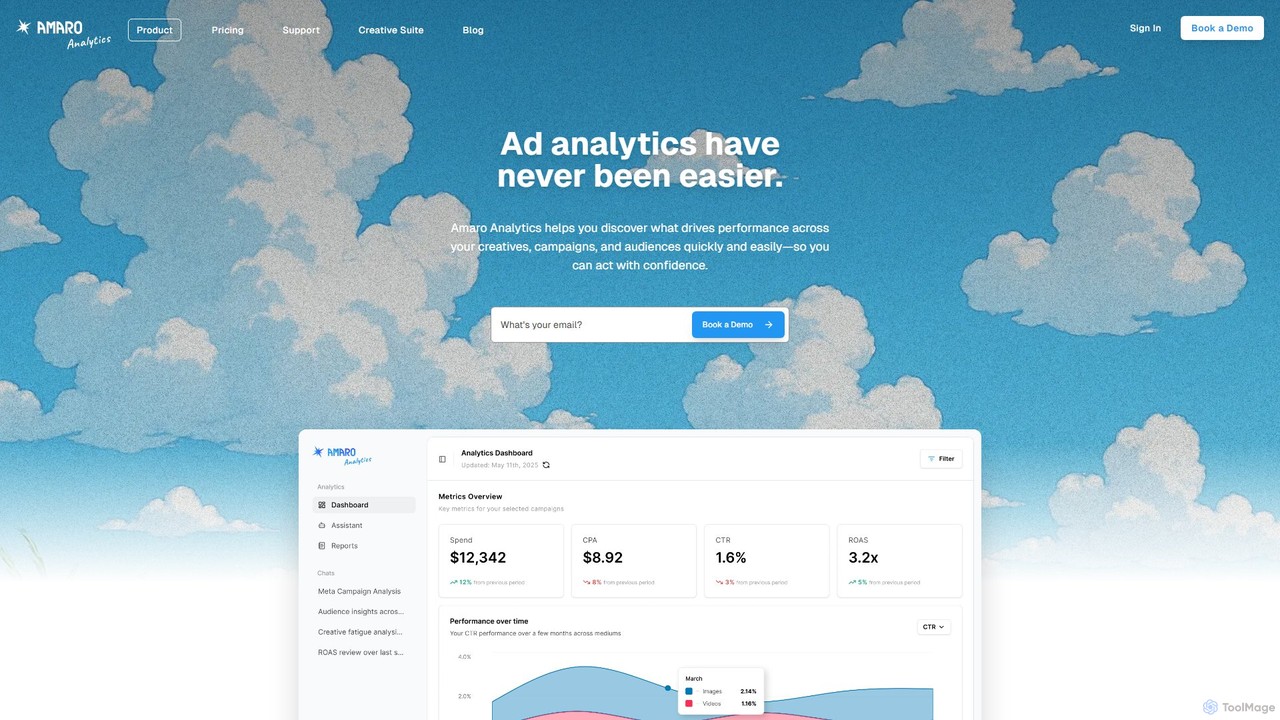
Amaro Analytics is an AI-powered ad analytics platform that unifies data from all your advertising channels (Meta, TikTok, etc.) and CRM. It replaces complex dashboards with a simple chat interface, allowing you to ask questions in plain English and get instant, actionable insights to optimize your campaigns and boost ROI.

Advertising Analytics
Visits 5.4KFavorites 144Likes 144

About Advertising Analytics

Advertising Analytics tools are AI-powered platforms designed to interpret complex ad campaign data and provide predictive insights for optimization. They leverage machine learning algorithms to analyze performance across multiple channels, moving beyond simple reporting to uncover hidden patterns and forecast future outcomes. These tools empower marketers to make data-driven decisions, automate performance monitoring, and maximize return on ad spend (ROAS). Their core value lies in transforming raw data into actionable strategies for budget allocation, creative improvement, and audience targeting.

Core Features

  • Predictive Performance Forecasting: Uses historical data to project future campaign results like CPA, ROAS, and conversion rates.
  • Cross-Channel Attribution Modeling: Analyzes the entire customer journey to accurately assign credit to different marketing touchpoints.
  • Automated Anomaly Detection: Automatically flags unusual spikes or drops in performance, enabling rapid response.
  • Creative Performance Analysis: Evaluates the impact of ad images, videos, and copy on audience engagement and conversion.
  • Budget Optimization Recommendations: Suggests how to reallocate ad spend across campaigns and platforms for better efficiency.

Use Cases

These tools are essential for digital marketing managers, performance marketers, and advertising agencies managing complex, multi-channel campaigns. For instance, an e-commerce brand can use them to identify which ad creative drives the most sales, while a B2B company can determine the most effective sequence of ads for generating qualified leads.

How to Choose

When selecting a tool, consider its integration capabilities with your existing ad platforms (e.g., Google Ads, Meta Ads). Evaluate the sophistication of its AI models for prediction and attribution. Also, assess the user-friendliness of its dashboard and reporting features, as well as its pricing structure relative to your ad spend.

Advertising Analytics use cases

1

Optimize Multi-Channel Campaign ROAS

A digital marketing manager for an online retail brand runs campaigns across Google Search, Meta, and TikTok. Using an AI Advertising Analytics tool, they connect all ad accounts to a central dashboard. The AI analyzes conversion data and identifies that while TikTok generates high engagement, Meta campaigns deliver a 30% higher Return on Ad Spend (ROAS). The tool recommends shifting 20% of the TikTok budget to specific high-performing Meta ad sets, projecting a 15% increase in overall ROAS without increasing total spend.

2

Automate Performance Reporting for Agencies

An advertising agency manages ten different client accounts, each with unique KPIs. Manually compiling weekly reports is time-consuming and prone to error. By implementing an AI Advertising Analytics tool, the team automates this process. The tool automatically pulls data, visualizes key trends, and generates AI-written summaries highlighting performance wins and areas for improvement. This reduces reporting time by over 80% and provides clients with deeper, more consistent insights into their campaign performance.

3

A/B Test Ad Creatives at Scale

An e-commerce company's creative team wants to test dozens of ad variations for a new product launch. Manually tracking the performance of each headline, image, and call-to-action is impractical. They use an AI tool to analyze real-time data from the campaigns. The platform quickly identifies the top-performing creative elements and combinations, providing clear recommendations like "Headlines featuring 'Free Shipping' increase click-through rates by 25%." This allows the team to iterate faster and focus creative efforts on what works.

4

Detect Ad Fraud and Wasted Spend

A performance marketer notices a high volume of clicks on a display campaign but a very low conversion rate. They suspect click fraud. An AI Advertising Analytics tool analyzes traffic patterns, device IDs, and user behavior. It flags a segment of traffic showing non-human characteristics, such as immediate bounces and clicks from a single IP range. The marketer uses this data to block the fraudulent sources in their ad platform, saving thousands of dollars in wasted ad spend and improving campaign data accuracy.

5

Forecast Seasonal Campaign Performance

A marketing lead for a consumer electronics brand is planning their crucial holiday season campaign. They need to set realistic sales targets and budget allocations. Using an AI analytics tool, they input their planned budget and campaign duration. The tool analyzes past holiday performance, current market trends, and competitor activity to generate a forecast. It predicts conversion rates, cost per acquisition (CPA), and total revenue, giving the team a data-backed foundation for their strategy and helping them secure the necessary budget from stakeholders.

6

Uncover True Customer Journey Attribution

A SaaS company struggles to understand which marketing channels truly influence sign-ups, as the default "last-click" model in their ad platforms is misleading. They implement an AI Advertising Analytics tool that builds a multi-touch attribution model. The analysis reveals that initial awareness generated by LinkedIn video ads, followed by a Google Search ad, results in the highest-value customers. This insight prompts them to invest more in top-of-funnel video content, a strategy previously undervalued by last-click attribution.

Advertising Analytics FAQ

What are AI Advertising Analytics tools?

AI Advertising Analytics tools are software platforms that use machine learning to analyze advertising data and provide predictive insights. Unlike traditional analytics, they automate the process of identifying trends, forecasting campaign outcomes (like ROAS and CPA), and offering specific recommendations for optimization. They help marketers understand complex cross-channel performance and make smarter decisions about budget and creative strategy.

How do AI Advertising Analytics tools differ from Google Analytics?

The primary difference lies in their focus and predictive capabilities. Google Analytics is a broad web analytics tool focused on website traffic and user behavior, offering descriptive "what happened" insights. AI Advertising Analytics tools are specialized for paid media, focusing on "why it happened" and "what will happen next." They offer advanced features like cross-platform ad spend optimization, predictive forecasting, and automated anomaly detection that are not native to standard platforms like Google Analytics.

How do I choose the right AI Advertising Analytics tool?

To choose the right tool, consider these key factors:

  • Integrations: Ensure it connects seamlessly with all your ad platforms (Google, Meta, TikTok, LinkedIn, etc.).
  • AI Model Sophistication: Evaluate its capabilities in predictive forecasting, attribution modeling, and creative analysis.
  • Usability: The dashboard should be intuitive and present complex data in an easy-to-understand format.
  • Scalability and Pricing: Choose a plan that aligns with your current ad spend and can grow with your needs.
What are the key benefits of using AI for advertising analysis?

Using AI for advertising analysis offers several key benefits. It provides deeper, predictive insights that go beyond simple performance metrics. It automates time-consuming tasks like data compilation and reporting, freeing up marketers to focus on strategy. AI can also identify complex patterns and anomalies across vast datasets that a human analyst might miss, leading to more efficient budget allocation, improved ad creative, and a higher overall return on investment.

Who should use AI Advertising Analytics tools?

These tools are most beneficial for roles and businesses that manage significant advertising budgets across multiple digital channels. This includes:

  • Performance Marketers: To optimize campaigns for specific KPIs like conversions and ROAS.
  • Digital Marketing Managers: To get a holistic view of all paid media efforts.
  • Advertising Agencies: To efficiently manage multiple client accounts and provide data-driven reports.
  • E-commerce Businesses: To directly link ad spend to sales and optimize creative performance.