Marketing Best in category 2 results Advertising Optimization AI Tool

Popular AI tools in the Advertising Optimization field of Marketing include nyle、uniqin.ai, etc., helping you quickly improve efficiency.

nyle

nyle

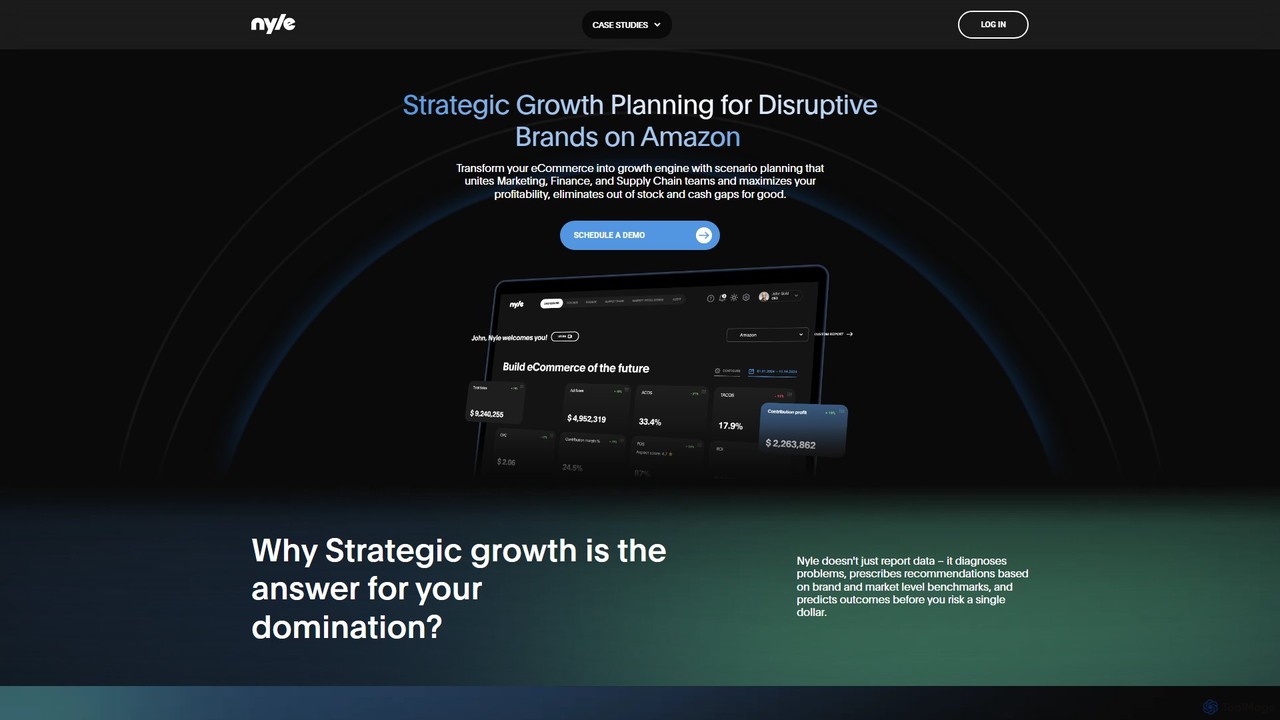
Nyle is an AI-powered growth platform designed for Amazon sellers. It integrates marketing, finance, and supply chain management …

5.7K
uniqin.ai

uniqin.ai

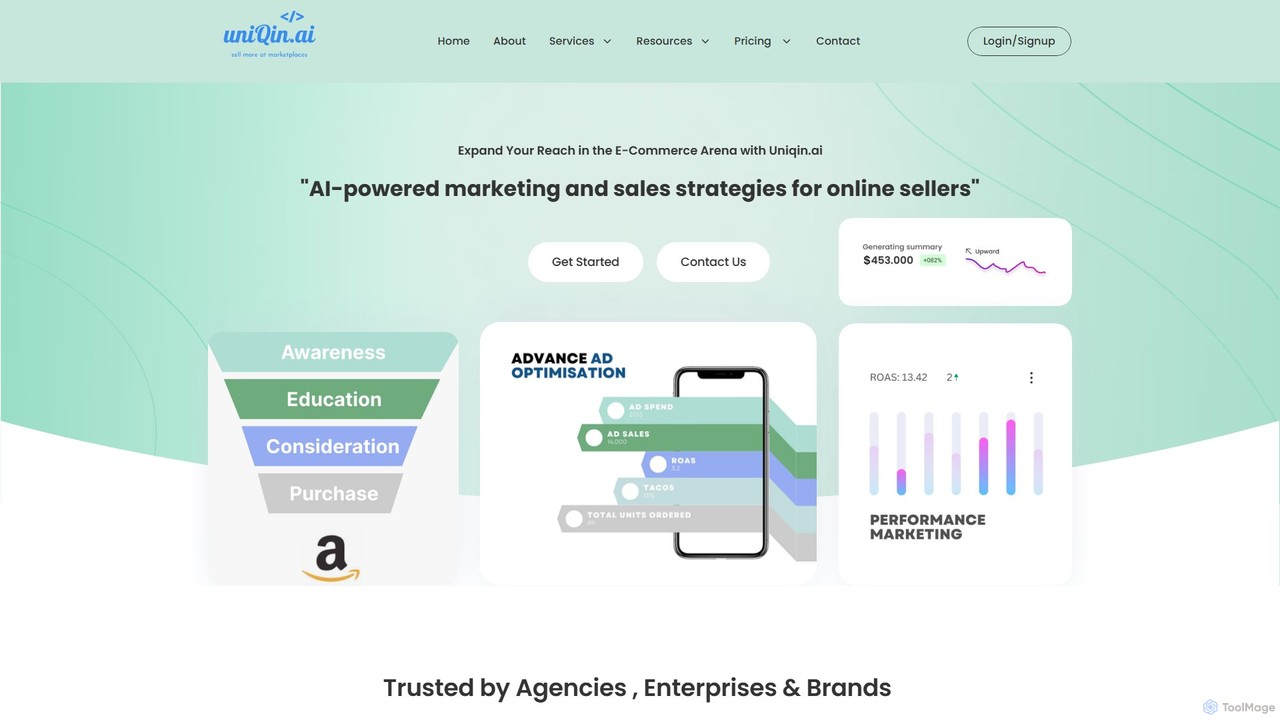
uniqin.ai is an AI-powered platform designed for e-commerce sellers, particularly on Amazon, to optimize marketing and sales strategies. …

3.3K

About Advertising Optimization

Advertising Optimization tools are AI-powered platforms designed to automate and enhance the performance of digital ad campaigns. They leverage machine learning algorithms to analyze vast amounts of data, predict user behavior, and make real-time decisions on bidding, targeting, and creative elements. This process helps marketers maximize their return on ad spend (ROAS), improve conversion rates, and efficiently scale their advertising efforts. These tools often integrate directly with major ad networks like Google Ads and Meta to apply data-driven insights automatically.

Core Features

  • Automated Bid Management: Dynamically adjusts bids across keywords and placements to achieve the best possible cost-per-acquisition (CPA) or ROAS.
  • Predictive Audience Targeting: Identifies and targets high-value customer segments that are most likely to convert, going beyond standard demographic targeting.
  • AI-Powered Creative Analysis: A/B tests ad copy, images, and headlines at scale to determine the most effective combinations for different audiences.
  • Budget Allocation Optimization: Recommends and automates the distribution of advertising budgets across various campaigns and channels for maximum impact.
  • Performance Forecasting: Uses historical data to predict future campaign outcomes, such as clicks, conversions, and spend.

Use Cases

These tools are essential for performance marketers, PPC specialists, e-commerce managers, and media buying agencies. They are widely used in industries like e-commerce, SaaS, lead generation, and mobile app promotion, where campaign performance is directly tied to revenue. For example, an e-commerce store can use these tools to manage bids for thousands of products simultaneously, ensuring profitability for each one.

How to Choose

When selecting an Advertising Optimization tool, consider its integration capabilities with your primary ad platforms (e.g., Google, Meta, TikTok). Evaluate the level of automation and control it offers—some tools are fully automated while others provide recommendations for manual implementation. Also, assess the depth of its analytics and reporting features, as well as a pricing model that aligns with your ad spend and business goals.

Advertising OptimizationUse Cases

1

Maximize E-commerce ROAS with Automated Bidding

An e-commerce manager overseeing a store with thousands of products uses an AI advertising optimization tool to manage their Google Shopping campaigns. Instead of manually setting bids for each product, the tool's algorithm analyzes real-time sales data, profit margins, and competitor pricing. It automatically increases bids on high-performing, high-margin products while reducing spend on items with low conversion rates. This dynamic approach ensures the advertising budget is always allocated to the most profitable products, leading to a significant increase in overall Return on Ad Spend (ROAS).

2

Personalize Ad Creatives at Scale for SaaS

A marketing team at a SaaS company wants to improve their Meta Ads performance by personalizing ad creatives for different user personas (e.g., small business owners, enterprise managers). Using an AI optimization tool, they upload multiple headlines, descriptions, images, and calls-to-action. The AI then automatically mixes and matches these elements to create hundreds of ad variations. It serves these variations to different audience segments and uses machine learning to identify the highest-performing combinations for each persona, significantly lifting click-through rates and lead quality without manual A/B testing.

3

Optimize Cross-Channel Budget Allocation

A performance marketing agency manages a large monthly budget for a client across Google Search, YouTube, and TikTok. To maximize overall conversions, they use an AI optimization platform. The platform analyzes performance data from all channels in a unified dashboard. Based on its predictive models, it recommends reallocating the budget—for instance, shifting 15% from a plateauing Google Search campaign to a high-potential TikTok campaign. This data-driven approach helps the agency move beyond channel-specific silos and make holistic decisions that improve the client's total return on investment.

4

Identify and Exclude Low-Performing Audiences

A mobile app developer is running user acquisition campaigns but notices high costs per install. They connect their ad accounts to an AI optimization tool, which analyzes conversion data across hundreds of audience segments. The tool quickly identifies specific demographic groups, locations, and interests that consistently show low engagement and no in-app purchases. It automatically adds these segments to exclusion lists or reduces bids for them, effectively cutting wasted ad spend and lowering the overall cost-per-install (CPI) by focusing only on valuable user segments.

5

Forecast Campaign Performance for Better Planning

A digital marketing manager is tasked with creating the quarterly advertising budget and setting realistic performance targets. Instead of relying solely on past performance, they use an AI optimization tool's forecasting feature. By inputting a proposed budget and campaign duration, the tool predicts key metrics like expected clicks, conversions, and cost-per-acquisition. This allows the manager to run multiple scenarios, justify budget requests with data-backed projections, and set achievable KPIs for their team, leading to more strategic and predictable marketing planning.

6

Automate Ad Copy A/B Testing

A PPC specialist needs to find the most effective ad copy for a new product launch on Google Search. Manually testing every combination of headlines and descriptions is time-consuming. They use an AI ad optimization tool to automate this process. After providing a list of potential headlines and descriptions, the tool's AI engine creates numerous ad combinations and runs them simultaneously. It quickly analyzes performance data (like CTR and conversion rate) to identify the winning copy, allowing the specialist to scale successful messaging across all ad groups in a fraction of the time.

Advertising OptimizationFrequently Asked Questions