Marketing Best in category 1 results Analysis AI Tool

Popular AI tools in the Analysis field of Marketing include Callaia, etc., helping you quickly improve efficiency.

Callaia

Callaia

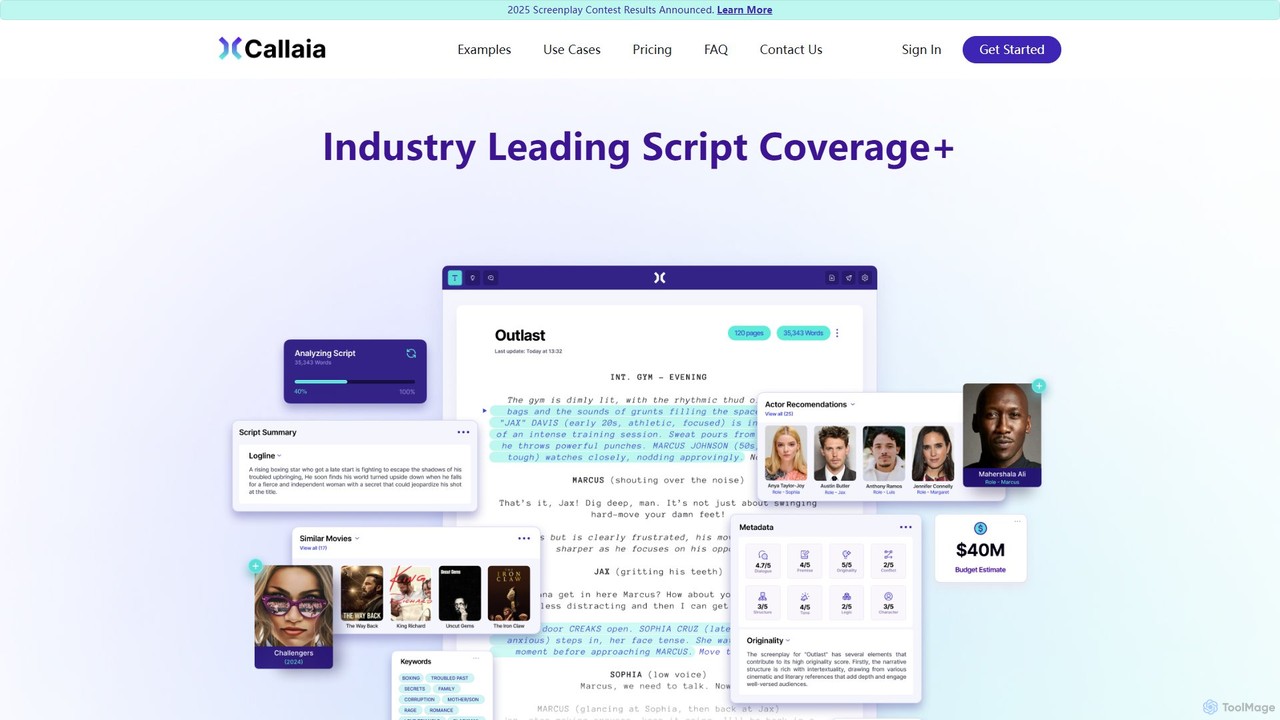
Callaia is an AI-powered screenplay consultant that provides fast, detailed, and objective script coverage for the entertainment industry. …

3.9K

About Analysis

AI Analysis tools are a category of sophisticated software designed to process vast amounts of data, identify patterns, and generate actionable insights, primarily within the marketing domain. Leveraging machine learning and natural language processing, these tools go beyond traditional reporting to offer predictive analytics, sentiment analysis, and automated trend detection. They empower marketers to understand customer behavior, optimize campaign performance, and make data-driven strategic decisions with unprecedented speed and accuracy, significantly enhancing the effectiveness of marketing efforts.

Core Features

  • Predictive Modeling: Forecast future market trends, customer churn, and campaign outcomes with high accuracy.
  • Sentiment Analysis: Gauge public opinion and customer emotions from text data across various digital channels.
  • Customer Segmentation: Automatically group customers based on behavior, demographics, and preferences for targeted marketing.
  • Competitor Intelligence: Monitor and analyze competitor strategies, pricing, and market positioning in real-time.
  • Performance Optimization: Identify underperforming areas in marketing campaigns and suggest data-backed improvements.

Use Cases

These tools are invaluable for marketing professionals, data analysts, and business strategists. They are used to refine advertising strategies by predicting ad performance, personalize customer experiences through deep behavioral insights, and uncover new market opportunities by analyzing vast datasets. For instance, a brand might use AI analysis to understand why a specific product is trending on social media, or to predict which customer segments are most likely to respond to a new promotional offer.

How to Choose

When selecting an AI Analysis tool, consider its data integration capabilities with your existing marketing platforms (CRM, ad platforms). Evaluate the accuracy and explainability of its predictive models, ensuring you can trust the insights. Assess the customization options for dashboards and reports, and check for scalability to handle growing data volumes. Finally, compare pricing models and the level of technical expertise required for implementation and ongoing use.

AnalysisUse Cases

1

Predictive Campaign Performance

Marketers leverage AI analysis to forecast the potential success of advertising campaigns before launch. By analyzing historical data, market trends, and audience behavior, the tools predict key metrics like conversion rates, ROI, and audience engagement, allowing for proactive optimization and budget allocation to maximize impact and minimize risks.

2

Customer Sentiment Monitoring

Brands use AI analysis to continuously monitor and understand customer sentiment across social media, reviews, and customer service interactions. This helps identify emerging issues, gauge brand perception, and respond promptly to positive or negative feedback, enhancing customer satisfaction and protecting brand reputation.

3

Market Trend Identification

Businesses employ AI analysis to detect and interpret emerging market trends, shifts in consumer preferences, and new opportunities. By processing vast amounts of unstructured data from news, forums, and search queries, these tools provide early warnings and insights, enabling companies to adapt strategies and develop relevant products or services ahead of competitors.

4

Competitor Strategy Analysis

Marketing teams utilize AI analysis to gain deep insights into competitor strategies, including pricing, product launches, promotional activities, and market positioning. These tools automate the collection and analysis of competitor data, revealing strengths, weaknesses, and potential gaps in the market, informing competitive differentiation and strategic planning.

5

Personalized Customer Segmentation

Marketers use AI analysis to create highly granular and dynamic customer segments based on complex behavioral patterns, purchase history, and engagement levels. This allows for hyper-personalized marketing campaigns, content delivery, and product recommendations, significantly improving conversion rates and customer loyalty by addressing individual needs.

6

Website/App User Behavior Analysis

Product and marketing teams deploy AI analysis to understand how users interact with websites and mobile applications. By tracking clicks, navigation paths, session duration, and conversion funnels, these tools identify friction points, optimize user journeys, and personalize content delivery, leading to improved user experience and higher engagement rates.

AnalysisFrequently Asked Questions