Marketing Best in category 1 results App Marketing AI Tool

Popular AI tools in the App Marketing field of Marketing include Onelink.to, etc., helping you quickly improve efficiency.

Onelink.to

Onelink.to

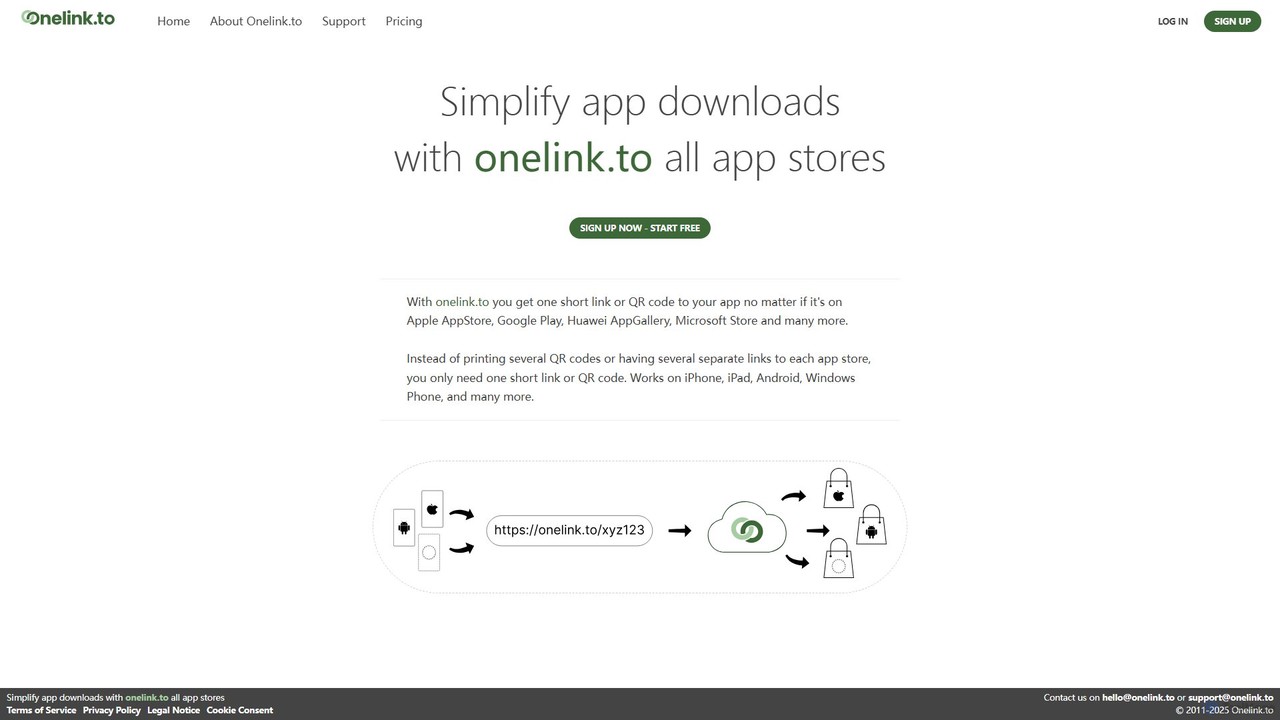
Onelink.to is an intelligent link management platform that simplifies app marketing. It provides a single, smart link and …

10.0M

About App Marketing

AI App Marketing tools are a specialized category of software that uses artificial intelligence to automate and optimize the promotion of mobile applications. These tools leverage machine learning algorithms to analyze user data, predict behavior, and make data-driven decisions for campaigns. Their primary value lies in increasing app downloads, improving user retention, and maximizing return on ad spend (ROAS) with greater efficiency than manual methods. They focus specifically on the unique challenges of the mobile app ecosystem, from app store visibility to in-app user engagement.

Core Features

  • AI-Powered ASO: Automatically suggests optimal keywords, analyzes competitor listings, and recommends changes to titles and descriptions to improve app store rankings.
  • Predictive User Acquisition: Identifies high-value user segments and predicts which ad channels will deliver the best results, optimizing budget allocation.
  • Automated Campaign Management: Adjusts ad bids, budgets, and creative assets in real-time across multiple networks like Apple Search Ads and Google Ads.
  • Churn Prediction & Re-engagement: Analyzes user behavior to identify users at risk of churning and triggers automated push notifications or in-app messages to retain them.

Use Cases

These tools are essential for mobile app developers, marketing managers at tech companies, and digital agencies specializing in app growth. They are used for launching new apps to gain initial traction, scaling user acquisition campaigns for established apps, and implementing sophisticated retention strategies to reduce user churn and increase lifetime value (LTV).

How to Choose

When selecting an AI App Marketing tool, consider its integration capabilities with major ad networks and analytics platforms (e.g., AppsFlyer, Firebase). Evaluate the transparency and control offered over the AI's automated decisions. Also, assess the pricing model (e.g., based on ad spend, MAUs) and ensure it supports the required platforms (iOS, Android, or both).

App MarketingUse Cases

1

Automating App Store Optimization (ASO)

A startup developer launching a new fitness app uses an AI ASO tool to gain a competitive edge. The tool analyzes top-ranking competitor apps, identifies high-traffic and low-competition keywords, and suggests optimized titles and descriptions. It also facilitates A/B testing of app icons and screenshots by predicting which variants will have higher conversion rates. This process, which would manually take weeks, is completed in hours, leading to a 40% increase in organic visibility and a higher install rate from app store searches within the first month.

2

Optimizing User Acquisition Ad Spend

A mobile game company's marketing manager is tasked with scaling user acquisition while maintaining a target ROAS. They use an AI platform that integrates with their ad networks. The AI continuously analyzes campaign performance, automatically reallocating the budget from underperforming creatives and channels to those acquiring high LTV players. It also adjusts bids in real-time based on predictive models. This automation frees the manager from manual bid adjustments and allows them to focus on strategy, resulting in a 25% improvement in ROAS and a 15% reduction in cost per install (CPI).

3

Predicting and Preventing User Churn

A subscription-based meditation app uses an AI marketing tool to improve retention. The tool analyzes in-app user behavior, such as session frequency and feature usage. It builds a predictive model that identifies users who are highly likely to churn in the next 7 days. For this high-risk segment, the system automatically triggers a personalized re-engagement campaign, sending a push notification with a new guided meditation or a special offer. This proactive approach helps reduce monthly churn by 18% and increases overall user lifetime value.

4

Personalizing In-App Messaging at Scale

An e-commerce app wants to increase its average order value. It employs an AI marketing tool to segment users based on real-time behavior, such as products viewed, items added to cart, and past purchase history. The AI then delivers highly personalized in-app messages. For example, a user browsing running shoes receives a message about a '20% off on running apparel' offer. This level of personalization, impossible to manage manually for millions of users, leads to a 30% higher click-through rate on in-app promotions and a 12% increase in average order value.

5

Intelligent Ad Creative Generation and Testing

A marketing agency managing multiple app clients needs to produce a high volume of ad creatives. They use an AI tool that generates hundreds of variations of ad copy, images, and videos based on top-performing elements. The system automatically launches micro-campaigns to test these variations. It quickly identifies the winning combinations of headlines, visuals, and calls-to-action for different audience segments. This process reduces creative production time by 70% and improves overall campaign click-through rates by an average of 35% across their client portfolio.

6

Analyzing Competitor Ad Strategies

A product manager for a new productivity app needs to understand the competitive landscape. They use an AI-powered market intelligence tool that tracks competitors' advertising activities. The tool provides insights into which ad networks competitors are using, what their top-performing ad creatives look like, and which geographic regions they are targeting most aggressively. This intelligence allows the product manager to identify gaps in the market, avoid saturated channels, and develop a more informed and effective go-to-market strategy for their own app, saving significant budget on initial testing.

App MarketingFrequently Asked Questions