ToolMage
Sign in

Best 2 Audience Analysis AI tools for Marketing

Popular Audience Analysis AI tools in Marketing include CommentScope and TubeVoice, helping you work more efficiently.

TubeVoice
Freemium

TubeVoice

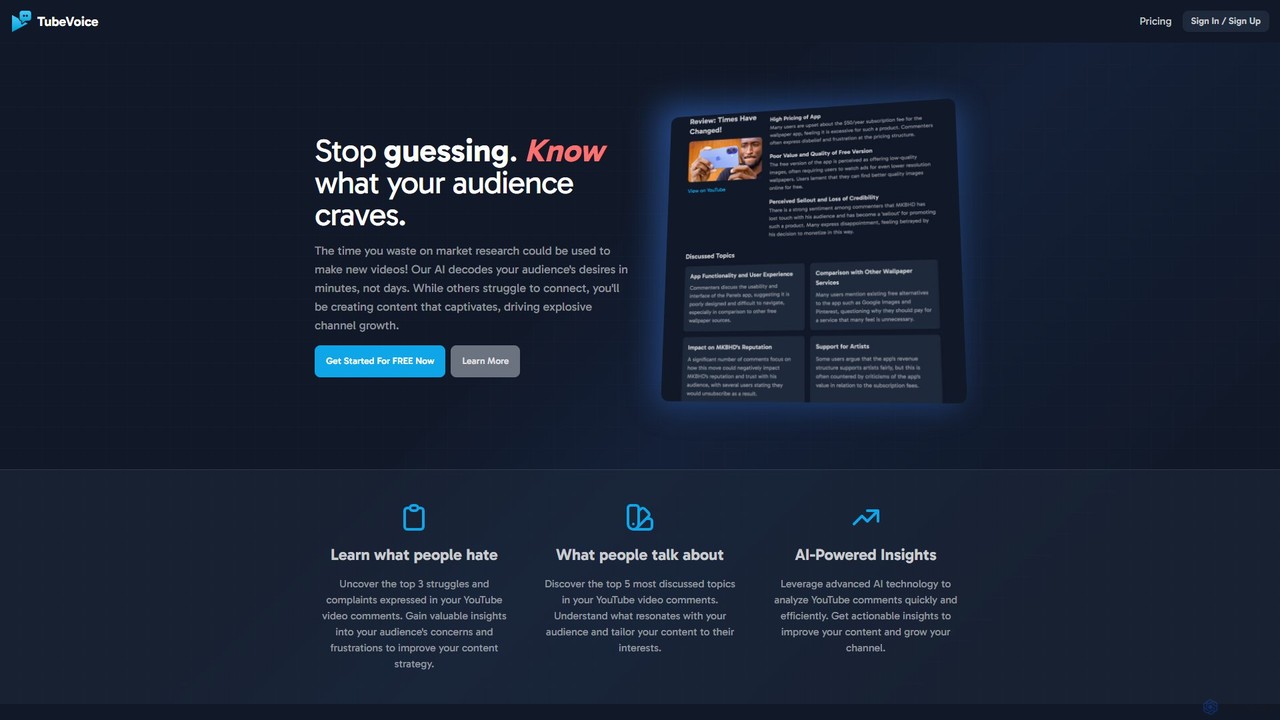
TubeVoice is an AI-powered YouTube comment analyzer that decodes audience feedback in minutes. It identifies top pain points, discussed topics, and viewer desires, helping creators save research time and produce highly engaging content that drives channel growth.

Audience Analysis
Visits 5.3KFavorites 110Likes 105
CommentScope
Freemium

CommentScope

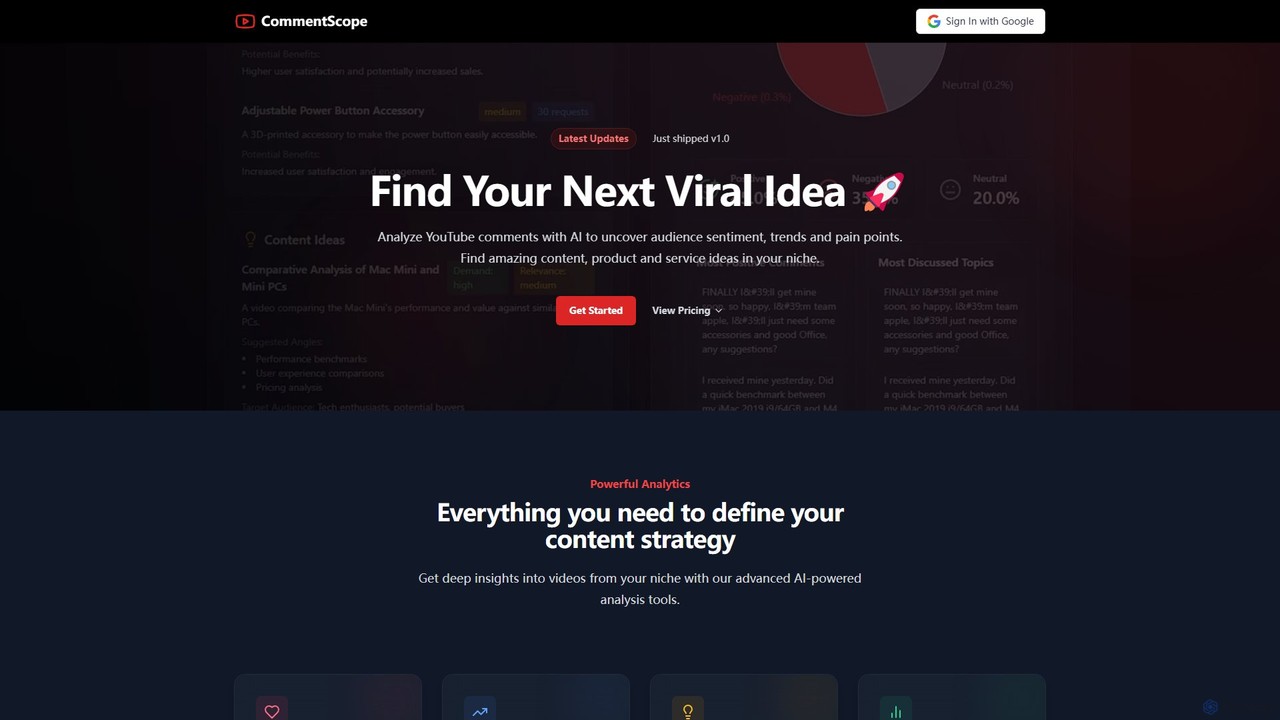
CommentScope is an AI-powered tool designed for YouTube creators to analyze video comments. It uncovers audience sentiment, identifies emerging trends, and extracts valuable pain points, helping creators generate viral content ideas and refine their content strategy with data-driven insights.

Audience Analysis
Visits 5.4KFavorites 128Likes 135

About Audience Analysis

Audience Analysis tools are AI-powered platforms designed to uncover deep insights into target customer groups. By processing vast amounts of data from social media, web forums, and other public sources, these tools identify demographic, psychographic, and behavioral patterns. This enables businesses to create accurate customer personas, refine marketing messages, and make data-driven decisions for product development and content strategy. They go beyond traditional analytics by revealing the 'who' and 'why' behind user actions.

Core Features

  • Demographic & Geographic Analysis: Identifies age, gender, location, language, and other key demographic attributes of an audience.
  • Psychographic Profiling: Uncovers interests, values, brand affinities, and personality traits to understand audience motivations.
  • Sentiment Analysis: Gauges public opinion and emotion (positive, negative, neutral) towards a brand, product, or topic.
  • Conversation & Trend Tracking: Monitors online discussions to identify key topics, emerging trends, and relevant hashtags.
  • Influencer Identification: Pinpoints key opinion leaders and influential figures within a specific niche or community.

Use Cases

These tools are widely used by marketing teams in e-commerce and B2C industries to personalize campaigns. Product managers and UX researchers utilize them to validate user needs, while content creators and publishers rely on them to align their content strategy with audience interests. PR and communications agencies also use them to manage brand reputation and identify media opportunities.

How to Choose

When selecting an Audience Analysis tool, consider the data sources it covers (e.g., specific social networks, news sites). Evaluate the depth of its analytical capabilities—does it offer basic demographics or advanced psychographic insights? Also, check its integration options with your existing CRM or marketing automation platforms and assess the clarity of its reporting and data visualization features.

Audience Analysis use cases

1

Crafting Data-Driven Customer Personas

A marketing manager for a new sustainable fashion brand needs to define their ideal customer. Using an Audience Analysis tool, they analyze conversations around ethical fashion and competitor audiences. The tool generates a detailed report highlighting that the core audience consists of urban millennials aged 25-35, who value transparency, follow specific eco-influencers, and frequent platforms like Instagram and Pinterest. This allows the team to build several accurate personas, guiding all subsequent marketing and product messaging.

2

Optimizing Social Media Ad Targeting

An e-commerce store selling specialized coffee beans wants to improve its ad spend efficiency. By feeding their existing customer data into an Audience Analysis tool, they discover non-obvious interests shared by their most loyal customers, such as an affinity for minimalist design and outdoor activities. They use these psychographic insights to create highly targeted lookalike audiences on Facebook and Instagram, resulting in a higher click-through rate and lower customer acquisition cost.

3

Informing a Content Creation Strategy

A B2B SaaS company's content team wants to create blog posts and webinars that truly resonate. They use an Audience Analysis tool to monitor industry forums and social media groups where their target professionals are active. The analysis reveals recurring pain points, frequently asked questions, and emerging technology trends. This data provides a roadmap for creating a content calendar filled with relevant, high-value topics that directly address the audience's needs, boosting engagement and establishing thought leadership.

4

Gauging Public Sentiment for a Product Launch

A consumer electronics company is preparing to launch a new smartwatch. Before the launch, they use an Audience Analysis tool to track public sentiment and conversations around competing products. The tool identifies key features that users praise (e.g., long battery life) and complain about (e.g., inaccurate fitness tracking). This intelligence helps the product and marketing teams refine their launch messaging to highlight their watch's superior battery performance and preemptively address potential concerns.

5

Identifying Niche Influencers for Collaboration

A startup in the vegan food space wants to partner with authentic micro-influencers. Instead of manual searching, they use an Audience Analysis tool to identify accounts that have high engagement rates within the vegan community. The tool filters by audience size, engagement metrics, and content relevance, providing a curated list of potential partners whose followers perfectly match the brand's target demographic. This data-driven approach ensures more effective and genuine collaborations.

6

Enhancing Competitive Landscape Analysis

A strategic analyst at a large corporation needs to understand a competitor's customer base. They use an Audience Analysis tool to analyze the competitor's social media followers and mentions. The platform reveals the competitor's audience demographics, their primary interests, and what they like or dislike about the competitor's products. This insight helps the analyst identify weaknesses in the competitor's strategy and uncover underserved market segments that their own company can target.

Audience Analysis FAQ

What are AI Audience Analysis tools?

AI Audience Analysis tools are software platforms that use artificial intelligence to analyze large volumes of public data from sources like social media, blogs, and forums. They go beyond simple metrics to provide deep insights into an audience's demographics, interests, values, and behaviors. The primary goal is to help businesses understand who their audience is and what motivates them, enabling more effective marketing and product strategies.

How do I choose the right Audience Analysis tool?

Choosing the right tool depends on your specific needs. Consider these factors:

  • Data Sources: Ensure the tool covers the platforms where your audience is most active (e.g., Twitter, Reddit, TikTok, news sites).
  • Analysis Depth: Determine if you need basic demographic data or more advanced psychographic insights like personality traits and purchase drivers.
  • Integration: Check if it can connect with your existing marketing stack, such as CRM or social media management tools.
  • Usability & Reporting: Evaluate how easy it is to generate and understand reports. Clear data visualization is crucial.
What is the difference between Audience Analysis and Web Analytics?

The key difference lies in the scope and type of data. Web Analytics tools (like Google Analytics) focus on on-site behavior, telling you what users do on your website—which pages they visit, how long they stay, and their conversion paths. Audience Analysis tools focus on off-site data, revealing who your audience is as people—their interests, demographics, and conversations across the entire internet. In short, Web Analytics is about what they do, while Audience Analysis is about who they are.

What kind of insights can I get from an Audience Analysis tool?

These tools provide a rich tapestry of audience insights. You can typically uncover detailed demographic information (age, gender, location, income), psychographic profiles (interests, hobbies, brand affinities, values), sentiment analysis (how they feel about certain topics), key conversation themes, and identification of influential figures within the community. This data helps build a holistic view of your target customer.

Who should use Audience Analysis tools?

A wide range of professionals can benefit from these tools. Marketing teams use them to refine ad targeting and messaging. Product managers leverage them to understand user needs and validate feature ideas. Content strategists use the insights to create more engaging content. PR and communications professionals monitor brand reputation and identify media opportunities. Essentially, anyone whose success depends on deeply understanding a target group of people can find value in them.