aijinglemaker
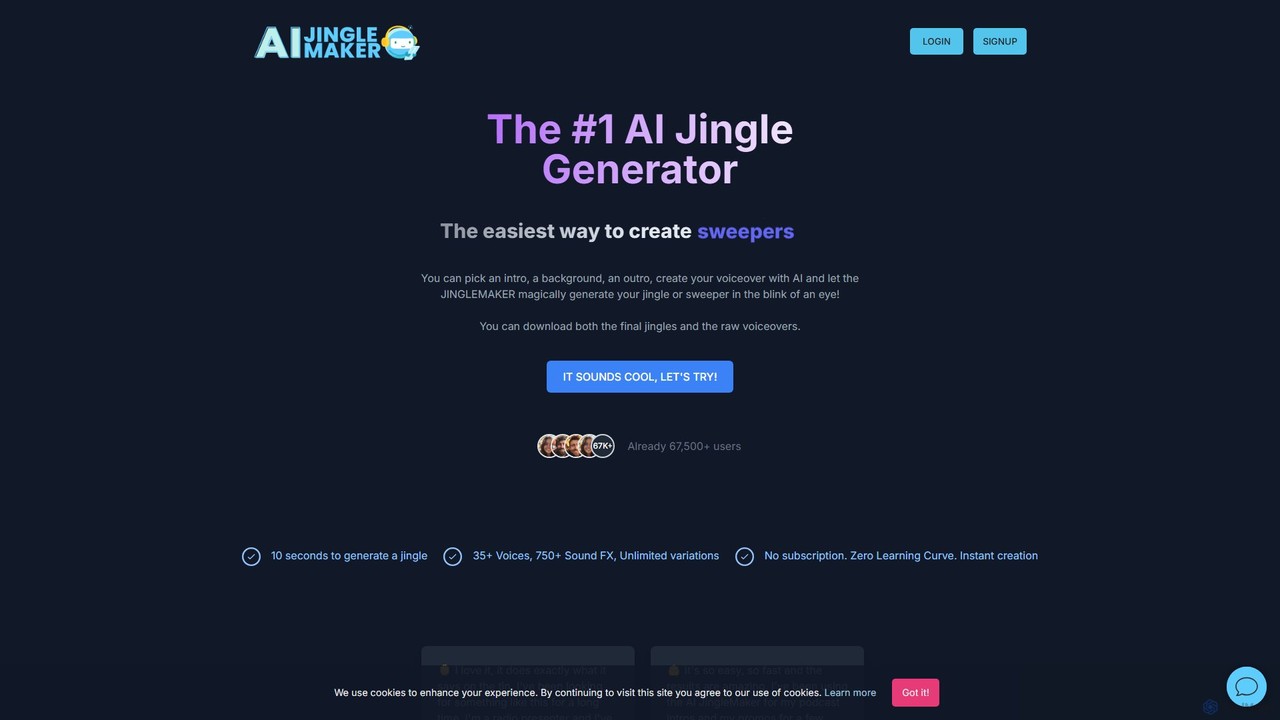
AI Jingle Maker is an online tool for instantly creating professional audio jingles, DJ drops, podcast intros, and …
AI Jingle Maker is an online tool for instantly creating professional audio jingles, DJ drops, podcast intros, and station IDs. With a vast library of AI voices and sound effects, users can generate unlimited variations from a single voiceover. It offers a simple, no-subscription, pay-per-credit model, making high-quality audio branding accessible and affordable for creators and businesses.
About Audio Advertising
Audio Advertising tools leverage AI to create, target, and optimize audio advertisements across various digital platforms. These tools utilize advanced natural language processing and voice synthesis to generate compelling ad scripts and lifelike voiceovers. They enable marketers to reach specific listener segments with personalized messages, enhancing campaign effectiveness and brand recall within the broader marketing landscape.
Core Features
- AI Script Generation: Automatically drafts engaging ad copy tailored to target audiences and campaign goals.
- Voice Synthesis & Cloning: Creates realistic voiceovers or replicates existing brand voices for consistent messaging.
- Dynamic Ad Insertion: Delivers personalized audio ads in real-time based on listener data, context, and location.
- Audience Targeting & Segmentation: Identifies and targets specific demographic, behavioral, and psychographic listener groups.
- Performance Analytics: Provides detailed insights into ad engagement, reach, and conversion rates for continuous optimization.
Use Cases
These tools are invaluable for brands seeking to expand their reach in the growing digital audio space. They are used by marketing teams for launching new products, increasing brand awareness on podcasts and streaming services, and delivering localized promotions to specific geographic audiences.
How to Choose
When selecting an Audio Advertising tool, consider its AI capabilities for script and voice generation, the precision of its audience targeting features, and its integration with major audio platforms. Evaluate its analytics dashboard for comprehensive performance tracking and ensure it offers scalability to meet evolving campaign demands.
Audio AdvertisingUse Cases
Personalized Podcast Ad Creation
Content marketers and brands can use AI audio advertising tools to generate highly personalized ad spots for podcast listeners. By analyzing podcast content and listener demographics, the AI crafts relevant scripts and voiceovers, ensuring the ad resonates deeply with specific segments, leading to higher engagement and conversion rates for products or services.
Automated Radio Spot Generation for Local Businesses
Local businesses, such as restaurants or car dealerships, can leverage these tools to quickly produce multiple versions of radio advertisements. The AI can generate varied scripts and voice styles for different promotions or regional markets, allowing for rapid A/B testing and localized messaging without the need for expensive studio time or voice actors, saving significant time and resources.
Dynamic In-Game Audio Ads
Game developers and advertisers can integrate AI audio advertising to deliver contextually relevant audio ads within mobile games. Based on player behavior, game progress, or in-game events, the AI dynamically inserts non-intrusive audio messages, offering a seamless advertising experience that enhances player immersion while effectively promoting relevant offers or in-game items.
Voice Assistant Advertising Campaigns
E-commerce brands and service providers can utilize AI audio advertising to create and deploy promotional messages through voice assistants like Alexa or Google Assistant. The AI generates natural-sounding audio prompts and responses, enabling interactive advertising experiences where users can learn about products, make purchases, or sign up for services directly via voice commands, opening new direct-response channels.
Localized Retail Promotions with Real-time Updates
Large retail chains can employ AI audio advertising to manage and deploy hyper-localized promotions. The AI can automatically update ad content (e.g., specific store offers, opening hours, event announcements) based on real-time data and geographic location, ensuring that listeners in different areas receive the most relevant and timely information, driving foot traffic to local stores.
Brand Storytelling and Sonic Branding
Marketing agencies and brand strategists can use AI audio tools to develop unique sonic identities and engaging audio narratives. The AI assists in crafting consistent brand voices, jingles, and soundscapes that can be deployed across various audio touchpoints, strengthening brand recognition and emotional connection with the audience through memorable and distinctive audio experiences.