Marketing Best in category 1 results Brainstorming AI Tool

Popular AI tools in the Brainstorming field of Marketing include Nodeland, etc., helping you quickly improve efficiency.

Nodeland

Nodeland

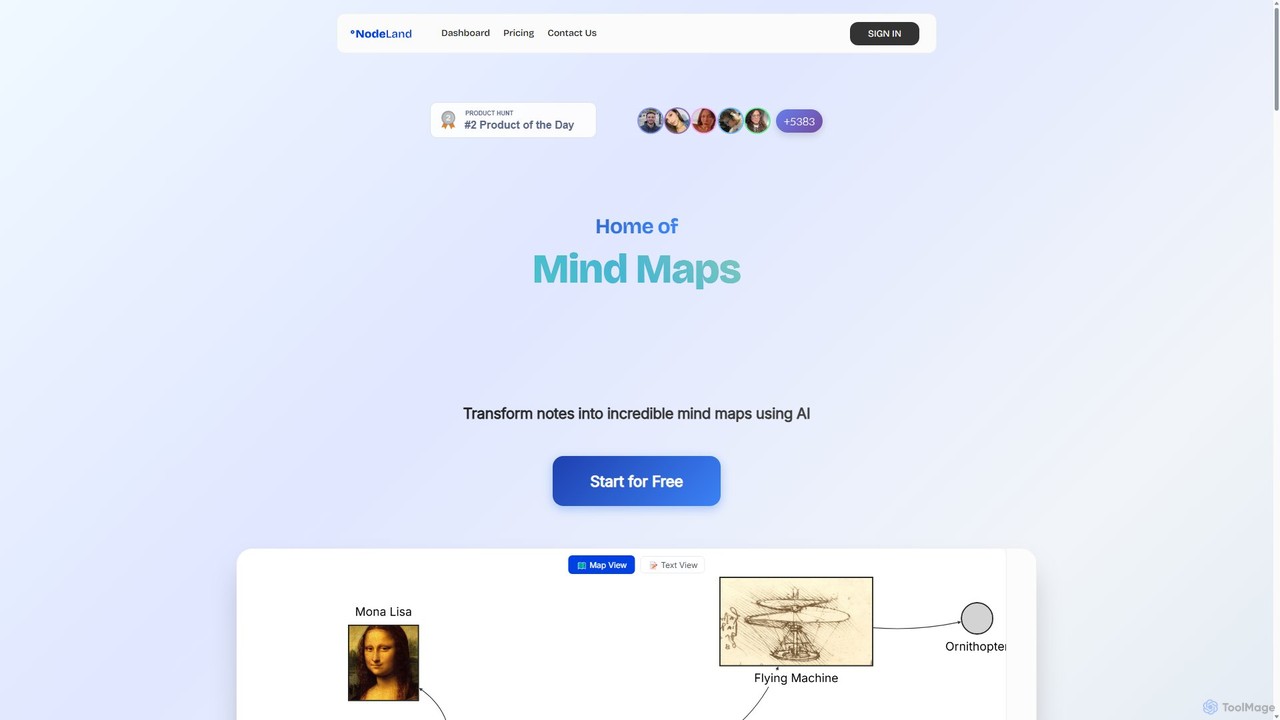
Nodeland is an AI-powered platform that transforms your notes, ideas, and documents into interactive mind maps and concept …

7.8K

About Brainstorming

AI Brainstorming tools are a class of software designed to generate, organize, and expand upon ideas using artificial intelligence. These tools leverage large language models (LLMs) and semantic analysis to provide creative prompts, alternative perspectives, and structured thought maps. They are particularly valuable in marketing for breaking through creative blocks, exploring novel campaign concepts, and rapidly developing content strategies. Unlike simple note-takers, AI brainstorming assistants act as active partners in the ideation process.

Core Features

  • Automated Idea Generation: Produces a wide range of ideas, headlines, or concepts based on a single keyword or problem statement.
  • Visual Mind Mapping: Creates interactive diagrams that visually connect central topics with related sub-topics and ideas.
  • Concept Expansion: Takes a core idea and elaborates on it, providing detailed descriptions, potential applications, or counter-arguments.
  • Perspective Shifting: Generates ideas from different viewpoints, such as a customer persona, a competitor, or an industry expert.
  • Thematic Clustering: Automatically groups scattered ideas into logical categories based on their semantic relevance.

Use Cases

These tools are frequently used by marketing teams, content creators, and product managers. Common applications include developing new advertising campaign angles, creating comprehensive content calendars from a core theme, generating names for new products or services, and structuring complex strategic plans by exploring all possible avenues.

How to Choose

When selecting an AI Brainstorming tool, consider the quality and diversity of its idea generation. Evaluate its visualization capabilities—whether you need structured mind maps, lists, or freeform canvases. Assess the collaboration features for team-based work and check for integrations with project management or content creation platforms to ensure a smooth workflow.

BrainstormingUse Cases

1

Develop a New Ad Campaign Concept

A marketing manager for a beverage company needs to launch a new summer drink. Using an AI brainstorming tool, they input the core product features like 'refreshing, natural fruit, low sugar' and the target audience 'health-conscious millennials'. The AI generates dozens of campaign slogans, visual concepts (e.g., 'A yoga retreat in a bottle'), and social media angles. The team then uses the tool's mind map feature to connect the best ideas, structure a multi-channel campaign, and assign tasks, reducing initial ideation time by over 60%.

2

Create a Content Marketing Calendar

A content strategist for a SaaS company wants to plan three months of blog and social media content around the theme 'Future of Work'. They input this theme into an AI brainstorming tool. The tool generates a list of sub-topics like 'AI in Project Management', 'Hybrid Work Best Practices', and 'Employee Wellness Tech'. For each sub-topic, it suggests specific blog post titles, key talking points, and related hashtags. This provides a structured and comprehensive content plan, saving days of manual research and planning.

3

Generate Names for a New Product

A startup is developing a new project management app focused on simplicity and visual workflows. The founders use an AI brainstorming tool to generate name ideas. They provide keywords like 'flow', 'simple', 'visual', 'task', and 'zen'. The AI returns hundreds of suggestions categorized by style: abstract (e.g., 'Zentask'), descriptive (e.g., 'VisualFlow'), and metaphorical (e.g., 'TaskCanvas'). It also checks for domain name availability for the top suggestions, dramatically accelerating the branding process.

4

Outline a Script for a Marketing Video

A video producer is tasked with creating a 2-minute explainer video for a complex software product. They use an AI brainstorming tool to structure the script. By inputting the problem ('managing freelance invoices is chaotic') and the solution ('our app automates it'), the AI outlines a classic problem-solution narrative. It suggests scenes, key talking points for the voiceover, and calls-to-action for the end screen. This structured outline allows the scriptwriter to focus on creative language rather than starting from a blank page.

5

Identify New Market Segments

A business strategist for an eco-friendly cleaning products company wants to expand their customer base. They use an AI brainstorming tool and input their current product line and value proposition ('plant-based, non-toxic, effective'). They ask the AI to brainstorm potential new customer segments. The tool suggests 'new parents concerned about chemicals', 'pet owners looking for safe floor cleaners', and 'small businesses wanting to project a green image'. This provides concrete, actionable avenues for market research and targeted marketing campaigns.

6

Facilitate a Remote Team Brainstorming Session

A project manager leads a distributed team across different time zones. To brainstorm features for the next software release, she uses an AI-powered virtual whiteboard. Team members add ideas as digital sticky notes. The AI automatically clusters similar ideas, such as 'UI improvements' or 'Integration requests'. It also suggests connections between different ideas that the team might have missed. This asynchronous and AI-assisted process ensures all voices are heard and transforms a chaotic collection of ideas into an organized, actionable roadmap.

BrainstormingFrequently Asked Questions