ReRoto
ReRoto is an AI-powered Content Management System (CMS) designed to elevate newsroom efficiency. Built by journalists for journalists, …
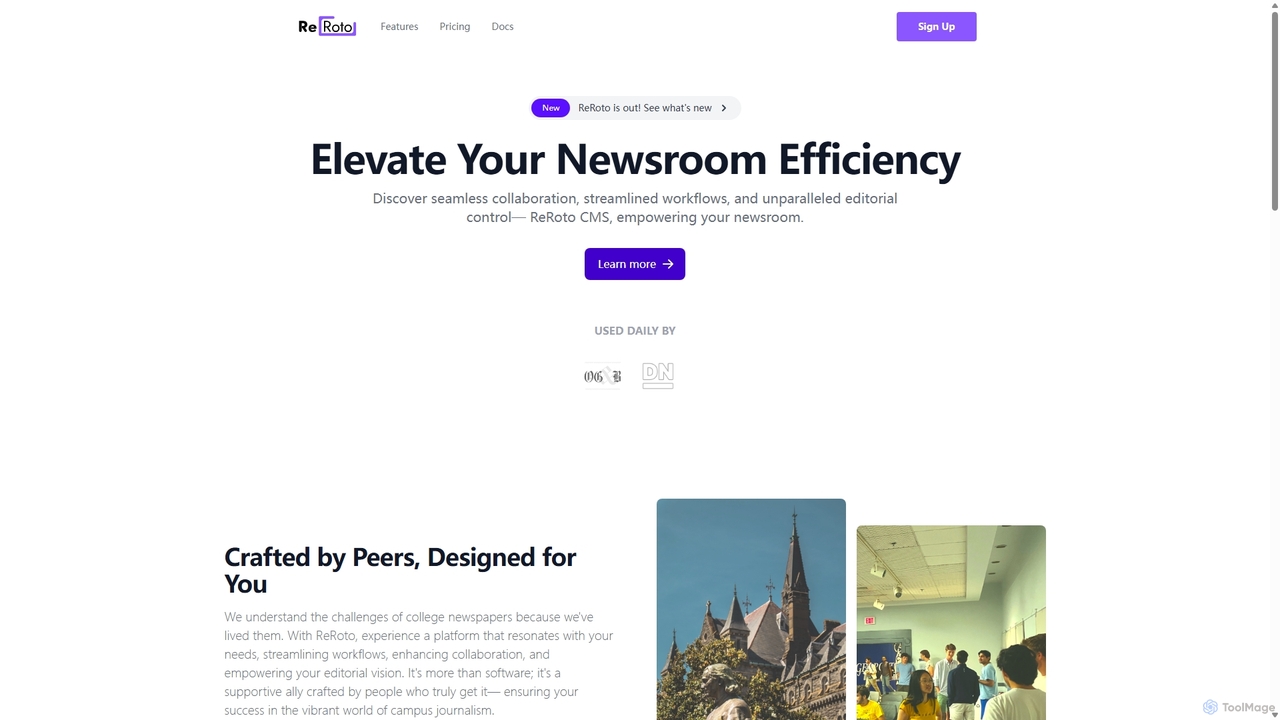
ReRoto is an AI-powered Content Management System (CMS) designed to elevate newsroom efficiency. Built by journalists for journalists, it streamlines workflows, enhances team collaboration, and provides powerful editorial tools. It features AI-assisted writing, real-time analytics, monetization options, and robust team management, making it ideal for college newspapers and professional publications seeking to optimize their content creation and audience engagement.
About Content Management System
An AI Content Management System (CMS) is a platform for creating, managing, and publishing digital content, enhanced with artificial intelligence capabilities. These systems leverage AI for tasks such as automated content generation, intelligent SEO suggestions, and dynamic personalization of user experiences. They empower marketing teams to scale content production, deliver highly relevant content to different audience segments, and optimize strategies based on predictive analytics. Unlike traditional CMS, an AI-powered system proactively assists in the entire content lifecycle, from ideation to performance analysis.
Core Features
- AI-Assisted Content Creation: Generates text drafts, headlines, product descriptions, and summaries based on simple prompts.
- Dynamic Personalization: Automatically adapts website content, layouts, and offers for individual users based on their behavior and data.
- Predictive SEO & Analytics: Provides real-time SEO recommendations, forecasts content performance, and identifies optimization opportunities.
- Automated Content Tagging: Intelligently analyzes and applies relevant tags to text and images, improving content organization and searchability.
- Smart A/B Testing: Autonomously tests variations of content elements like headlines or calls-to-action to find the best performing version.
Use Cases
AI CMS platforms are particularly valuable for marketing departments in medium to large enterprises, e-commerce businesses, and digital publishing houses. For instance, an e-commerce site can use it to display personalized product recommendations on the homepage, while a media company can automate the curation of news feeds for different reader segments. They are essential for any organization aiming to deliver personalized digital experiences at scale.
How to Choose
When selecting an AI CMS, first evaluate the specific AI features you need—content generation, personalization, or analytics. Consider its integration capabilities with your existing marketing stack, such as CRM and analytics tools. Assess whether you need a flexible API-first (headless) architecture for multi-channel delivery or a more traditional, all-in-one system. Finally, ensure the user interface is intuitive for your content creators to leverage the AI functions effectively.

Content Management SystemUse Cases
Automate SEO Blog Post Generation
A content marketer for a SaaS company needs to consistently publish high-quality, keyword-targeted blog posts to drive organic traffic. Using an AI CMS, they input a target keyword like 'AI in project management'. The system generates a comprehensive, SEO-optimized article draft, including a title, meta description, headings, and body content. The marketer then reviews, edits, and adds their unique insights, reducing the entire content creation process from several hours to under an hour, allowing them to scale their content strategy effectively.
Personalize E-commerce Homepage Experience
An e-commerce manager wants to increase conversion rates by showing relevant content to different visitor segments. Within their AI CMS, they set up rules for personalization. For first-time visitors, the homepage displays a welcome offer and best-selling products. For returning customers, it shows products related to their past purchases and browsing history. The AI dynamically adjusts the content in real-time for each user, creating a unique and engaging shopping experience that leads to higher engagement and sales without manual intervention for each segment.
Intelligently Tag a Large Media Library
A global news organization has a media library with millions of images and videos, many of which lack proper metadata, making them difficult to find. By implementing an AI CMS, their entire library is automatically processed. The AI uses computer vision to identify objects, people, and scenes in images, and speech-to-text to transcribe videos. It then applies relevant tags and categories to each asset. This transforms a chaotic library into a highly organized, searchable database, saving journalists and editors countless hours when searching for specific media assets.
Optimize Landing Pages with Smart A/B Testing
A digital marketing agency is running a campaign for a client and wants to maximize lead generation from a landing page. Instead of manually creating and testing variants, they use the AI CMS. The marketer defines the goal (e.g., form submissions) and the AI automatically generates and tests multiple variations of headlines, button text, and images. It analyzes real-time user engagement to quickly identify the winning combination and automatically directs more traffic to it. This accelerates the optimization process and significantly improves the campaign's conversion rate.
Automate Content Localization for Global Markets
A multinational corporation needs to maintain consistent branding and messaging across websites for 20 different countries. Their global marketing team uses an AI CMS to streamline this process. When a new article is published on the primary English site, the AI automatically translates the text into 19 other languages. It also suggests culturally relevant imagery and adjusts formatting for right-to-left languages. Local marketing managers can then quickly review and approve the localized content, reducing the time to market for global campaigns from weeks to days.
Provide Predictive Content Performance Insights
A content strategist is planning the editorial calendar for the next quarter and wants to focus on topics with the highest potential impact. They use the AI CMS's predictive analytics feature. By inputting a list of potential topics and keywords, the AI analyzes historical performance data, search trends, and competitor activity to score each topic's likelihood of success. It provides insights like 'This topic has high search volume but also high competition' or 'This emerging topic is likely to trend next month'. This data-driven approach helps the strategist prioritize content that will deliver the best ROI.