Mixpanel
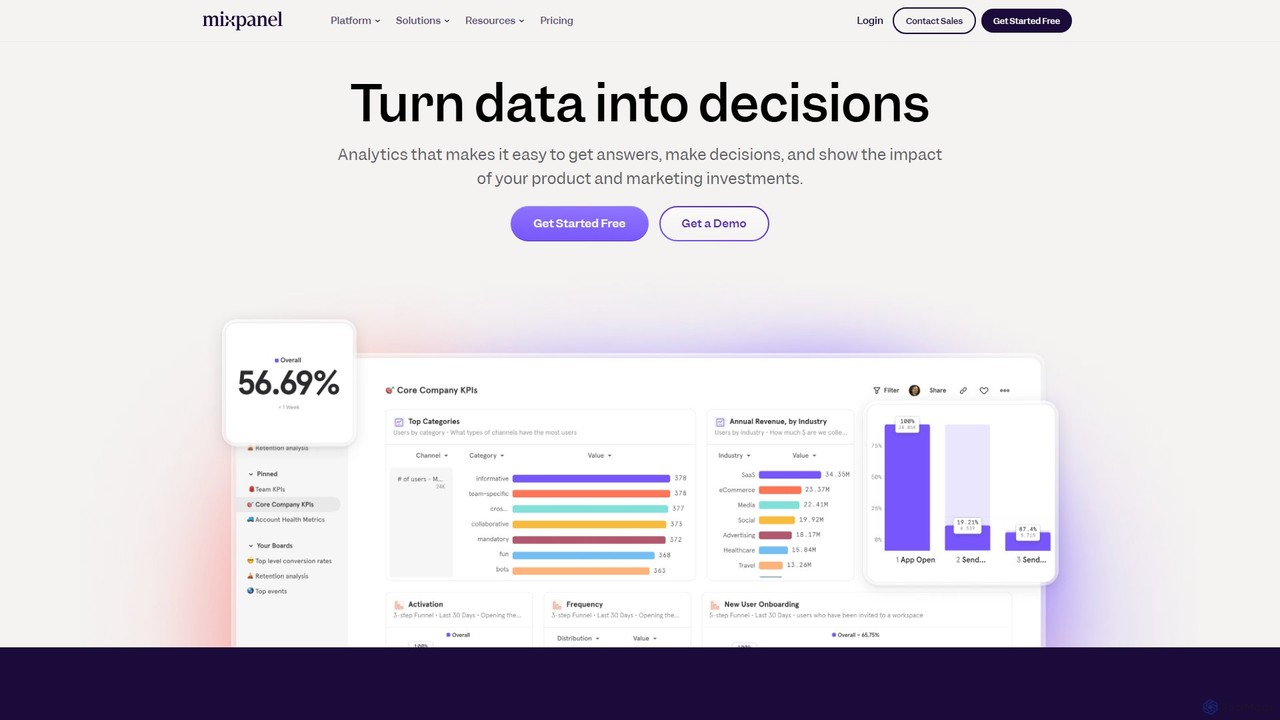
Mixpanel is a powerful product analytics platform that helps businesses understand user behavior, measure key metrics, and make …
Mixpanel is a powerful product analytics platform that helps businesses understand user behavior, measure key metrics, and make data-driven decisions. It offers self-serve analytics, session replays, and data integrations to empower teams across product, marketing, and engineering to drive growth and retention.
PI.EXCHANGE
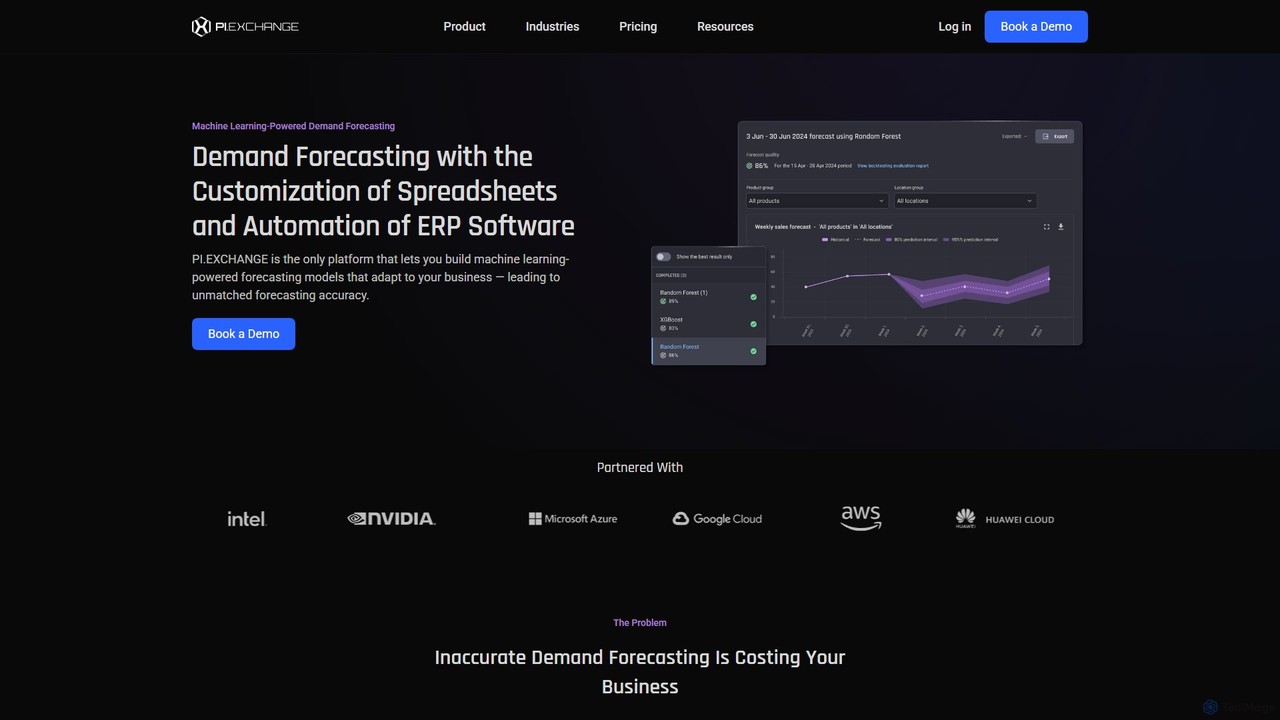
PI.EXCHANGE is an enterprise-grade, no-code machine learning platform designed for businesses. It offers specialized studios for demand forecasting, …
PI.EXCHANGE is an enterprise-grade, no-code machine learning platform designed for businesses. It offers specialized studios for demand forecasting, customer insights, and custom model building, enabling users to create highly accurate predictive models without writing code. The platform automates data pipelines, integrates external factors, and supports collaborative scenario planning to drive data-informed decisions and improve business outcomes.
flameanalytics
flameanalytics is an advanced AI-powered analytics platform for physical spaces. It integrates data from CCTV, WiFi, and other …
flameanalytics is an advanced AI-powered analytics platform for physical spaces. It integrates data from CCTV, WiFi, and other sensors to provide deep insights into customer behavior, traffic patterns, and venue performance. Businesses like retail stores, shopping malls, and hotels use it to optimize operations, enhance customer experience, and increase loyalty through data-driven decisions.
Amplitude
Amplitude is a leading digital analytics platform that uses AI to help businesses understand user behavior, optimize products, …
Amplitude is a leading digital analytics platform that uses AI to help businesses understand user behavior, optimize products, and drive growth. It provides a unified solution for product analytics, session replay, A/B testing, and feature management, enabling teams to make data-driven decisions and build better customer experiences.
About Customer Behavior
AI Customer Behavior tools are a specialized category of marketing software that uses machine learning to analyze and predict user actions on websites and apps. By processing data from clicks, session recordings, and purchase history, these tools uncover the 'why' behind user engagement. They enable businesses to proactively identify friction points, forecast trends like customer churn, and deliver highly personalized experiences. This deep behavioral insight allows for more effective marketing strategies and product improvements.
Core Features
- Predictive Analytics: Forecasts future outcomes like customer churn, lifetime value (LTV), and conversion probability.
- Behavioral Segmentation: Automatically groups users based on their actions and engagement patterns, not just demographics.
- Session Replay & Heatmaps: Provides visual recordings of user sessions and aggregated data on clicks, scrolls, and mouse movements.
- Funnel Optimization: Identifies drop-off points in critical user journeys, such as checkout or onboarding processes.
- Personalization Engine: Recommends products, content, or features in real-time based on individual user behavior.
Use Cases
These tools are crucial for e-commerce, SaaS, and content-driven businesses. For instance, an e-commerce manager can use them to understand cart abandonment, while a SaaS product manager can identify features that lead to user churn. UX designers also rely on them to validate design choices with real user interaction data.
How to Choose
When selecting a tool, consider its integration capabilities with your existing CRM or marketing stack. Evaluate the depth of its predictive modeling and the clarity of its data visualizations. Also, assess the scalability for handling your data volume and whether its pricing model aligns with your business growth.
Customer BehaviorUse Cases
Reduce Cart Abandonment in E-commerce
An e-commerce manager notices a high cart abandonment rate. Using an AI Customer Behavior tool, they analyze session replays for users who drop off at checkout. The tool's AI identifies a common friction point: a confusing shipping cost calculator. The manager then uses this insight to simplify the calculator's design. The tool also helps create a behavioral segment of 'hesitant buyers' to target with a personalized email offering a small discount, recovering a significant portion of lost sales.
Proactively Prevent SaaS Customer Churn
A Customer Success Manager for a SaaS company needs to reduce churn. They use an AI platform to monitor user engagement. The AI builds a predictive model that flags accounts at high risk of churning based on declining feature usage, infrequent logins, and ignored support tickets. The system automatically alerts the manager, who can then proactively reach out with targeted training, support, or special offers to retain the customer before they decide to cancel.
Optimize User Onboarding Funnels
A product manager for a new mobile app wants to improve user retention after the first week. They implement a customer behavior tool to analyze the onboarding process. By watching session replays and analyzing funnel drop-off reports, they discover that 40% of new users get stuck on the profile creation step. The AI suggests simplifying the form by removing two non-essential fields. After implementing the change, the onboarding completion rate increases, leading to higher long-term user engagement.
Personalize Content for Media Websites
A content strategist for a news website aims to increase reader engagement and time on site. They integrate an AI behavior analysis tool that tracks reading patterns, topics of interest, and scroll depth for each visitor. Based on this data, the tool's personalization engine dynamically adjusts the homepage and 'Recommended Articles' section for each user. This results in visitors discovering more relevant content, increasing page views per session and ad revenue.
Improve UX with Data-Driven Insights
A UX designer is tasked with redesigning a complex dashboard for a B2B application. Instead of relying solely on user interviews, they use an AI tool to generate heatmaps and click maps from thousands of real user sessions. The visual data clearly shows that a critical feature is rarely clicked because it's placed in an obscure menu. This data-driven evidence helps the designer justify a layout change, moving the feature to a more prominent position and significantly improving its adoption rate.
Create Hyper-Targeted Marketing Segments
A digital marketer wants to run a more efficient advertising campaign for a new high-end product. Instead of using broad demographic targeting, they use a customer behavior tool to create a dynamic segment. The AI identifies users who have viewed the new product page multiple times, spent over a certain amount in the past, and engaged with related blog content. This hyper-targeted audience is then synced with their ad platform, resulting in a higher conversion rate and a lower cost per acquisition.