Scal-e
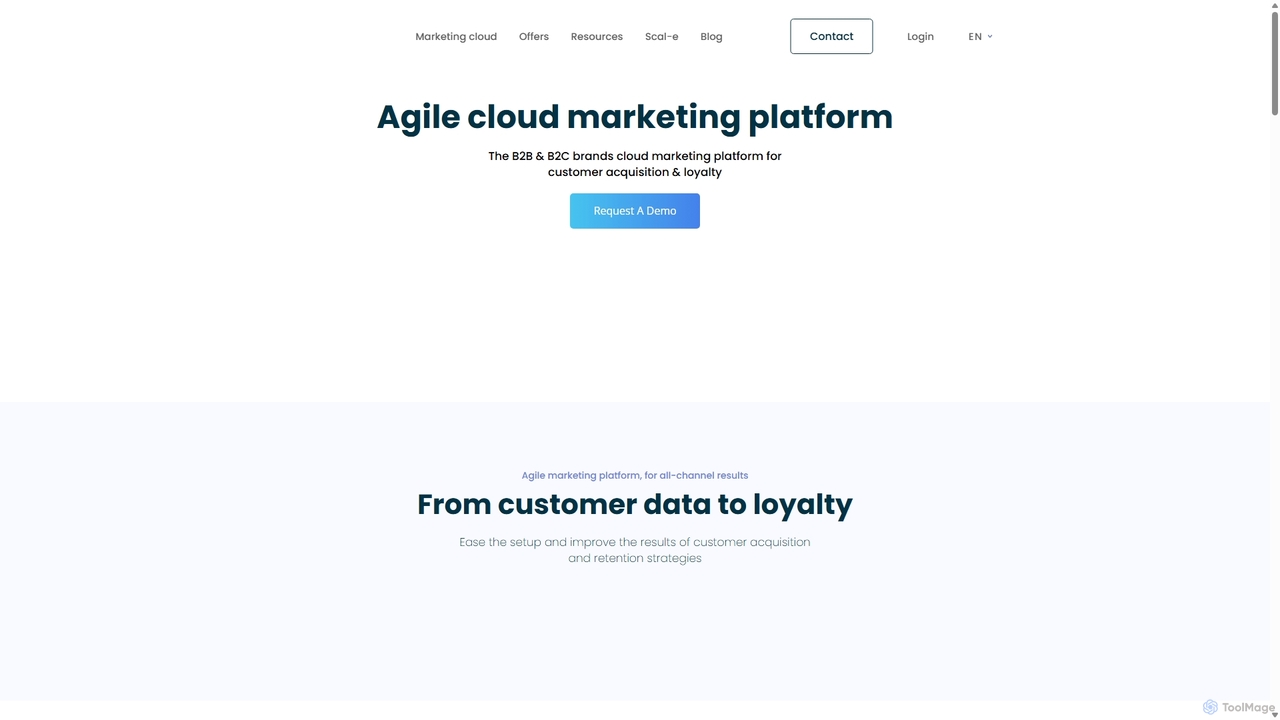
Scal-e is an agile cloud marketing platform built around a powerful Customer Data Platform (CDP). It enables B2B …
Scal-e is an agile cloud marketing platform built around a powerful Customer Data Platform (CDP). It enables B2B and B2C brands to unify customer data from all touchpoints, creating a 360° view. This allows for hyper-personalized marketing, automated omnichannel campaigns, and effective customer loyalty programs, ultimately driving acquisition and retention.
Lytics
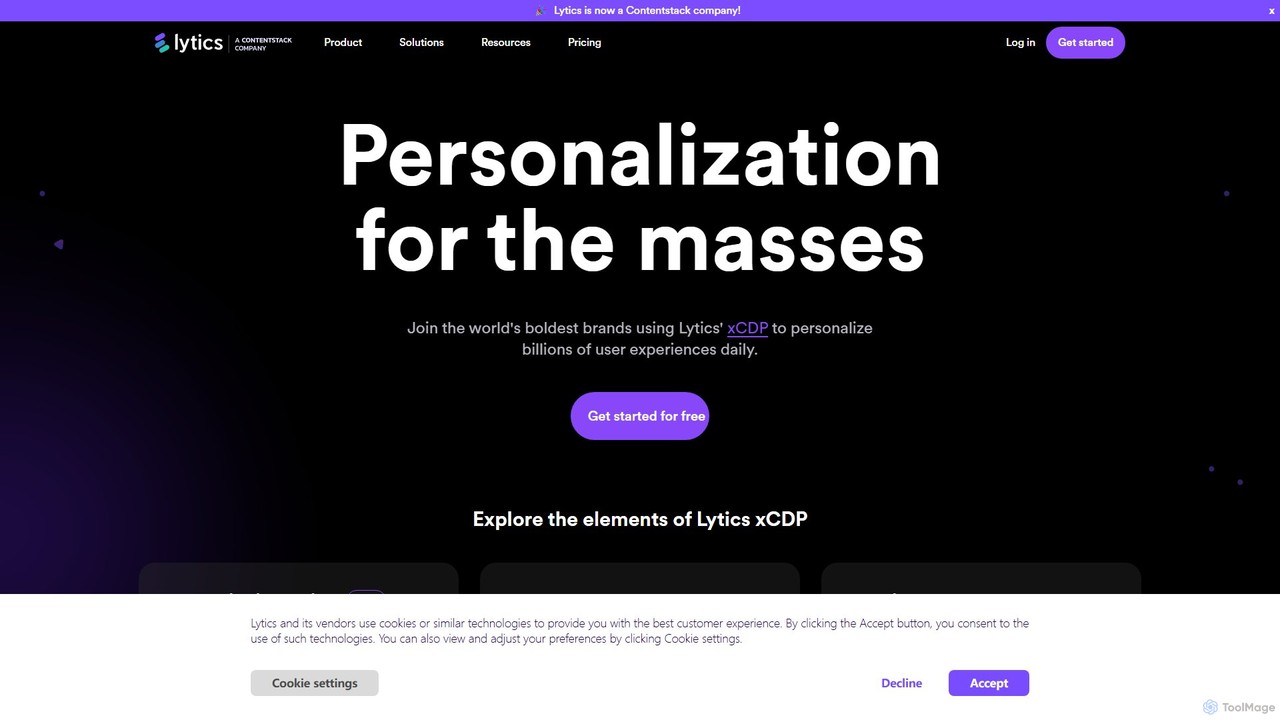
Lytics is an AI-powered Customer Data Platform (xCDP) that enables brands to deliver real-time, personalized experiences. It unifies …
Lytics is an AI-powered Customer Data Platform (xCDP) that enables brands to deliver real-time, personalized experiences. It unifies customer data from all sources, generates deep insights using AI, and activates this data across marketing channels and CMS platforms to drive engagement, conversions, and loyalty.
Tracardi
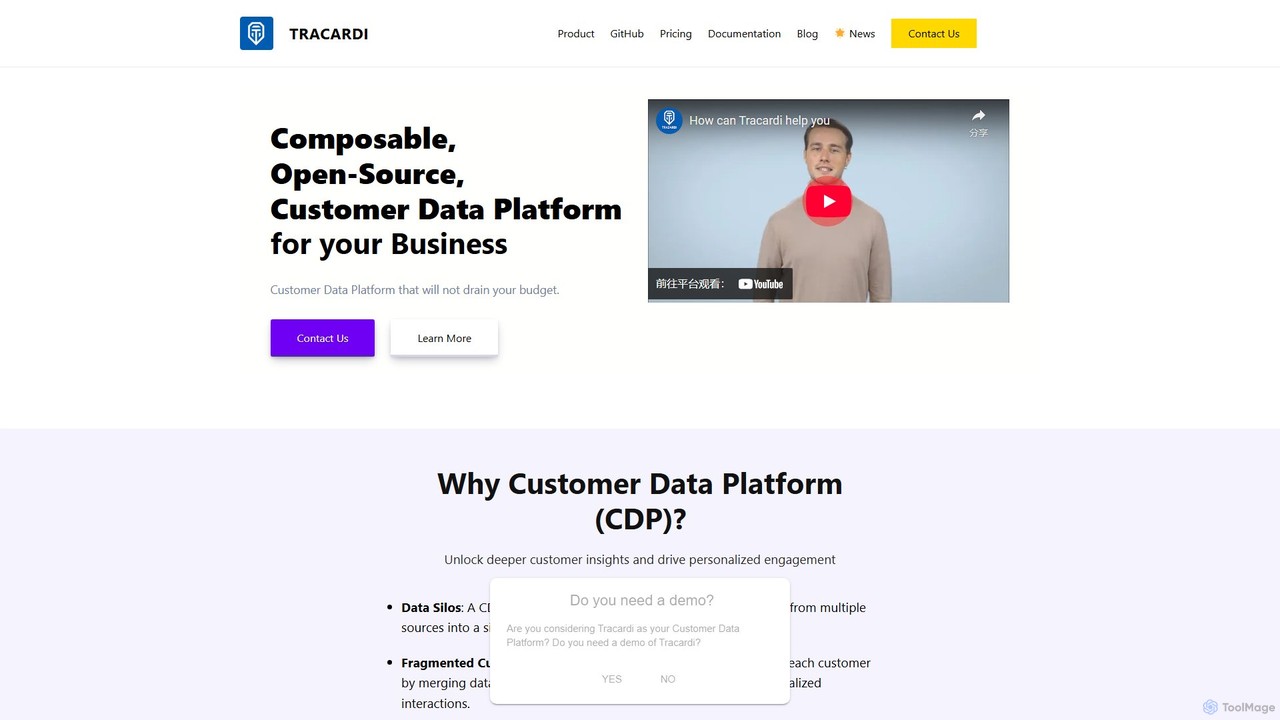
Tracardi is an open-source, API-first Customer Data Platform (CDP) designed to unify customer data from multiple sources. It …
Tracardi is an open-source, API-first Customer Data Platform (CDP) designed to unify customer data from multiple sources. It helps businesses break down data silos, create 360-degree customer profiles, and enable real-time personalized engagement. With both free and commercial versions, it offers a flexible, scalable, and affordable solution for data-driven marketing, sales, and support, featuring no-code automation and extensive integration capabilities.
Hightouch
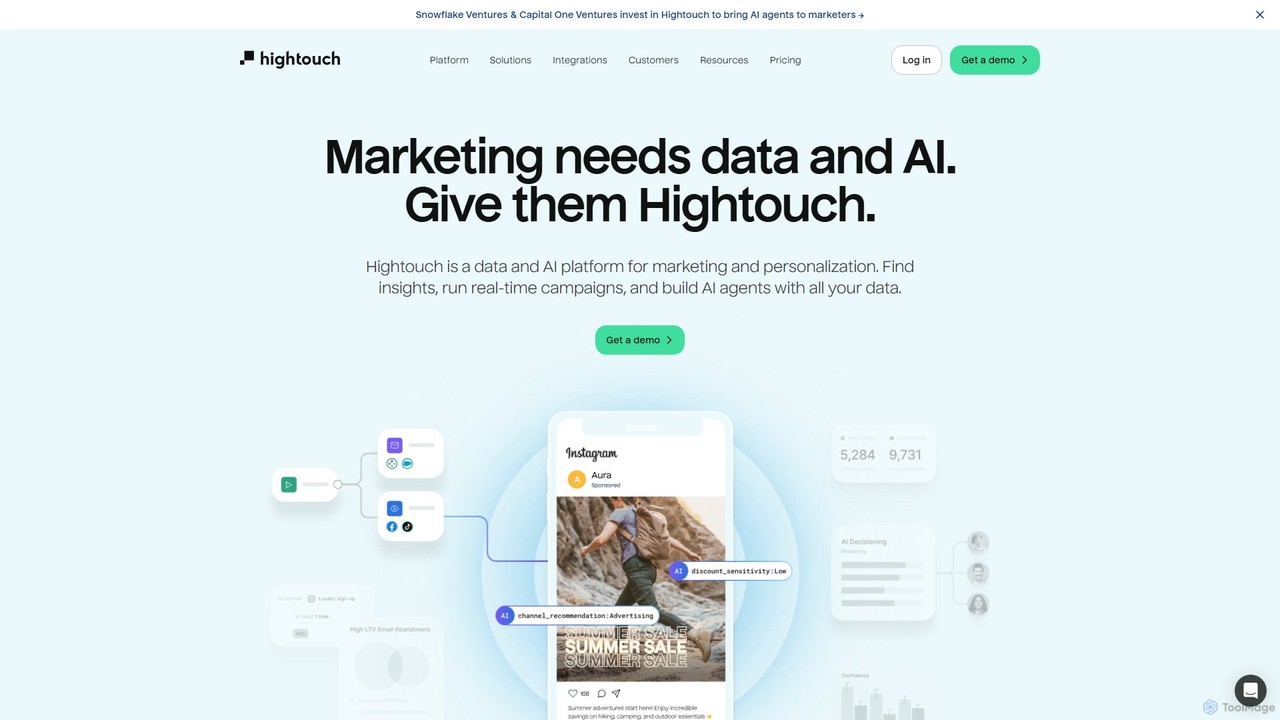
Hightouch is a leading Composable Customer Data Platform (CDP) and AI Decisioning platform. It empowers marketing teams to …
Hightouch is a leading Composable Customer Data Platform (CDP) and AI Decisioning platform. It empowers marketing teams to activate data directly from their data warehouse, enabling real-time personalization, targeted campaigns, and AI-driven customer experiences without copying data or relying on engineering teams.
About Customer Data Platform
A Customer Data Platform (CDP) is a system that collects and unifies first-party customer data from multiple sources to build a single, coherent, complete view of each customer. It ingests data from touchpoints like websites, mobile apps, CRM systems, and offline stores, then uses identity resolution to link this data to individual profiles. This unified profile enables businesses to create personalized marketing campaigns, improve customer service, and make data-driven decisions. Unlike other marketing tools, a CDP provides a persistent and accessible customer database for various systems to leverage.
Core Features
- Data Ingestion: Collects customer data in real-time from various online and offline sources, such as websites, apps, POS systems, and CRMs.
- Identity Resolution: Stitches together data fragments from different devices and channels to create a persistent, unified profile for each individual customer.
- Audience Segmentation: Allows marketers to build dynamic customer segments based on demographic, transactional, and behavioral data for targeted campaigns.
- Data Activation: Pushes unified profiles and audience segments to other tools in the marketing stack, such as email platforms, ad networks, and personalization engines.
Use Cases
CDPs are primarily used by marketing, e-commerce, and customer experience teams in B2C and B2B companies. They are essential for industries like retail, finance, travel, and media that need to manage large volumes of customer data across multiple channels. Common applications include orchestrating cross-channel marketing campaigns, personalizing website content, and providing customer support agents with a complete interaction history.
How to Choose
When selecting a Customer Data Platform, consider its integration capabilities with your existing tech stack. Evaluate the sophistication of its identity resolution engine and whether it supports real-time data processing. Assess the user interface to ensure it is accessible to non-technical marketing users. Finally, consider the platform's scalability to handle your data volume growth and its compliance with data privacy regulations like GDPR and CCPA.

Customer Data PlatformUse Cases
Personalize Website Experience in Real-Time
An e-commerce marketing manager uses a Customer Data Platform to deliver a personalized browsing experience. The CDP collects real-time behavioral data, such as products viewed, items added to cart, and past purchases. When a known customer returns to the site, the CDP activates this data, allowing the website's personalization engine to instantly display relevant product recommendations, custom banners, and tailored offers. This creates a more engaging experience, increasing conversion rates and average order value by showing customers exactly what they are interested in.
Orchestrate Cross-Channel Marketing Campaigns
A campaign manager aims to re-engage users who abandoned their shopping carts. Using the CDP, they create a dynamic segment of all users who added an item to their cart in the last 24 hours but did not complete the purchase. The CDP then activates this segment across multiple channels simultaneously: it triggers an automated reminder email, adds the users to a custom audience for retargeting ads on social media, and sends a push notification with a special offer to users who have the mobile app installed. This consistent, multi-channel approach significantly increases the chances of cart recovery.
Improve Customer Support with a 360-Degree View
A customer support agent receives an inquiry from a frustrated customer. Instead of relying solely on the ticketing system, the agent's helpdesk software is integrated with the CDP. This provides the agent with a complete view of the customer's history in a single interface, including recent purchases, website browsing activity, and past support interactions. Armed with this context, the agent can understand the root of the problem faster, avoid asking repetitive questions, and offer a more relevant and empathetic solution, leading to higher customer satisfaction and faster resolution times.
Reduce Ad Spend Waste with Suppression Lists
A digital advertising specialist wants to optimize their budget for customer acquisition campaigns. They use the CDP to create a dynamic audience segment of all existing customers who have made a purchase in the last 90 days. This segment is then synced as a suppression list (or exclusion audience) with their advertising platforms like Google Ads and Facebook Ads. As a result, the company stops showing expensive acquisition ads to people who are already loyal customers, reallocating that budget towards acquiring genuinely new users and significantly improving the campaign's return on ad spend (ROAS).
Develop Predictive Lead Scoring Models
A B2B marketing operations specialist needs a more accurate way to score leads. They use a CDP to combine behavioral data from their website (e.g., pages visited, content downloaded) with firmographic data from their CRM (e.g., company size, industry). This unified dataset is then fed into a predictive AI model to create a more nuanced lead score. The CDP can then automatically update this score in the CRM in real-time. As a result, the sales team can focus their efforts on leads with the highest propensity to convert, improving sales efficiency and shortening the sales cycle.
Analyze Customer Lifetime Value (CLV)
A data analyst for a subscription-based service wants to understand what drives long-term customer value. They use the CDP to consolidate all customer data, including acquisition channel, initial product choice, feature usage, support ticket history, and subscription renewals, into a single unified view. By analyzing this comprehensive dataset, the analyst can identify patterns and build accurate CLV models. These insights help the marketing team identify the most valuable customer segments and acquisition channels, allowing them to focus retention efforts and marketing spend more effectively.