Marketing Best in category 2 results Customer Research AI Tool

Popular AI tools in the Customer Research field of Marketing include PersonaGPT、Personadeck, etc., helping you quickly improve efficiency.

Personadeck

Personadeck

Personadeck is an AI-powered platform designed to generate detailed and accurate customer personas instantly. By inputting customer data, …

3.1K
Free
PersonaGPT

PersonaGPT

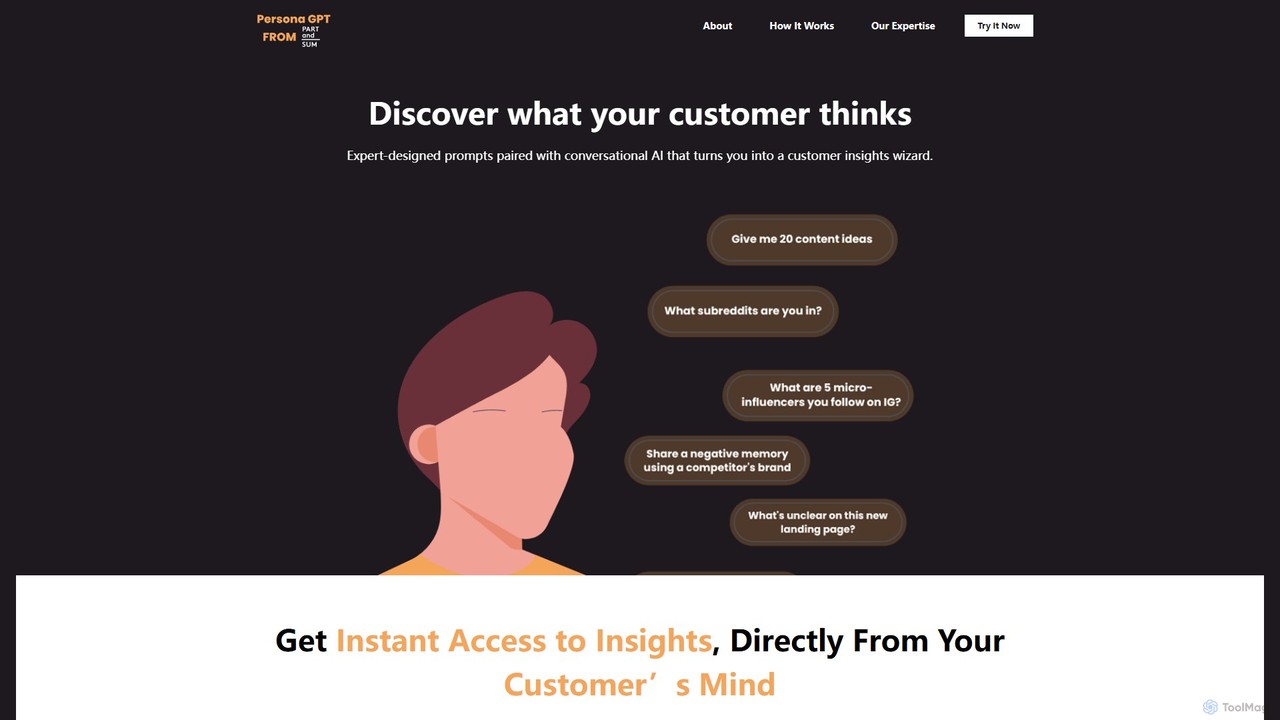
PersonaGPT is a free AI-powered tool that transforms you into a customer insights wizard. By combining expert-designed prompts …

3.2K

About Customer Research

Customer Research AI tools are specialized platforms that leverage artificial intelligence to automate and enhance the process of gathering, analyzing, and interpreting data about target audiences. These tools utilize advanced algorithms, including natural language processing (NLP), machine learning, and predictive analytics, to uncover deep, actionable insights into customer behaviors, preferences, and sentiments. They empower businesses to make data-driven decisions, optimize marketing strategies, and develop products that truly resonate with their market, forming a crucial component within the broader field of AI-powered marketing by providing a comprehensive understanding of the consumer landscape.

Core Features

  • Automated Data Collection: Gathers vast amounts of customer data from diverse sources like social media, online reviews, forums, surveys, and customer support interactions, ensuring a holistic view.
  • Sentiment Analysis: Identifies and quantifies the emotional tone, opinions, and attitudes expressed in customer feedback, helping to gauge satisfaction and pinpoint areas for improvement.
  • Persona Generation: Automatically creates detailed buyer personas based on aggregated behavioral, demographic, and psychographic data, providing a clear picture of target segments.
  • Trend Identification: Detects emerging market trends, shifts in consumer preferences, competitive movements, and potential market gaps in real-time, enabling proactive strategy adjustments.
  • Predictive Analytics: Forecasts future customer behaviors, purchase patterns, churn risks, and market demands, allowing businesses to anticipate needs and optimize resource allocation.

Use Cases

Businesses across various sectors, from e-commerce to software development and healthcare, utilize Customer Research AI tools to gain a significant competitive edge. Marketing teams employ these tools to refine campaign targeting, personalize messaging, and identify new market opportunities. Product managers leverage the insights to prioritize feature development, validate new concepts, and ensure product-market fit. Furthermore, customer service departments can utilize sentiment analysis to improve support quality, proactively address issues, and enhance overall customer satisfaction, fostering a more responsive and customer-centric approach to market understanding and strategic planning.

How to Choose

When selecting an AI customer research tool, it's crucial to consider its data integration capabilities with your existing systems (e.g., CRM, social media platforms, analytics tools) to ensure seamless data flow. Evaluate the depth and accuracy of its analytical models, particularly its natural language processing (NLP) sophistication for qualitative data. Assess its ability to generate truly actionable insights, not just raw data. Other key factors include the customization options for reporting and dashboarding, the scalability to handle growing data volumes, the ease of use for your team, and the transparency of its AI models. Finally, compare pricing models, data security protocols, and the quality of customer support for long-term value and compliance.


Customer ResearchUse Cases

1

Automated Buyer Persona Creation

Marketing and sales teams often spend significant time manually compiling customer data to build buyer personas. AI customer research tools automate this by analyzing vast datasets—including demographics, online behavior, purchase history, and social media interactions—to generate detailed, data-driven personas. This saves hundreds of hours, provides more accurate and dynamic customer profiles, and enables highly targeted marketing campaigns and product development strategies.

2

Real-time Customer Sentiment Monitoring

Customer service and product management teams need to understand how customers feel about their products or services. AI tools continuously monitor and analyze customer feedback from various sources like reviews, social media, and support tickets. They identify sentiment (positive, negative, neutral), detect emerging issues, and highlight common pain points in real-time, allowing companies to quickly address problems, improve customer satisfaction, and prioritize urgent product fixes or service enhancements.

3

Competitive Market Landscape Analysis

Business strategists and market analysts require up-to-date information on competitors. AI customer research tools scan and analyze competitor websites, product reviews, news articles, and social media mentions to provide a comprehensive overview of their strategies, product launches, pricing, and customer perception. This enables businesses to identify market gaps, benchmark their performance, and refine their unique selling propositions to maintain a competitive edge.

4

Optimizing Product Feature Prioritization

Product development teams constantly face decisions about which features to build next. AI tools analyze user feedback, feature requests from support tickets, forum discussions, and market trends to quantify demand and potential impact for new features. By identifying the most requested and impactful features based on customer data, these tools help product managers prioritize their roadmap, ensuring resources are allocated to developments that will deliver the most value to users.

5

Targeted Audience Segmentation for Campaigns

Digital marketers and advertisers aim to reach the right audience with the right message. AI customer research tools segment customer bases far beyond basic demographics, using complex behavioral patterns, engagement metrics, and psychographic data. This granular segmentation allows for the creation of highly personalized marketing campaigns, leading to significantly higher engagement rates, improved conversion rates, and more efficient ad spend by focusing on the most receptive customer groups.

6

Enhancing Survey Design and Open-Ended Response Analysis

Researchers and UX designers often struggle with crafting effective surveys and analyzing qualitative data from open-ended questions. AI tools can suggest optimal survey questions to minimize bias and maximize insight. More importantly, they can automatically process thousands of open-ended responses, extracting key themes, common sentiments, and actionable insights much faster and more consistently than manual coding, streamlining the entire survey research process and yielding richer qualitative data.

Customer ResearchFrequently Asked Questions