Gmplus
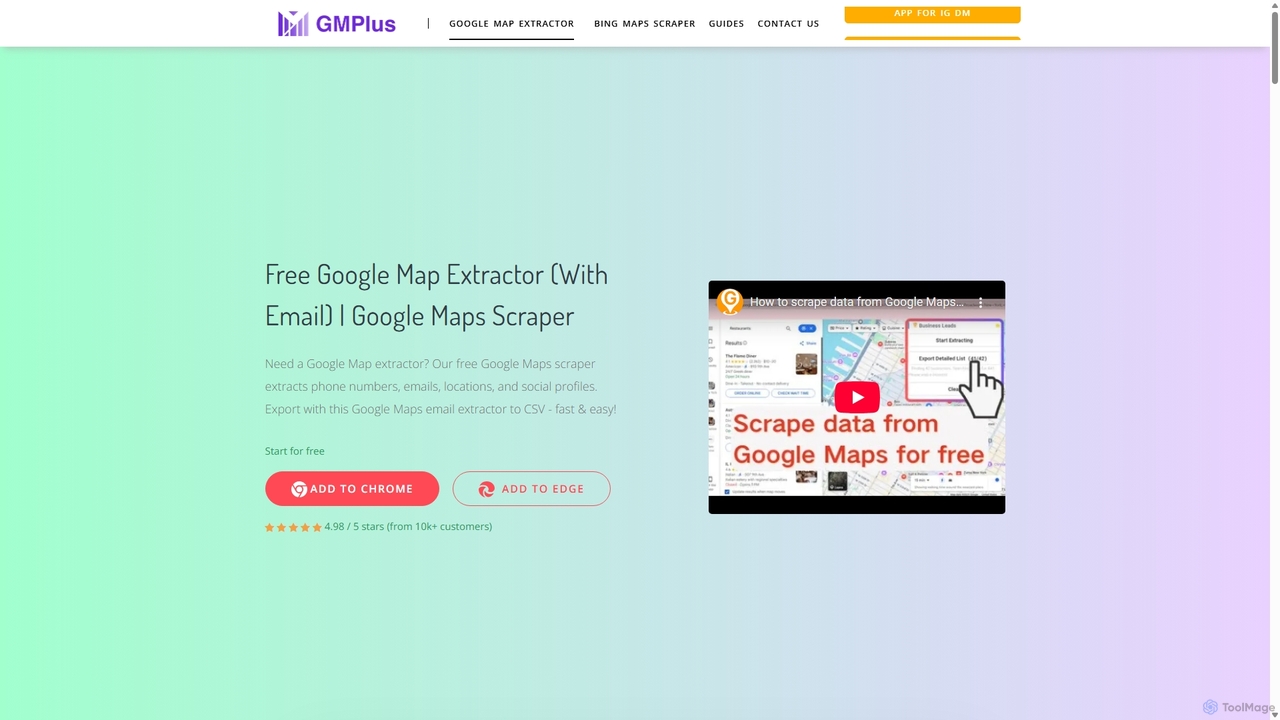
Gmplus is a powerful and free Google Maps scraper designed for effortless lead generation. As a browser extension, …
Gmplus is a powerful and free Google Maps scraper designed for effortless lead generation. As a browser extension, it automatically extracts comprehensive business data, including names, phone numbers, emails, addresses, and social media profiles from Google Maps listings. Export your targeted leads to CSV/Excel in seconds, streamlining your sales and marketing efforts without any coding required.
Leads-Sniper
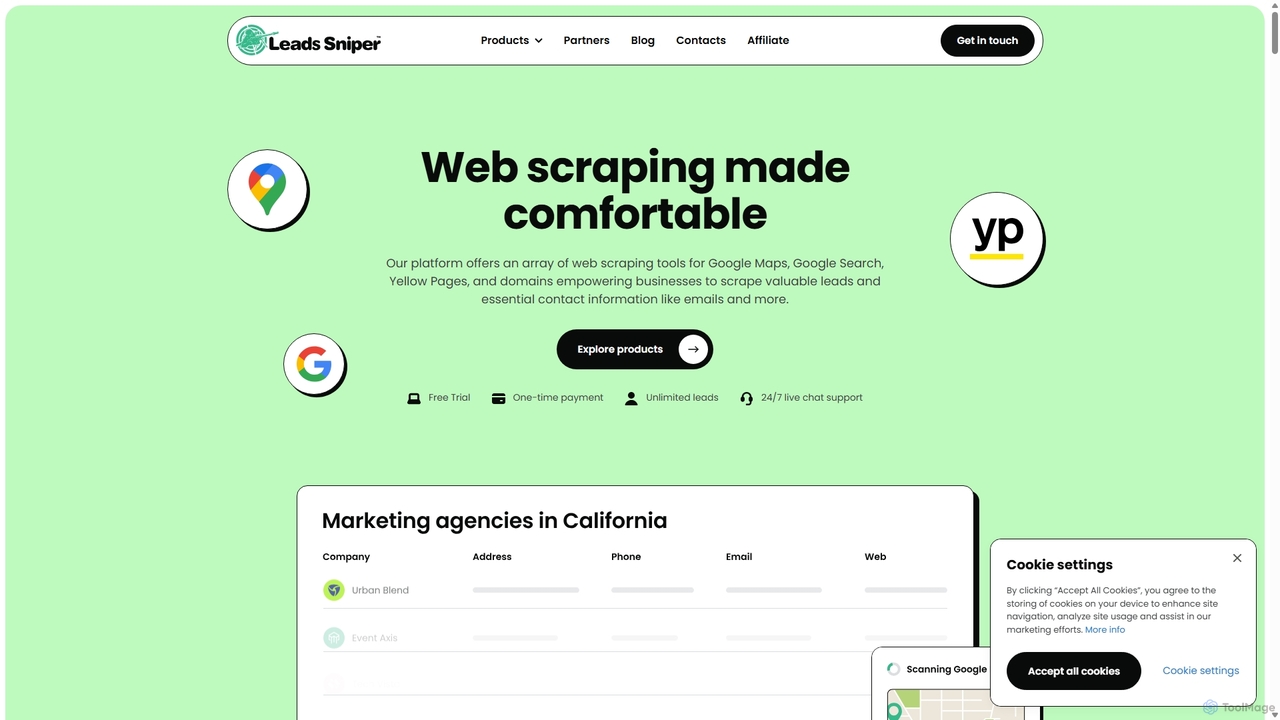
Leads-Sniper is a powerful web scraping platform offering a suite of tools to automate lead generation. It effortlessly …
Leads-Sniper is a powerful web scraping platform offering a suite of tools to automate lead generation. It effortlessly extracts valuable business data, including emails and contact information, from Google Maps, Google Search, Yellow Pages, and domains, helping businesses grow by providing a steady stream of targeted leads.
About Data Extraction
AI Data Extraction tools are a class of software that automates the capture of specific information from unstructured sources like websites, documents, and images. Leveraging technologies such as Natural Language Processing (NLP) and computer vision, these tools can intelligently identify, parse, and structure data without manual intervention. For marketing professionals, they are instrumental in gathering competitive intelligence, generating leads, and conducting market research at scale. This allows teams to make data-driven decisions by transforming vast amounts of web and document data into actionable insights.
Core Features
- Intelligent Web Scraping: Automatically navigates and extracts data from complex, dynamic websites, handling logins and JavaScript-heavy pages.
- Document Processing (OCR & Parsing): Extracts text, tables, and key-value pairs from PDFs, invoices, and scanned documents.
- Entity Recognition (NER): Identifies and categorizes specific information like company names, contact details, prices, and locations within text.
- Data Structuring & Export: Cleans and organizes extracted information into structured formats like CSV, JSON, or directly into databases and CRMs.
- Scheduled & Real-time Extraction: Configures automated data collection on a recurring schedule or in response to specific triggers.
Applicable Scenarios
These tools are widely used by marketing analysts, sales development representatives, and business intelligence teams. Common applications include systematically monitoring competitor product pricing and promotions, building targeted lead lists from online directories and professional networks, and aggregating customer reviews from multiple platforms for sentiment analysis.
Selection Criteria
When choosing a tool, consider the specific data sources you need to target (e.g., social media, e-commerce sites, PDFs). Evaluate the user interface—whether you need a no-code, point-and-click solution or a powerful API for developers. Also, assess its scalability for large-volume tasks, integration capabilities with your existing marketing stack (like Salesforce or HubSpot), and the pricing model based on usage.

Data ExtractionUse Cases
Automated Competitor Price Monitoring
E-commerce marketing managers use AI data extraction tools to systematically track competitor websites. They can set up automated crawlers to visit specific product pages daily, extracting key data points like price, stock availability, and shipping costs. The AI identifies these data fields even if the website layout changes. This provides a real-time dashboard of the competitive landscape, enabling dynamic pricing strategies and timely promotional adjustments without hours of manual checking.
Building Targeted B2B Lead Lists
Sales and marketing teams leverage these tools to accelerate lead generation. Instead of manually copying information, they can extract company names, job titles, and contact details from online business directories, conference attendee lists, or professional networks. The tool's entity recognition feature helps isolate relevant information from surrounding text, which is then structured into a clean CSV file ready for import into a CRM system, significantly boosting outbound campaign efficiency.
Social Media Sentiment Analysis
Brand managers and market researchers apply AI data extraction to gauge public opinion. The tools can be configured to scrape mentions of their brand, products, or competitors from social media platforms, forums, and review sites. Integrated NLP capabilities then analyze the sentiment (positive, negative, neutral) of the extracted text. This process delivers consolidated insights into customer satisfaction and emerging trends, informing product development and communication strategies.
Aggregating Content for Market Intelligence
Content marketing and strategy teams use data extraction to stay ahead of industry trends. They can automate the collection of articles, press releases, and research reports from hundreds of news sites and industry blogs based on specific keywords. The extracted content can be used to build an internal knowledge base, generate market intelligence reports, or curate high-quality content for newsletters and social media, establishing thought leadership.
Real Estate Market Data Collection
Real estate analysts and agencies utilize data extraction tools to compile comprehensive market data. They can scrape property listings from multiple real estate portals to gather information on pricing, property features (e.g., square footage, number of bedrooms), location, and days on the market. This aggregated, structured data is then used for comparative market analysis (CMA), identifying investment opportunities, and advising clients with data-backed insights.
Streamlining Marketing Campaign Reporting
Digital marketing agencies often manage campaigns across various platforms that may not have direct API integrations. They use data extraction tools to log into different ad platforms or analytics dashboards and automatically pull key performance indicators (KPIs) like impressions, clicks, and conversions. This automates the tedious process of report creation, consolidating data from disparate sources into a single dashboard for client review.