SEO.AI
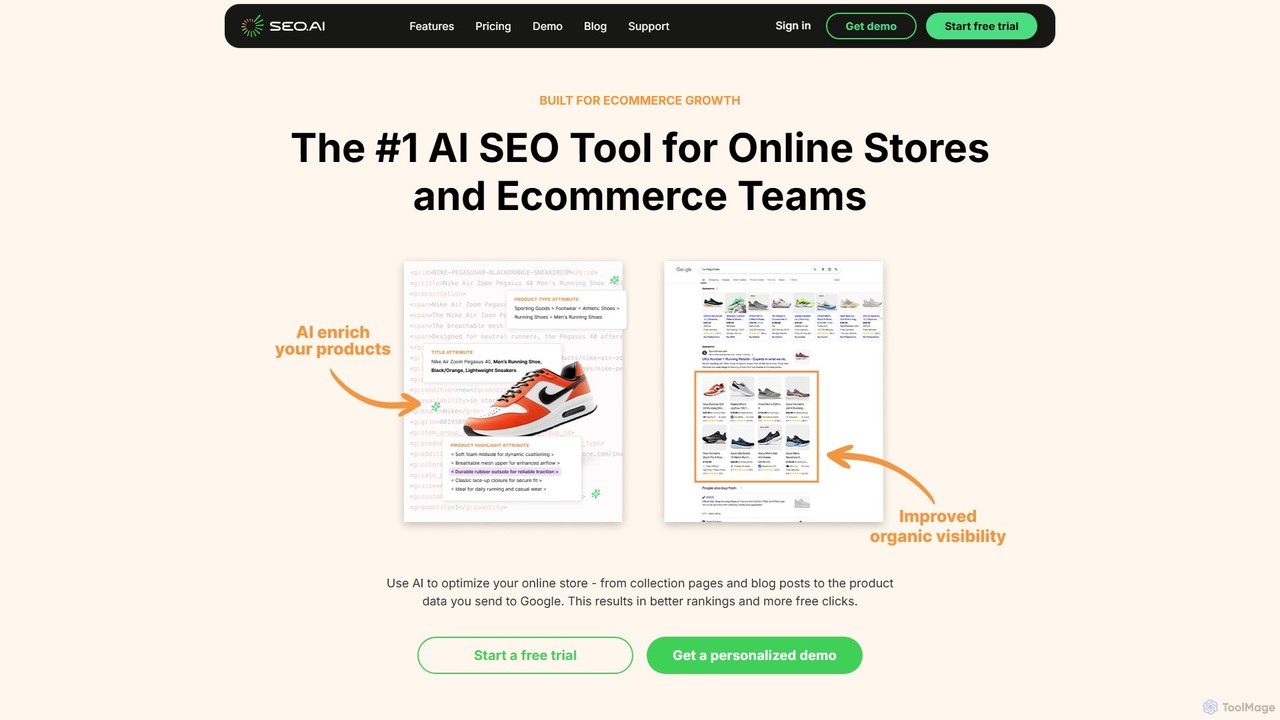
SEO.AI is an all-in-one AI-powered SEO platform designed for e-commerce teams, marketers, and agencies. It combines an AI …
SEO.AI is an all-in-one AI-powered SEO platform designed for e-commerce teams, marketers, and agencies. It combines an AI copywriter, content optimization tools, keyword research, and competitor analysis to help you dominate search engine results pages (SERPs). Generate high-converting content, optimize product feeds, and build topical authority with data-driven insights and real-time SEO scoring.
Embolden
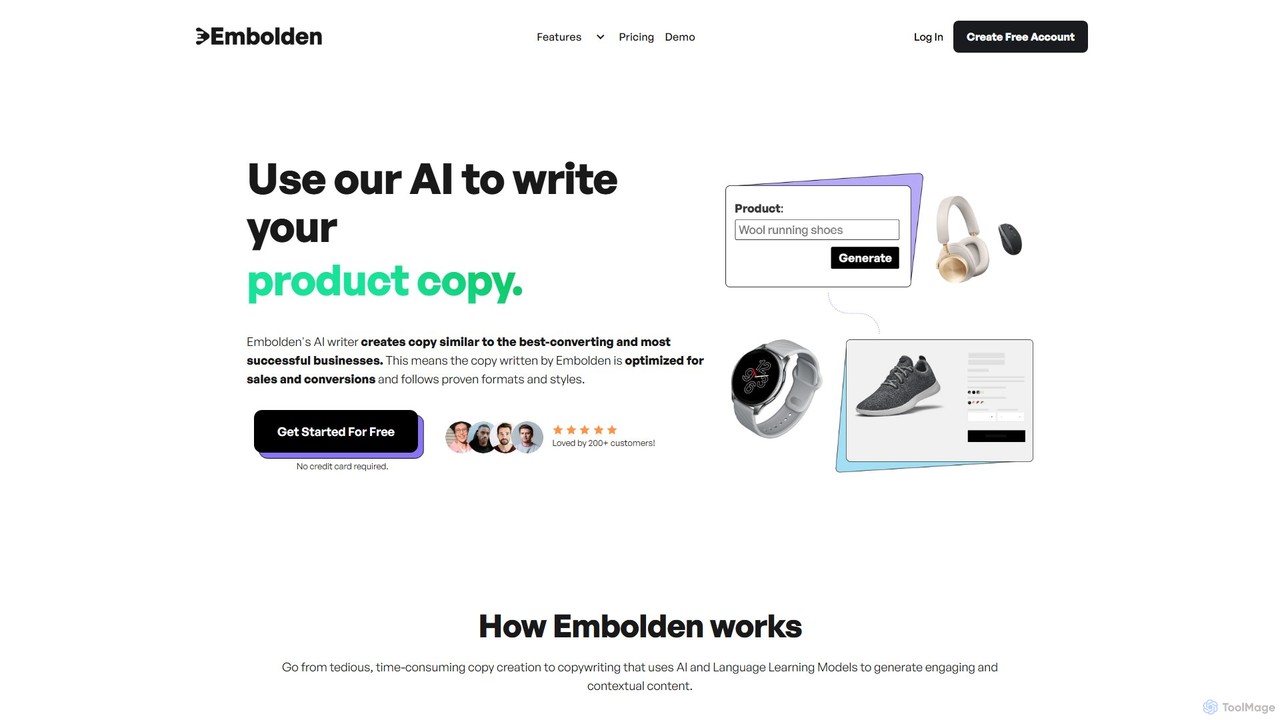
Embolden is a specialized AI writing assistant for ecommerce businesses. It offers over 60+ tools powered by GPT-3.5 …
Embolden is a specialized AI writing assistant for ecommerce businesses. It offers over 60+ tools powered by GPT-3.5 to generate high-quality, conversion-optimized copy for product descriptions, marketing emails, social media posts, ads, and more. It helps businesses save time, maintain brand consistency, and increase sales.
About Ecommerce
AI Ecommerce tools are specialized solutions that leverage artificial intelligence to optimize various aspects of online retail operations. These tools utilize machine learning, natural language processing, and computer vision to enhance customer experience, streamline marketing efforts, and improve operational efficiency. They empower businesses to personalize shopping journeys, automate routine tasks, and make data-driven decisions, ultimately driving sales and growth within the competitive digital marketplace.
Core Features
- Personalized Recommendations: AI algorithms analyze customer behavior and preferences to suggest relevant products, increasing conversion rates and average order value.
- Automated Customer Support: AI chatbots and virtual assistants handle inquiries, provide instant support, and guide customers through the purchasing process 24/7.
- Dynamic Pricing Optimization: Machine learning models analyze market trends, competitor prices, and demand fluctuations to automatically adjust product prices for maximum profitability.
- Intelligent Inventory Management: AI predicts demand, optimizes stock levels, and automates reordering to prevent stockouts and reduce carrying costs.
- AI-Powered Marketing & Advertising: Tools for generating ad copy, optimizing campaign targeting, and personalizing email marketing content based on user segments.
Use Cases
Ecommerce businesses use these tools for everything from enhancing product discovery on their websites to automating post-purchase customer engagement. They are crucial for optimizing conversion funnels, managing large product catalogs efficiently, and delivering highly personalized shopping experiences that mimic in-store assistance.
How to Choose
When selecting AI Ecommerce tools, consider the specific challenges you aim to solve, such as improving conversion, reducing customer service load, or optimizing inventory. Evaluate the tool's integration capabilities with your existing ecommerce platform (e.g., Shopify, Magento), the accuracy and sophistication of its AI models, and its scalability to grow with your business. Also, assess the ease of implementation and the level of ongoing support provided.

EcommerceUse Cases
Automating Product Recommendations on Storefronts
Ecommerce managers use AI tools to automatically display personalized product suggestions to shoppers based on their browsing history, purchase patterns, and similar customer data. This significantly enhances the shopping experience, guides customers to relevant items, and boosts cross-selling and up-selling opportunities, leading to higher average order values and improved conversion rates without manual merchandising.
Generating AI-Powered Product Descriptions & Ad Copy
Content creators and marketing teams leverage AI to quickly generate compelling and SEO-optimized product descriptions for thousands of items. These tools can also produce various ad copy variations for different marketing channels (e.g., Google Ads, social media), saving hours of manual writing, ensuring consistency, and allowing for rapid A/B testing to find the most effective messaging.
Enhancing Customer Service with AI Chatbots
Online retailers deploy AI chatbots on their websites and messaging apps to provide instant 24/7 support for common customer inquiries, such as order status, shipping information, and product FAQs. This reduces the workload on human support agents, improves response times, and ensures customers receive immediate assistance, leading to higher satisfaction and fewer abandoned carts.
Optimizing Dynamic Pricing Strategies
Pricing strategists in ecommerce utilize AI algorithms to continuously monitor competitor prices, market demand, and inventory levels. The AI automatically adjusts product prices in real-time to maximize profit margins during peak seasons, clear excess stock, or stay competitive, ensuring optimal revenue generation without constant manual intervention.
Personalizing Email Marketing Campaigns
Email marketers use AI tools to segment customer lists and personalize email content, product recommendations, and promotional offers based on individual customer behavior and preferences. This leads to significantly higher open rates, click-through rates, and conversions compared to generic mass emails, fostering stronger customer relationships and repeat purchases.
Predictive Inventory and Demand Forecasting
Operations managers and supply chain teams employ AI to analyze historical sales data, seasonal trends, and external factors to accurately forecast future product demand. This enables precise inventory planning, reduces instances of overstocking or stockouts, minimizes storage costs, and ensures products are available when customers want them, optimizing the entire supply chain.