
ToolMage
Sign in

Best 1 Email Automation AI tools for Marketing

Popular Email Automation AI tools in Marketing include nurturally, helping you work more efficiently.

nurturally
Freemium

nurturally

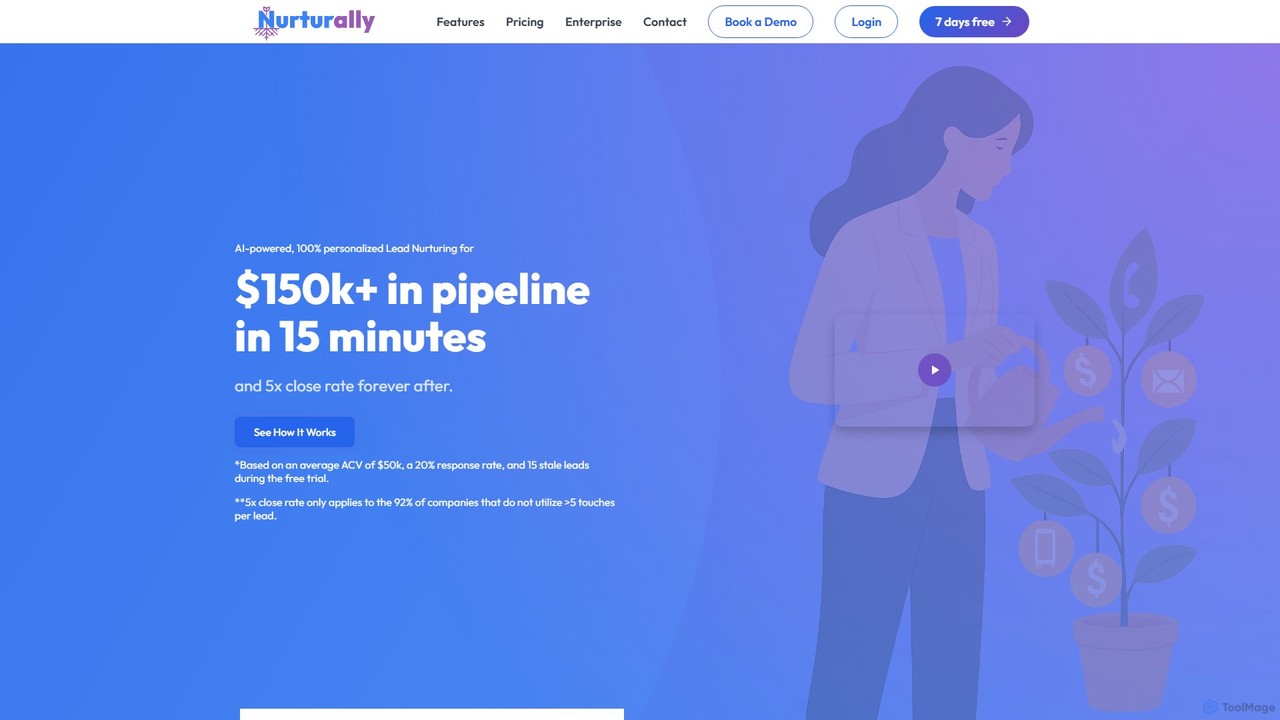
Nurturally is an AI-powered platform designed to automate lead nurturing and follow-ups. It intelligently re-engages cold or long-cycle leads with personalized, context-aware emails that feel human-written. By analyzing past conversations, Nurturally ensures perfect timing and relevant messaging, preventing valuable leads from falling through the cracks. It aims to significantly increase close rates, shorten sales cycles, and boost sales efficiency for businesses of all sizes, from freelancers to large enterprises.

Email Automation
Visits 5.8KFavorites 157Likes 143

About Email Automation

Email Automation tools are AI-powered platforms designed to streamline and optimize email marketing campaigns. Leveraging machine learning and natural language processing, these tools automate tasks such as audience segmentation, content generation, send time optimization, and personalized communication. They empower businesses to deliver highly relevant messages to the right audience at the optimal moment, significantly enhancing engagement, driving conversions, and freeing up marketing teams from repetitive manual work within the broader context of digital marketing.

Core Features

  • AI-Powered Content Generation: Automatically crafts compelling subject lines, email body copy, and calls-to-action tailored to specific segments.
  • Predictive Send Time Optimization: Analyzes recipient behavior to determine the ideal time to send emails for maximum open and click-through rates.
  • Dynamic Audience Segmentation: Intelligently groups subscribers based on behavior, demographics, and preferences for hyper-targeted campaigns.
  • Automated Workflow Creation: Designs and executes complex email sequences, such as welcome series, abandoned cart reminders, and re-engagement campaigns.
  • Performance Analytics & Insights: Provides deep data analysis on campaign effectiveness, offering actionable recommendations for continuous improvement.

Use Cases

Marketing teams utilize Email Automation to scale personalized outreach without increasing manual effort. E-commerce businesses deploy these tools to automatically send abandoned cart recovery emails with dynamic product suggestions. SaaS companies leverage them for onboarding new users with tailored educational content and feature adoption prompts, ensuring consistent communication across the customer lifecycle.

How to Choose

When selecting an Email Automation tool, consider its AI capabilities for personalization and content generation, integration with existing CRM and marketing platforms, and scalability to accommodate your audience growth. Evaluate the ease of use, reporting features, and pricing structure to ensure it aligns with your team's technical expertise and budget. Prioritize tools offering robust A/B testing and predictive analytics for continuous campaign optimization.

Email Automation use cases

1

Personalized Product Recommendations

E-commerce marketers can utilize AI Email Automation to send highly personalized product recommendations to customers. By analyzing past purchase history, browsing behavior, and demographic data, the AI identifies relevant products and automatically generates emails featuring these items. This approach significantly increases click-through rates and conversion likelihood compared to generic promotional emails, driving higher sales revenue.

2

Automated Lead Nurturing Campaigns

Sales and marketing teams can set up sophisticated automated lead nurturing sequences. When a new lead signs up or interacts with content, the system automatically sends a series of tailored emails over time, providing valuable information, addressing potential pain points, and guiding them through the sales funnel. AI optimizes the content and timing of these emails based on lead engagement, improving conversion rates.

3

Dynamic Abandoned Cart Recovery

Online retailers frequently face abandoned carts. AI Email Automation tools can detect when a customer leaves items in their cart and automatically trigger a series of recovery emails. These emails can include personalized product images, special discounts, or urgency-driven messages, dynamically generated by AI to entice the customer back to complete their purchase, significantly reducing lost sales.

4

Optimized Newsletter Scheduling

Content creators and publishers can leverage AI to determine the optimal send time for their newsletters. Instead of guessing, the AI analyzes historical engagement data for each subscriber, predicting when they are most likely to open and interact with emails. This ensures newsletters reach recipients at their peak engagement window, leading to higher open rates, click-throughs, and overall content consumption.

5

AI-Generated Subject Lines & Body Copy

Marketing professionals can use AI Email Automation to generate compelling subject lines and email body content. By inputting key messages or campaign goals, the AI can produce multiple creative variations, test them, and identify the most effective ones. This not only saves significant time in copywriting but also improves email performance by ensuring messages are highly engaging and optimized for recipient response.

6

Customer Onboarding & Engagement Series

SaaS companies and service providers can automate their customer onboarding and engagement processes. AI-powered email sequences can welcome new users, guide them through initial setup, highlight key features, and provide tips for maximizing value. These emails are personalized based on user activity and progress, ensuring a smooth onboarding experience and fostering long-term customer loyalty and retention.

Email Automation FAQ

What is Email Automation?

Email Automation refers to the use of software, often powered by AI, to automatically send emails to specific individuals or segments of an audience based on predefined triggers, schedules, or behaviors. It's a strategic component of digital marketing that allows businesses to deliver personalized and timely communications without manual intervention, from welcome series to promotional campaigns and transactional messages.

How does AI enhance Email Automation?

AI significantly enhances Email Automation by introducing intelligence and personalization beyond basic rule-based systems. AI algorithms can analyze vast amounts of data to predict optimal send times, dynamically segment audiences, generate personalized content (subject lines, body copy), and even suggest A/B test variations. This leads to higher open rates, click-through rates, and conversions by ensuring messages are highly relevant and delivered at the most impactful moment.

What are the key benefits of using AI Email Automation tools?

The primary benefits include substantial time savings for marketing teams, improved customer engagement through hyper-personalization, and increased conversion rates due to optimized messaging and delivery. AI Email Automation also offers enhanced scalability, allowing businesses to manage large subscriber lists and complex campaigns efficiently, alongside deeper insights into campaign performance for continuous improvement and better ROI.

How to choose the best Email Automation tool for my business?

To choose the best tool, first assess your specific needs regarding AI capabilities like content generation and predictive analytics. Consider its integration with your existing CRM, e-commerce platform, or other marketing software. Evaluate scalability for your current and future audience size, ease of use for your team, and the comprehensiveness of its analytics and reporting features. Finally, compare pricing models to find a solution that fits your budget and offers strong customer support.

What's the difference between traditional Email Marketing and AI Email Automation?

Traditional Email Marketing often involves manual campaign setup, basic segmentation, and scheduled sends, relying heavily on human input for content and timing. AI Email Automation, conversely, leverages machine learning to automate and optimize these processes intelligently. It offers dynamic personalization, predictive analytics for send times, and AI-generated content, leading to more effective, data-driven campaigns with less manual effort and superior performance.