Squidly
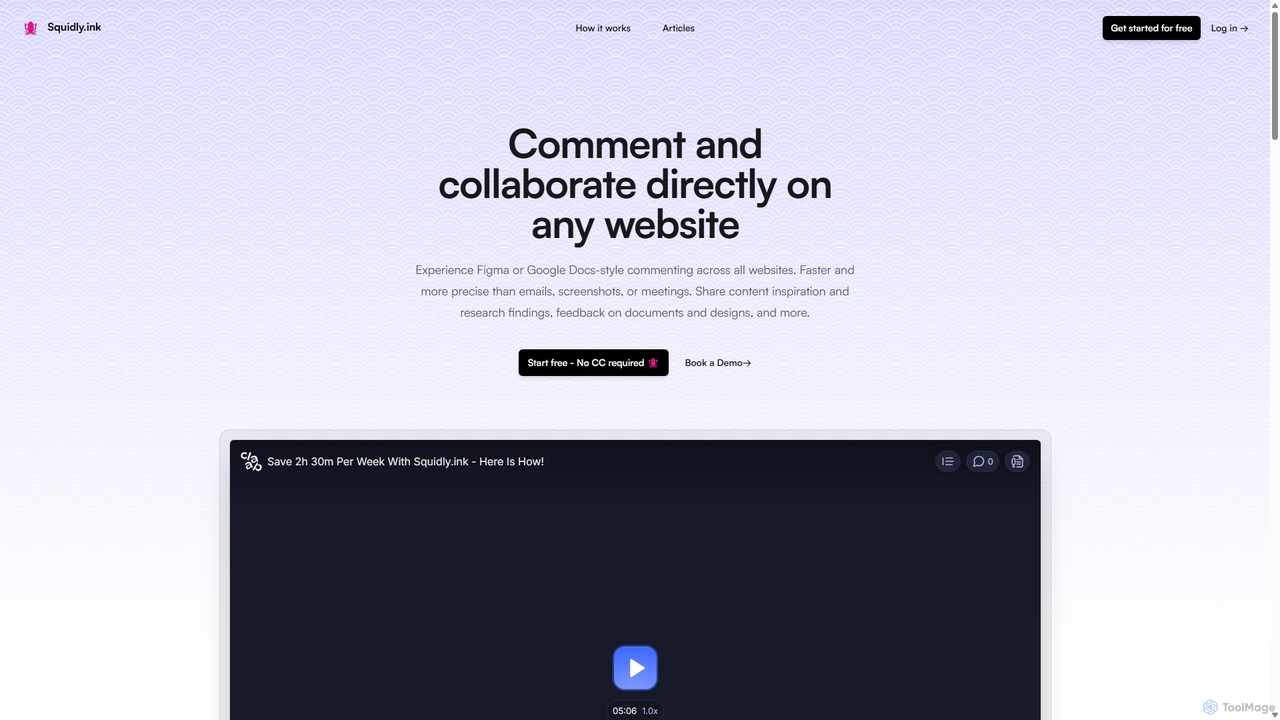
Squidly is a collaborative browser extension that allows teams to leave comments directly on any website, similar to …
Squidly is a collaborative browser extension that allows teams to leave comments directly on any website, similar to Figma or Google Docs. It streamlines feedback, eliminates the need for screenshots and meetings, and centralizes all discussions in one dashboard for enhanced productivity in remote and asynchronous work environments.
MagicLoop
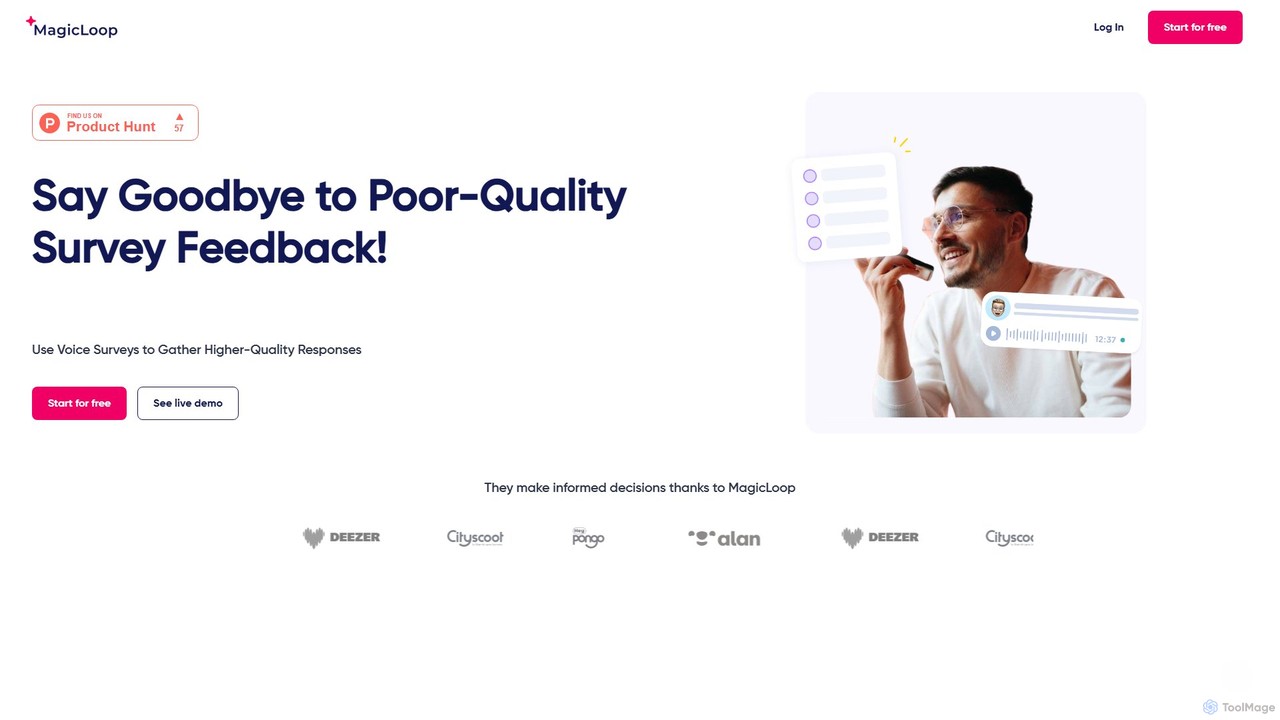
MagicLoop is an AI-powered voice survey tool designed to capture high-quality customer feedback. It replaces traditional text-based surveys …
MagicLoop is an AI-powered voice survey tool designed to capture high-quality customer feedback. It replaces traditional text-based surveys with engaging voice responses, allowing you to gather richer, more nuanced insights. The platform uses AI to automatically transcribe, analyze, and synthesize voice data, saving you hours of manual work. Ideal for user research, NPS feedback, and market analysis, MagicLoop helps you truly understand the voice of your customer and make more informed, empathetic decisions.
Cynthia AI
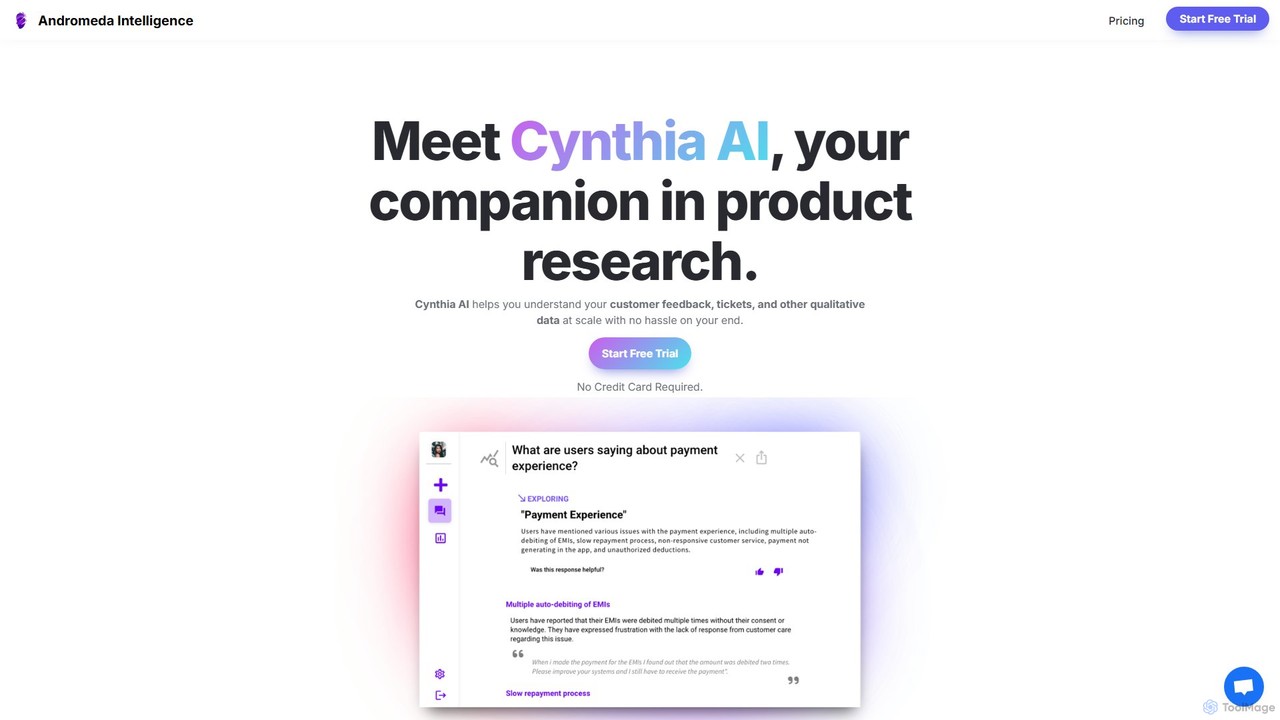
Cynthia AI is a product research platform that analyzes customer feedback from various sources like Zendesk, app stores, …
Cynthia AI is a product research platform that analyzes customer feedback from various sources like Zendesk, app stores, and social media. It uses natural language queries, automated reporting, and multilingual sentiment analysis to help product teams uncover hidden opportunities, track trends, and make data-driven decisions with speed and transparency.
About Feedback Management
AI Feedback Management tools are designed to automate and enhance the process of collecting, analyzing, and acting on customer and user feedback. They leverage advanced AI, including natural language processing (NLP) and machine learning, to extract insights from vast amounts of unstructured data. These tools help businesses understand customer sentiment, identify pain points, and prioritize improvements across products, services, and customer experiences. By transforming raw feedback into actionable intelligence, they enable data-driven decision-making and foster stronger customer relationships.
Core Features
- Sentiment Analysis: Automatically detects the emotional tone (positive, negative, neutral) in text feedback.
- Automated Categorization: Organizes feedback into predefined or AI-discovered themes and topics.
- Trend Identification: Uncovers emerging patterns and shifts in customer opinions over time.
- Natural Language Processing (NLP): Extracts key entities, keywords, and intentions from open-ended comments.
- Integration Capabilities: Connects with CRM, helpdesk, and project management systems for seamless workflows.
Applicable Scenarios
Product teams use them to identify feature requests and bugs from user reviews. Marketing departments analyze campaign feedback to optimize messaging. Customer service teams pinpoint common issues to improve support efficiency.
How to Choose
Evaluate the sophistication of NLP, sentiment analysis, and predictive analytics. Ensure compatibility with existing CRM, support, and project management platforms. Consider the volume of feedback data the tool can process and store. Look for intuitive dashboards and customizable reports for actionable insights.
Feedback ManagementUse Cases
Analyzing Product Reviews for Feature Prioritization
Product managers can use AI feedback management tools to automatically collect and analyze thousands of app store reviews, social media comments, and support tickets. The AI identifies recurring themes, sentiment, and feature requests, allowing teams to prioritize development efforts based on actual user needs and pain points, accelerating product iteration cycles.
Enhancing Customer Service with Issue Identification
Customer service teams leverage these tools to process incoming support tickets, chat transcripts, and call recordings. AI automatically categorizes common issues, detects urgent complaints, and identifies knowledge base gaps. This enables faster resolution times, proactive problem-solving, and continuous improvement of support resources, leading to higher customer satisfaction.
Optimizing Marketing Campaigns through Sentiment Analysis
Marketing professionals deploy AI feedback management to monitor public perception and sentiment around new campaigns, product launches, or brand mentions across social media, forums, and news sites. The AI provides real-time insights into audience reactions, allowing marketers to quickly adjust messaging, address negative feedback, and capitalize on positive trends to maximize campaign effectiveness.
Improving Employee Experience via Internal Feedback
HR departments and team leaders can utilize AI feedback tools to analyze internal surveys, suggestion boxes, and employee engagement platforms. The AI anonymizes and categorizes feedback, identifying common concerns, areas for improvement in company culture, or operational bottlenecks. This fosters a more responsive work environment and helps in retaining talent.
Streamlining Website/App Usability Testing Feedback
UX/UI designers and researchers use these tools to gather and analyze feedback from usability tests, beta programs, and website surveys. AI processes open-ended comments, heatmaps, and session recordings to pinpoint specific navigation difficulties, confusing interfaces, or broken functionalities, leading to more intuitive and user-friendly digital products.
Proactive Churn Prevention with Predictive Analytics
Businesses can integrate AI feedback management with CRM data to identify customers at risk of churning. By analyzing feedback patterns, sentiment shifts, and engagement metrics, the AI can flag dissatisfied customers or predict potential churn, enabling account managers to intervene proactively with targeted offers or support, thereby improving customer retention rates.