Productivity Best in category 8 results Surveys AI Tool

Popular AI tools in the Surveys field of Productivity include Typeform、ScoreApp、ChattySurvey、Phonic、PollGen、PollPebble、MagicLoop, etc., helping you quickly improve efficiency.

ScoreApp

ScoreApp

ScoreApp is an advanced quiz funnel marketing platform designed to attract, engage, and convert audiences. It enables businesses …

3.0K
ChattySurvey

ChattySurvey

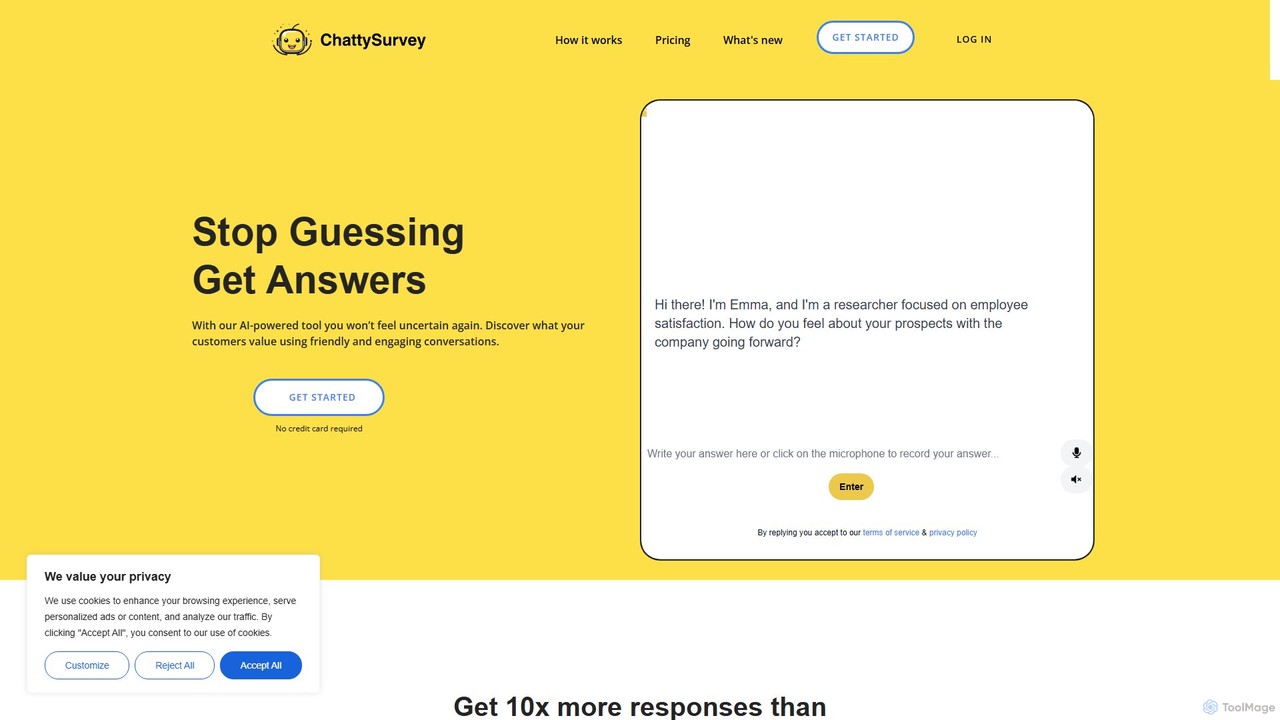
ChattySurvey is an AI-powered survey tool that replaces traditional forms with engaging, friendly conversations. It's designed to capture …

5.8K
PollGen

PollGen

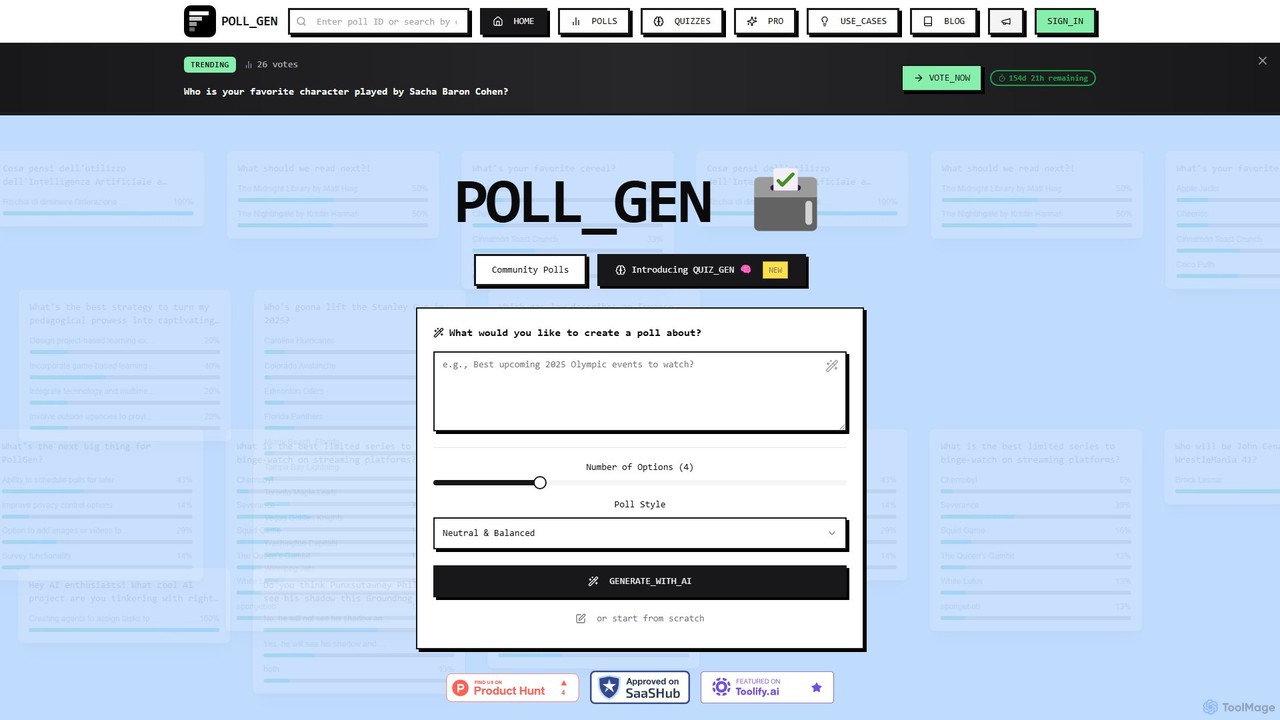
PollGen is an AI-powered platform for instantly creating and sharing engaging polls and quizzes. Simply describe your topic …

3.0K
MagicLoop

MagicLoop

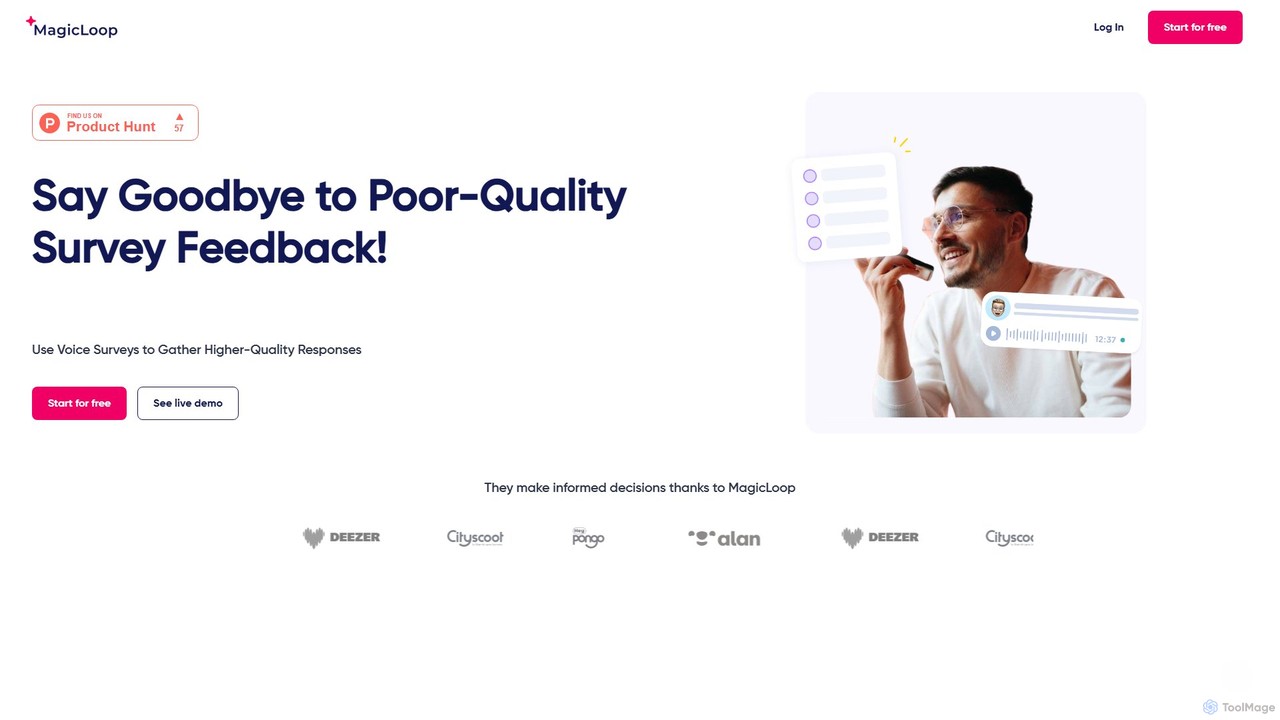
MagicLoop is an AI-powered voice survey tool designed to capture high-quality customer feedback. It replaces traditional text-based surveys …

2.9K
Phonic

Phonic

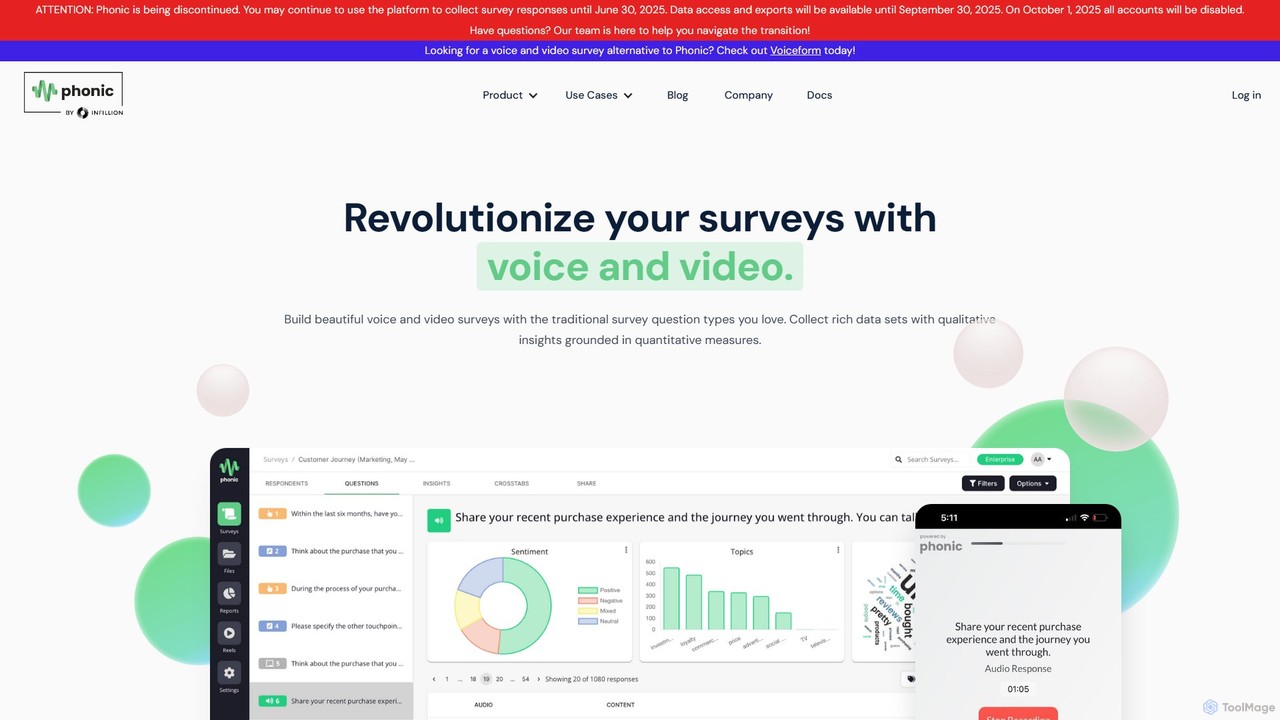
Phonic is an advanced survey platform that captures authentic feedback through voice and video. It leverages AI for …

4.6K
ScoreApp

ScoreApp

ScoreApp is an advanced quiz funnel marketing software designed to help businesses attract, engage, and convert their audience. …

754.7K
Typeform

Typeform

Typeform is an AI-powered, conversational data collection platform that allows users to create beautiful, engaging, and intuitive forms, …

33.9M
PollPebble

PollPebble

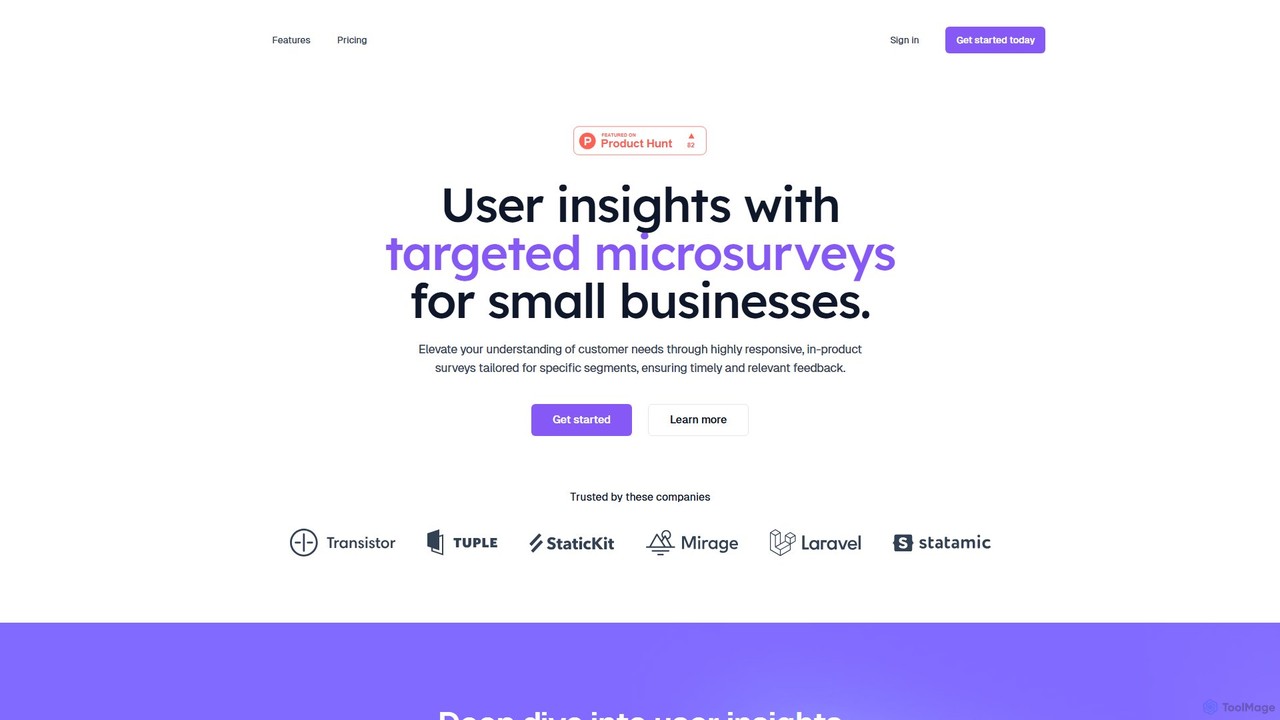
PollPebble is an AI-powered platform for creating targeted microsurveys, designed for small businesses to gather valuable user insights. …

2.9K

About Surveys

AI-powered survey tools are advanced platforms that leverage artificial intelligence to streamline the entire survey process, from design to analysis. These tools utilize machine learning and natural language processing to automate question generation, personalize respondent experiences, and extract deeper insights from collected data. By enhancing efficiency and accuracy in feedback collection, they significantly boost productivity in market research, customer experience, and human resources. Their unique advantage lies in transforming raw data into actionable intelligence with minimal manual effort.

Core Features

  • AI Question Generation: Automatically drafts relevant and unbiased survey questions based on topic input, saving design time.
  • Smart Branching Logic: Dynamically adjusts survey paths and follow-up questions in real-time based on previous responses, enhancing relevance.
  • Sentiment Analysis: Analyzes open-ended text responses to identify underlying emotions, opinions, and key themes at scale.
  • Automated Data Visualization: Transforms raw survey data into intuitive charts, graphs, and dashboards for quick interpretation.
  • Predictive Analytics: Identifies potential survey drop-offs or predicts future trends based on response patterns.

Applicable Scenarios

Businesses conducting market research can rapidly design and deploy targeted questionnaires. HR departments can efficiently gather nuanced employee feedback and identify engagement drivers. Product development teams can collect and analyze user experience data to inform feature improvements.

How to Choose

When selecting an AI survey tool, consider its AI capabilities for question design and data analysis, the level of customization offered for branding and survey flow, integration options with existing CRM or analytics platforms, and the scalability to handle varying survey volumes. Evaluate the intuitiveness of its user interface and the robustness of its reporting features.

SurveysUse Cases

1

Automating Market Research Questionnaire Design

Market researchers often spend significant time crafting comprehensive questionnaires. AI survey tools allow them to input research objectives and target demographics, then automatically generate a draft questionnaire with diverse question types. This accelerates the initial design phase, ensures question relevance, and helps identify potential biases, enabling researchers to focus more on strategic analysis rather than manual question writing.

2

Analyzing Open-Ended Customer Feedback at Scale

Customer service teams and product managers receive vast amounts of qualitative feedback through open-ended survey questions. Manually sifting through these responses is time-consuming. AI survey tools use natural language processing (NLP) to perform sentiment analysis, topic extraction, and keyword identification across thousands of comments, providing immediate insights into customer satisfaction, pain points, and emerging trends without extensive manual review.

3

Personalizing Employee Engagement Surveys

HR professionals aim to understand employee sentiment deeply. AI survey tools can create adaptive employee engagement surveys where follow-up questions are dynamically tailored based on previous answers. For example, if an employee expresses dissatisfaction with work-life balance, the AI can present more specific questions related to workload or flexible working options, leading to more relevant and actionable feedback for HR initiatives.

4

Optimizing Product Feature Prioritization with User Feedback

Product managers need to prioritize new features based on user needs. By deploying AI-powered surveys, they can gather structured and unstructured feedback on proposed features. The AI can then analyze this data, identify common requests, gauge user sentiment towards specific functionalities, and even highlight conflicting opinions, providing data-driven insights to inform the product roadmap and development sprints.

5

Predicting Survey Drop-off and Improving Completion Rates

Survey administrators struggle with low completion rates. Advanced AI survey tools can analyze respondent behavior in real-time, identifying patterns that indicate potential drop-offs. Based on these predictions, the tool can suggest interventions like rephrasing confusing questions, shortening the survey path, or offering incentives at critical junctures, thereby proactively improving overall survey completion rates and data quality.

6

Conducting Academic Research with Advanced Data Collection

Academic researchers require rigorous data collection methods. AI survey platforms can assist in designing complex experimental surveys, ensuring randomization, and managing large participant pools. Beyond basic data collection, the AI can help identify correlations, detect anomalies in responses, and even suggest further lines of inquiry based on preliminary findings, streamlining the research process from methodology to initial analysis.

SurveysFrequently Asked Questions