
ToolMage
Sign in

Best 1 Global Marketing AI tools for Marketing

Popular Global Marketing AI tools in Marketing include BabelShark, helping you work more efficiently.

BabelShark
Freemium

BabelShark

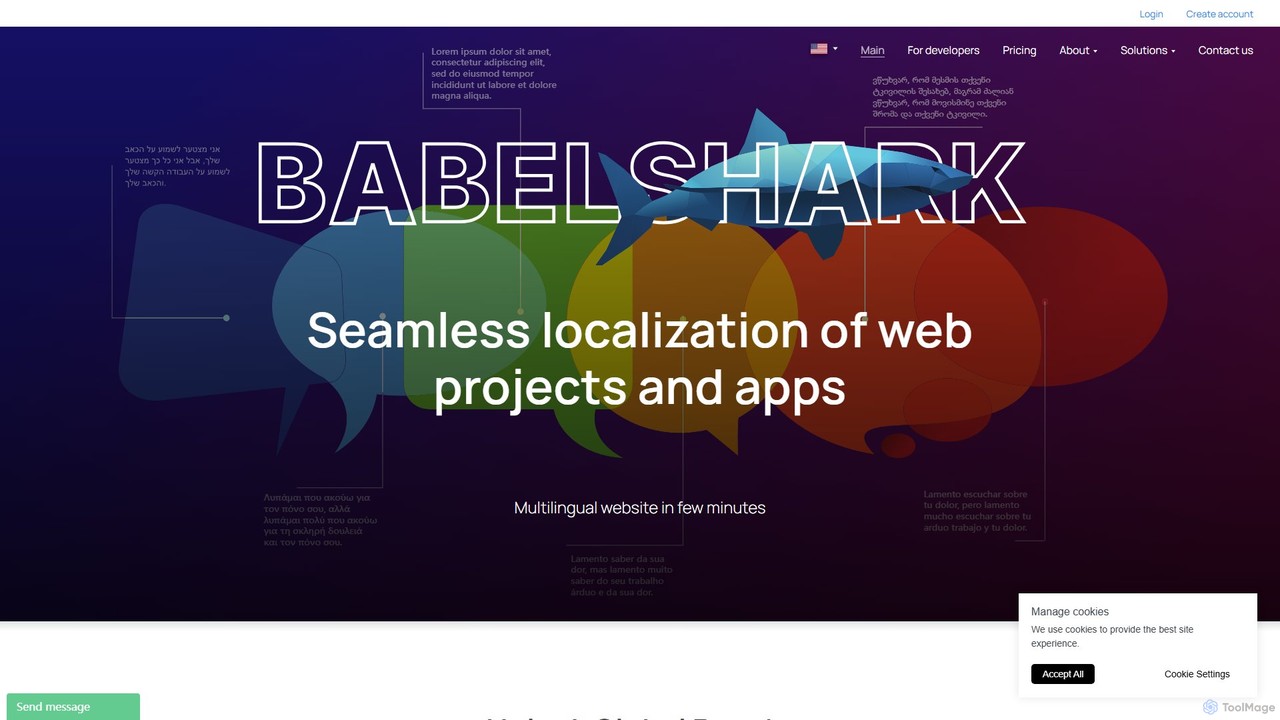
BabelShark is an AI-powered localization service that enables businesses to translate websites and apps into over 200 languages within minutes. It combines advanced AI translation with full user control, allowing for review and customization. Key features include AI-powered proofreading, a glossary for consistent terminology, selective content translation, and visitor language analytics. Designed for rapid global expansion, it offers seamless integration and scalable plans, including a free tier.

Internationalization
Visits 5.9KFavorites 152Likes 141

About Global Marketing

AI Global Marketing tools are specialized platforms designed to adapt and execute marketing strategies across diverse international markets. They leverage machine learning and natural language processing to overcome language barriers and cultural nuances, enabling businesses to connect with a global audience effectively. These tools automate the creation of localized content, analyze cross-cultural consumer data, and optimize campaigns for specific regions. This approach ensures marketing messages are not just translated, but are culturally relevant and resonant.

Core Features

  • Multilingual Content Localization: Automatically translates and culturally adapts marketing copy, ads, and website content.
  • Cross-Cultural Analytics: Analyzes campaign performance and consumer behavior with consideration for regional differences.
  • Global SEO Optimization: Conducts keyword research and content optimization tailored to local search engines and user intent.
  • Localized Campaign Management: Manages and automates marketing campaigns across different time zones, languages, and platforms.

Use Cases

These tools are essential for e-commerce businesses expanding internationally, SaaS companies launching products worldwide, and global brands managing a unified but locally relevant presence. They support marketing managers, localization specialists, and content strategists in scaling their efforts efficiently.

How to Choose

When selecting a tool, evaluate its language support and translation quality. Consider its integration capabilities with your existing marketing stack (e.g., CRM, CMS). Also, assess the depth of its cultural analytics and its ability to handle regional compliance and data privacy regulations.

Global Marketing use cases

1

Localize E-commerce Product Listings for New Markets

An e-commerce manager preparing to launch in three new European countries uses an AI Global Marketing tool to streamline the process. Instead of manually translating hundreds of product descriptions, the tool automatically generates high-quality, localized descriptions for French, German, and Spanish markets. It also suggests culturally relevant keywords for product titles and meta descriptions, improving local SEO from day one. This reduces the market entry timeline by weeks and ensures a consistent yet localized brand voice.

2

Scale Global Social Media Content Creation

A social media team for a global consumer brand needs to create daily content for audiences in Asia, Europe, and North America. Using an AI tool, they input a core campaign message. The AI then generates multiple variations of ad copy and post captions, adapted for the cultural context and preferred tone of each region. It can also suggest imagery that resonates better with local audiences, ensuring campaigns feel authentic rather than simply translated.

3

Optimize International PPC Advertising Campaigns

A digital marketing specialist manages Google Ads campaigns across 10 countries. An AI Global Marketing tool helps by performing multilingual keyword research to uncover local search terms that direct translations would miss. The platform then generates localized ad copy variations and provides performance predictions based on regional data. This allows the specialist to optimize budgets more effectively and achieve a higher return on ad spend (ROAS) in each market.

4

Create Multilingual Landing Pages for a SaaS Launch

A SaaS company is launching its new software globally. The marketing team uses an AI tool to build and test multiple versions of their landing page for different languages. The AI not only translates the text but also suggests layout adjustments and calls-to-action (CTAs) that are more effective in specific cultures. This A/B testing process is automated, helping the team quickly identify the highest-converting page design for each target country.

5

Analyze Competitor Strategies in Foreign Markets

A market research analyst needs to understand the competitive landscape in Southeast Asia. They use an AI Global Marketing tool to monitor competitors' websites, social media, and ad campaigns in languages like Vietnamese and Thai. The tool translates the content and performs sentiment analysis, identifying key marketing messages, popular promotions, and customer pain points. This provides actionable intelligence for crafting a differentiated market entry strategy.

6

Automate Multilingual Email Marketing Journeys

A CRM manager for an international travel agency wants to create personalized email nurture sequences for customers worldwide. An AI platform helps segment the audience by location and language preference. It then generates entire email sequences—from welcome messages to promotional offers—in multiple languages. The AI also optimizes send times based on local time zones, increasing open rates and engagement across the global customer base.

Global Marketing FAQ

What are AI Global Marketing tools?

AI Global Marketing tools are software platforms that use artificial intelligence to help businesses plan, execute, and optimize marketing campaigns for international audiences. They go beyond simple translation by providing features for content localization, cross-cultural analytics, and global SEO. Their primary goal is to make marketing messages culturally relevant and effective in diverse markets.

How do AI Global Marketing tools differ from standard marketing automation tools?

The key difference lies in their focus on cross-border complexities. Standard marketing automation tools excel at streamlining workflows like email campaigns or social media posting within a single cultural context. AI Global Marketing tools add a crucial layer of multilingual and multicultural capabilities. They are specifically designed to handle tasks like nuanced translation, cultural adaptation of content, and analysis of consumer behavior across different regions, which standard tools typically lack.

How to choose the right AI tool for global marketing?

When selecting a tool, consider these factors:

  • Language & Localization Quality: Assess the number of supported languages and the sophistication of the AI's ability to culturally adapt content, not just translate it.
  • Integration Capabilities: Ensure it connects seamlessly with your existing CRM, CMS, and analytics platforms.
  • Regional Data Analysis: Check if the tool provides insights specific to your target markets, including local trends and consumer behavior.
  • Compliance & Security: Verify that the tool complies with international data privacy laws like GDPR and CCPA.
What are the key features of AI-powered global marketing platforms?

Most AI Global Marketing platforms include a core set of features designed for international campaigns. These typically include multilingual content generation for ads and social media, automated translation and localization workflows, global SEO keyword research, cross-cultural sentiment analysis, and campaign performance dashboards that segment data by country or region. Many also offer predictive analytics to forecast campaign success in new markets.

Who can benefit from using AI Global Marketing tools?

These tools are highly beneficial for any organization operating in multiple countries. Key users include e-commerce businesses expanding their international sales, SaaS companies with a global user base, multinational corporations managing brand consistency, and digital marketing agencies serving international clients. Roles like international marketing managers, localization specialists, and global content strategists find these tools particularly valuable for scaling their operations.