Locales.ai
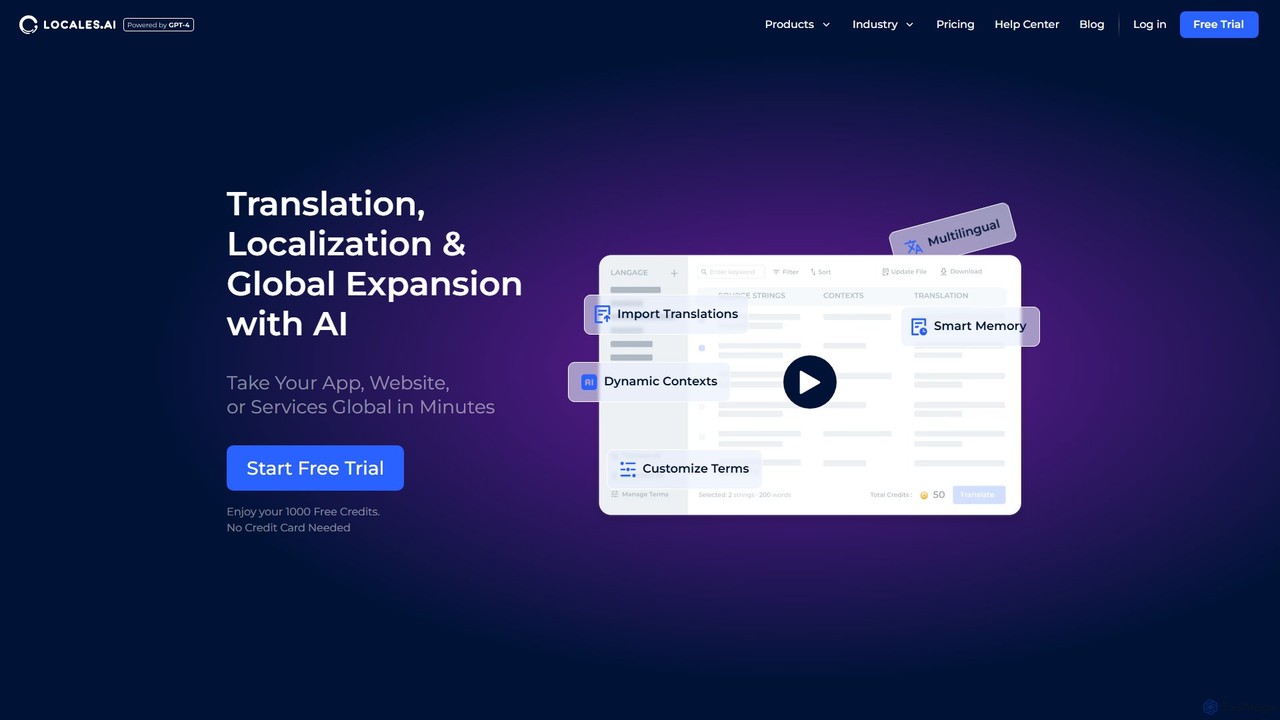
Locales.ai is an AI-driven localization platform that enables fast, accurate, and cost-effective translation of websites, apps, and services …
Locales.ai is an AI-driven localization platform that enables fast, accurate, and cost-effective translation of websites, apps, and services into over 30 languages. It simplifies global expansion with a one-click translation process, achieving 99% accuracy without needing a dedicated localization team. The platform offers a user-friendly workflow, advanced context management tools, and seamless integration with various tech frameworks, including a dedicated Shopify app.
BabelShark
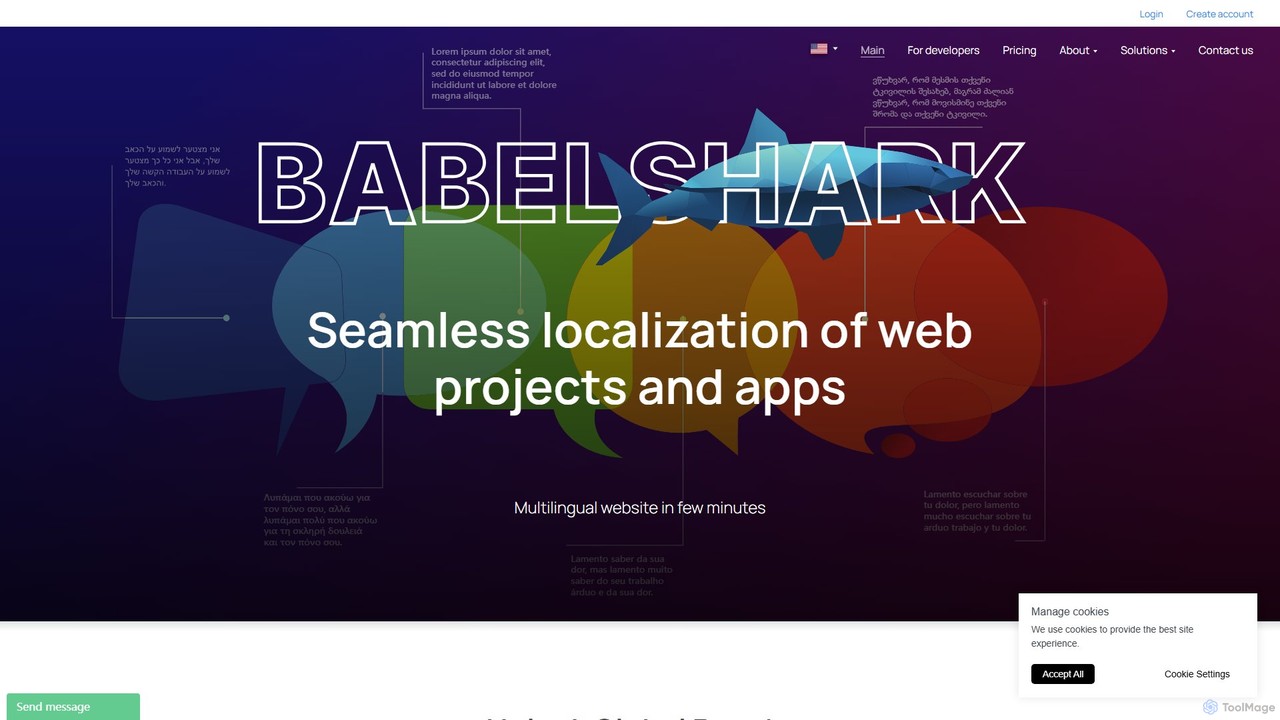
BabelShark is an AI-powered localization service that enables businesses to translate websites and apps into over 200 languages …
BabelShark is an AI-powered localization service that enables businesses to translate websites and apps into over 200 languages within minutes. It combines advanced AI translation with full user control, allowing for review and customization. Key features include AI-powered proofreading, a glossary for consistent terminology, selective content translation, and visitor language analytics. Designed for rapid global expansion, it offers seamless integration and scalable plans, including a free tier.
About Internationalization
Internationalization (i18n) AI tools are designed to help developers and businesses adapt software, websites, and applications for global audiences. These tools leverage artificial intelligence to automate and streamline the complex process of preparing products for different languages, cultures, and regions. This includes managing localized content, ensuring linguistic accuracy, and maintaining cultural relevance across diverse markets. Within the developer tools ecosystem, they significantly reduce manual effort and accelerate time-to-market for global products.
Core Features
- Automated String Extraction: AI identifies and extracts translatable text strings from source code and resource files.
- Machine Translation Integration: Provides initial, context-aware translations for various languages, often with customizable glossaries.
- Localization Workflow Automation: Manages translation memory, terminology databases, and review processes for efficient content updates.
- Cultural & Format Adaptation: AI suggests region-specific formats for dates, currencies, numbers, and addresses, ensuring cultural appropriateness.
- Quality Assurance & Consistency Checks: Automatically detects translation inconsistencies, grammatical errors, and UI layout issues in localized versions.
Use Cases
These tools are crucial for adapting mobile apps, SaaS platforms, and e-commerce sites for global markets. They enable developers to efficiently localize user interfaces, documentation, and marketing content, ensuring products resonate with diverse linguistic and cultural audiences worldwide.
How to Choose
When selecting an AI Internationalization tool, consider its integration capabilities with existing development environments and CI/CD pipelines. Evaluate the breadth of supported languages and file formats (e.g., JSON, XML, PO). Assess the level of AI-powered automation for translation, QA, and workflow management, alongside options for human review and customization of glossaries and style guides.

InternationalizationUse Cases
Automating Mobile App UI Localization
Mobile app developers utilize AI internationalization tools to automatically extract user interface strings from their codebase, obtain initial translations, and manage updates across iOS and Android platforms for rapid deployment into new linguistic markets. This significantly reduces the manual effort and time required for global app launches.
Streamlining SaaS Platform Content Adaptation
SaaS companies employ these AI tools to efficiently localize their web application's user interface, comprehensive help documentation, and marketing content. This ensures consistent, culturally appropriate messaging and functionality for users in various geographical regions, enhancing global user adoption and satisfaction.
Global E-commerce Product Description Translation
E-commerce businesses leverage AI to translate vast catalogs of product descriptions, customer reviews, and promotional copy into multiple languages. The tools help adapt content to local cultural nuances and purchasing habits, thereby expanding market reach and boosting international sales conversions.
Real-time Multilingual Customer Support Integration
Integrating AI internationalization tools with customer support systems, such as chatbots or helpdesks, enables businesses to provide real-time, localized responses to customer inquiries. This ensures users receive support in their native language, improving satisfaction and reducing communication barriers.
Developer Documentation & API Reference Localization
Software development teams use AI to translate technical documentation, API references, and code comments, making their tools and platforms accessible to a broader, global developer community. This fosters wider adoption and collaboration across different linguistic backgrounds.
Continuous Localization in Agile Development
Agile development teams integrate AI-powered i18n tools directly into their Continuous Integration/Continuous Deployment (CI/CD) pipelines. This allows for automatic detection of new strings, triggering of translations, and deployment of localized versions with every sprint, ensuring products are always market-ready.