ToolMage
Sign in

Best 1 Lead Conversion AI tools for Marketing

Popular Lead Conversion AI tools in Marketing include Offorte, helping you work more efficiently.

Offorte
Freemium

Offorte

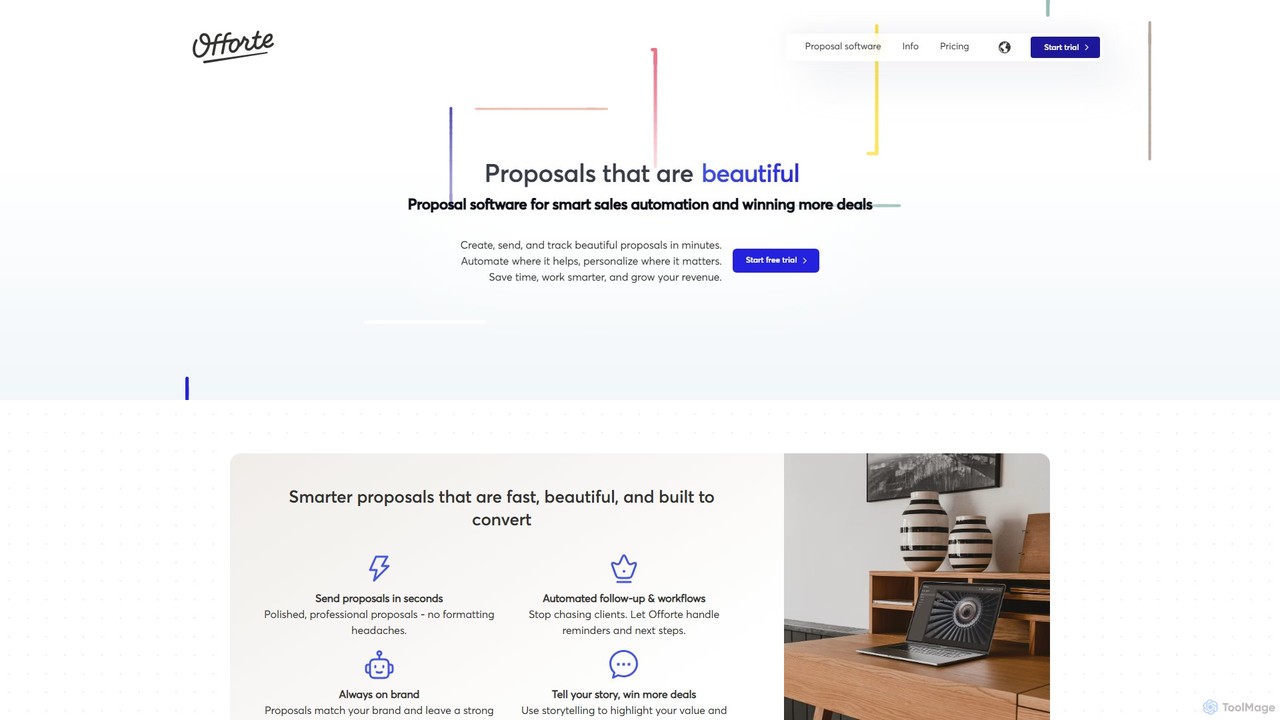
Offorte is an AI-powered proposal software designed for sales automation. It helps businesses create, send, and track beautiful, interactive proposals in minutes. By combining smart templates, AI-assisted writing, automated follow-ups, and e-signatures, Offorte streamlines the sales process, saving time and increasing deal conversion rates for freelancers, agencies, and small businesses.

Lead Conversion
Visits 20.1KFavorites 122Likes 136

About Lead Conversion

AI Lead Conversion tools are a specialized class of software designed to automate and optimize the process of turning potential customers into active buyers. These tools use machine learning to analyze lead behavior, personalize communication across channels, and predict which prospects are most likely to convert. By doing so, they enable marketing and sales teams to focus their efforts on high-intent leads with tailored messaging, significantly improving conversion rates and sales efficiency. This data-driven approach moves beyond simple automation to intelligent, adaptive engagement.

Core Features

  • Predictive Lead Scoring: Uses AI to analyze historical and behavioral data to rank leads based on their likelihood to purchase.
  • Automated Personalization: Dynamically customizes emails, website content, and chat interactions for each lead.
  • Intelligent Chatbots: Engages website visitors 24/7, answers questions, qualifies leads, and schedules meetings automatically.
  • Behavioral Triggers: Initiates automated workflows or alerts based on specific lead actions, such as visiting a pricing page.
  • Conversion Path Analysis: Identifies friction points in the customer journey and suggests optimizations for landing pages and forms.

Use Cases

These tools are essential for B2B companies with long sales cycles, SaaS businesses aiming to convert free trial users, and high-volume e-commerce stores. Marketing automation specialists, sales development representatives (SDRs), and growth managers use them to scale their nurturing efforts and prioritize their pipeline effectively.

How to Choose

When selecting an AI Lead Conversion tool, prioritize its integration capabilities with your existing CRM (e.g., Salesforce, HubSpot). Evaluate the sophistication of its AI models for scoring and personalization. Also, consider the range of supported communication channels (email, chat, SMS), the level of customization available for workflows, and the clarity of its analytics dashboard.

Lead Conversion use cases

1

Automating B2B Lead Qualification and Booking

A B2B software company implements an AI chatbot on its website. When a visitor lands on the pricing page, the chatbot initiates a conversation, asking qualifying questions about company size, role, and specific needs. Based on the responses, the AI determines if the lead is a good fit. For qualified leads, the chatbot seamlessly integrates with the sales team's calendars to book a product demo instantly, reducing lead response time from hours to seconds and ensuring sales reps only speak with high-potential prospects.

2

Personalizing E-commerce Abandoned Cart Recovery

An online fashion retailer uses an AI lead conversion tool to tackle cart abandonment. The tool analyzes the user's behavior before they left, such as hesitation on the shipping cost section. Instead of a generic reminder email, the AI triggers a personalized message offering a limited-time free shipping code. For users who viewed multiple items in a category, it might send a follow-up email showcasing similar products. This tailored approach significantly increases the recovery rate compared to standard, one-size-fits-all campaigns.

3

Prioritizing High-Value Leads for Sales Teams

A real estate agency receives hundreds of inquiries daily. They use an AI lead conversion platform with predictive scoring. The AI analyzes various data points for each lead, such as the property value they viewed, whether they used the mortgage calculator, and their engagement with email newsletters. Leads with the highest scores, indicating strong purchase intent, are automatically routed to senior agents for immediate follow-up. This ensures that the most valuable opportunities are handled promptly, maximizing the chances of closing a deal.

4

Dynamic Website Content Personalization

A SaaS company targeting multiple industries uses an AI tool to personalize its homepage. The tool identifies a visitor's industry based on their IP address or referral source. A visitor from the healthcare industry sees a headline reading 'The 1 CRM for Healthcare Providers,' while a visitor from finance sees 'Secure CRM Solutions for Financial Services.' This immediate relevance captures attention, reduces bounce rates, and increases the number of demo requests from their target audiences by presenting the most compelling value proposition upfront.

5

Nurturing Long-Cycle Educational Leads

A university uses an AI nurturing tool to engage prospective students over several months. When a student downloads a prospectus for the engineering department, the AI enrolls them in a personalized email sequence. The system sends them content relevant to their interest, such as interviews with engineering alumni and updates on new lab facilities. It tracks engagement and adjusts the communication frequency and content accordingly. This sustained, relevant contact keeps the university top-of-mind and significantly increases application rates from nurtured leads.

6

Optimizing Landing Page Form Conversion

A digital marketing agency uses an AI conversion tool to improve a client's landing page performance. The AI analyzes thousands of user sessions, tracking mouse movements, clicks, and form interaction times. It identifies that a non-essential 'Phone Number' field is causing a 30% drop-off rate. Based on this insight, the agency removes the field. The AI then runs an A/B test on the call-to-action button text, finding that 'Get Started Now' converts 15% better than 'Submit'. These data-driven optimizations lead to a significant uplift in lead generation without increasing ad spend.

Lead Conversion FAQ

What are AI Lead Conversion tools?

AI Lead Conversion tools are software applications that use artificial intelligence to improve the process of turning leads into customers. They go beyond traditional marketing automation by using machine learning to predict lead behavior, personalize communication at scale, and automate complex engagement workflows. Key functions include predictive lead scoring, intelligent chatbots for qualification, and dynamic content personalization to increase conversion rates.

How do AI Lead Conversion tools differ from a CRM?

A CRM (Customer Relationship Management) system is primarily a database for storing customer and lead information. AI Lead Conversion tools are action-oriented platforms that use the data within a CRM to actively engage and convert leads. While some CRMs have added AI features, dedicated lead conversion tools offer more advanced capabilities for real-time personalization, predictive scoring, and automated communication workflows. They work best when integrated with a CRM, using it as the central data repository while they execute the conversion strategy.

What is the main benefit of using AI for lead conversion?

The main benefit is achieving personalization and prioritization at scale. A human sales team cannot manually tailor communication for thousands of leads or accurately predict which ones are most likely to buy. AI automates this process, analyzing vast amounts of data to deliver the right message to the right person at the right time. This leads to higher engagement, improved conversion rates, increased sales team efficiency, and a better overall customer experience.

Who should use AI Lead Conversion tools?

These tools are most beneficial for businesses with a consistent volume of inbound leads that exceeds their team's capacity for manual, personalized follow-up. This includes:

  • B2B Companies: Especially those with long sales cycles that require sustained nurturing.
  • SaaS Businesses: To convert free trial users into paying customers and reduce churn.
  • E-commerce Stores: For cart abandonment recovery, product recommendations, and personalized offers.
  • Educational Institutions: To nurture prospective student applications over several months.

Essentially, any organization looking to improve marketing ROI and sales efficiency can benefit.

How do I choose the right AI Lead Conversion tool?

Choosing the right tool depends on your specific needs. Consider these key factors:

  • Integration: Does it seamlessly connect with your existing CRM, email marketing platform, and other essential tools?
  • Features: Does it offer the core functions you need, such as predictive scoring, chatbots, or website personalization?
  • Scalability: Can the tool grow with your business as your lead volume increases?
  • Ease of Use: How intuitive is the interface for your marketing and sales teams? Is the learning curve steep?
  • Analytics: Does it provide clear, actionable insights into performance and ROI?

Start by identifying your primary conversion bottleneck and look for a tool that specializes in solving that specific problem.