StrategyMasterAI
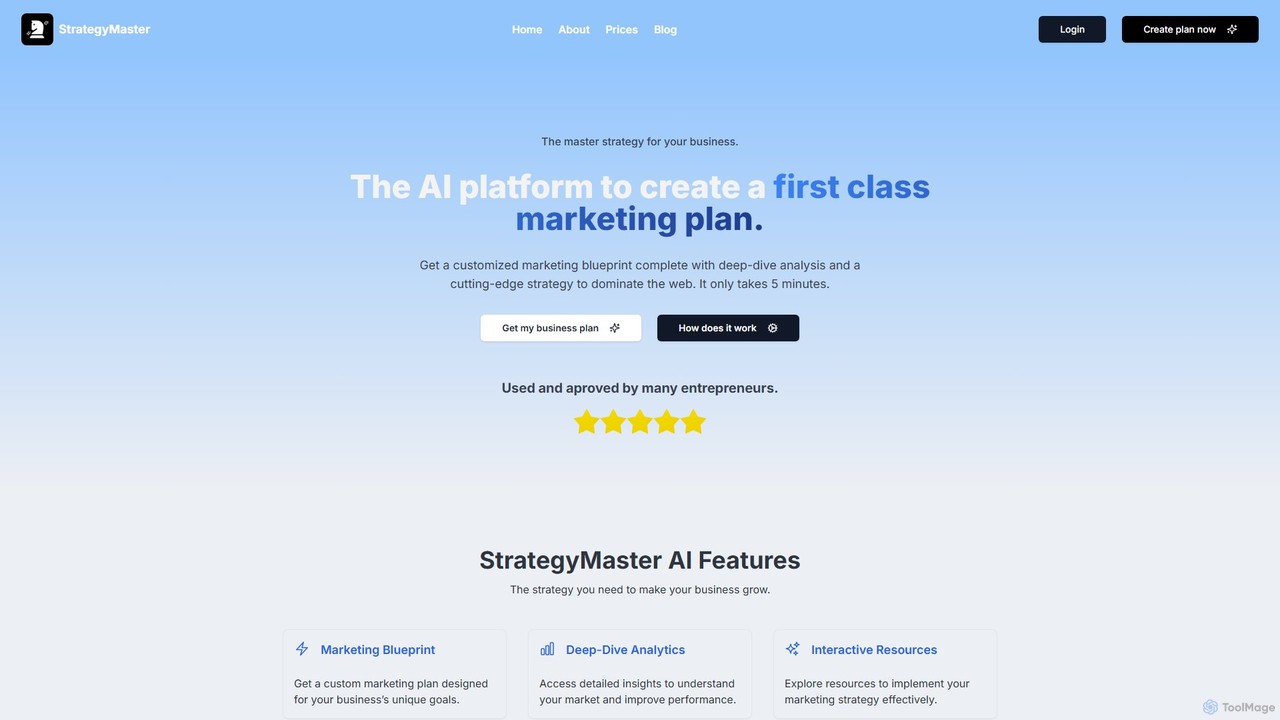
StrategyMasterAI is an AI-powered platform that generates comprehensive, customized marketing plans for businesses in just 5 minutes. By …
StrategyMasterAI is an AI-powered platform that generates comprehensive, customized marketing plans for businesses in just 5 minutes. By analyzing your business details, market, and competitors, it delivers a strategic blueprint complete with deep-dive analytics and actionable steps to enhance your online presence and drive growth.
atomicelevator
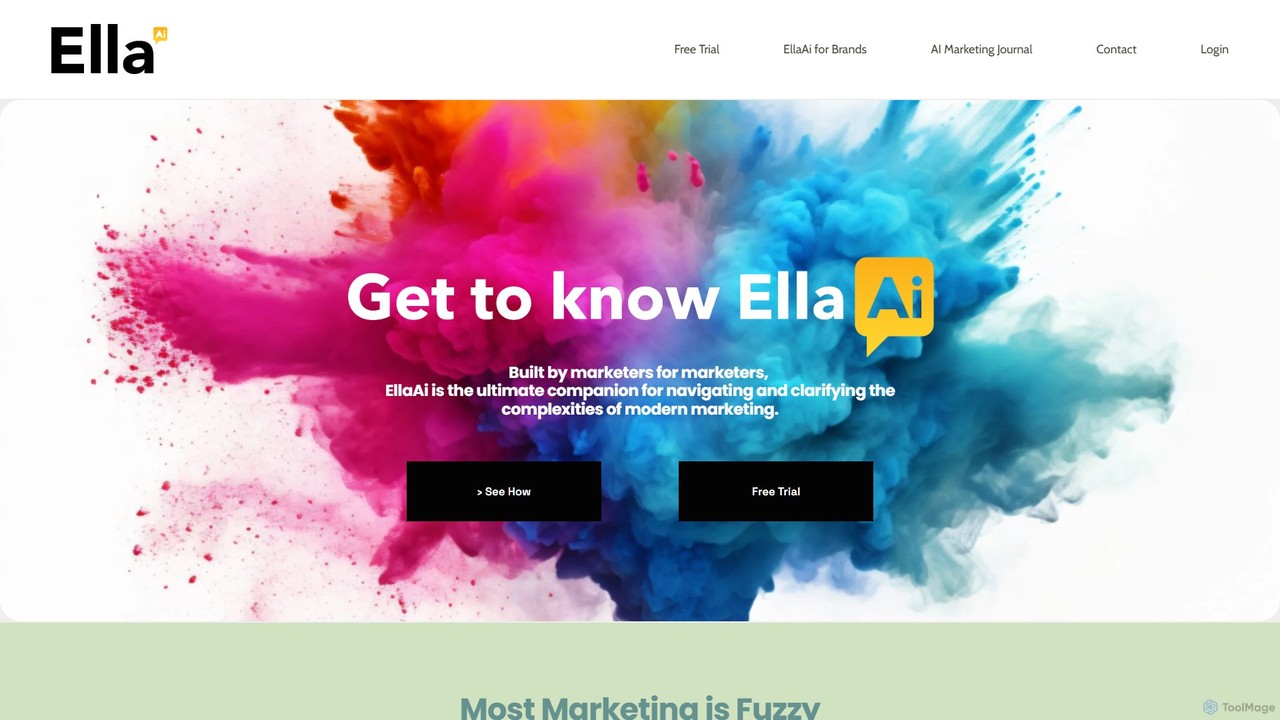
Atomic Elevator's EllaAi is an AI-powered marketing strategy platform designed for marketers, fCMOs, and agencies. It transforms fuzzy …
Atomic Elevator's EllaAi is an AI-powered marketing strategy platform designed for marketers, fCMOs, and agencies. It transforms fuzzy marketing into "High-Definition Marketing™" by helping you audit brands, build interconnected strategies (personas, value props), and generate precisely aligned content using expert-built playbooks and templates. Create a custom "Brand Bot" to ensure consistent, on-brand messaging across all channels.

MarketingFrame.works
MarketingFrame.works is an AI-powered platform designed for startups and marketers. It provides proven marketing frameworks to generate strategic …
MarketingFrame.works is an AI-powered platform designed for startups and marketers. It provides proven marketing frameworks to generate strategic ideas, growth plans, and content, eliminating guesswork and accelerating business growth. Define your company and customers to unlock endless, tailored marketing solutions.
About Marketing Strategy
Marketing Strategy AI tools are advanced platforms that leverage artificial intelligence to analyze market data, predict consumer behavior, and optimize overall marketing plans. These tools utilize machine learning algorithms to identify trends, segment audiences, and recommend data-driven strategies for improved campaign performance. They empower businesses to make informed decisions, personalize customer engagement, and allocate resources more effectively across various marketing channels. This leads to more targeted campaigns and a stronger competitive advantage within the broader field of AI marketing.
Core Features
- Market Trend Analysis: Identifies emerging market trends and shifts in consumer preferences using vast datasets.
- Audience Segmentation & Profiling: Automatically segments target audiences based on demographics, behavior, and psychographics for precise targeting.
- Campaign Optimization & Planning: Recommends optimal campaign structures, channels, and timing to maximize ROI.
- Predictive Analytics: Forecasts future marketing outcomes, sales performance, and customer lifetime value.
- Competitive Intelligence: Monitors competitor strategies and performance to identify opportunities and threats.
Applicable Scenarios
Businesses across various sectors, from e-commerce to B2B services, utilize Marketing Strategy AI tools. Marketing managers employ them to develop comprehensive annual plans, while product teams use them to identify market gaps for new offerings. Growth marketers leverage these tools to refine acquisition strategies and personalize customer journeys from initial touchpoint to conversion.
How to Choose
When selecting Marketing Strategy AI tools, consider the breadth of data integration (CRM, sales, web analytics), the sophistication of predictive models, and the clarity of actionable insights provided. Evaluate the ease of use, customization options for specific business needs, and the ability to scale with your organization's growth. Ensure the tool offers robust reporting and visualization capabilities to effectively communicate strategic recommendations.
Marketing StrategyUse Cases
Developing Data-Driven Annual Marketing Plans
Marketing directors use AI tools to analyze historical campaign data, market trends, and competitor activities, generating comprehensive strategic plans with predicted outcomes and optimized budget allocations for the upcoming year. This process significantly reduces manual research time and enhances the accuracy of strategic forecasting, ensuring resources are aligned with the most promising opportunities.
Identifying Untapped Market Segments
Product marketing teams leverage AI to process vast consumer data, uncovering niche market segments with high potential and low competition, guiding the development of new products or tailored messaging. This allows businesses to pinpoint specific customer groups whose needs are currently underserved, enabling highly targeted and effective market entry strategies.
Optimizing Customer Journey Personalization
E-commerce strategists employ AI to map individual customer journeys, predicting next best actions and recommending personalized content, offers, or communication channels to maximize conversion and retention rates. By understanding each customer's unique path and preferences, AI tools enable dynamic adjustments to the marketing strategy, leading to highly relevant and impactful interactions.
Forecasting Campaign Performance & ROI
Digital marketing managers input planned campaign parameters into AI strategy tools to receive predictive analytics on expected reach, engagement, conversions, and return on investment, allowing for pre-launch adjustments. This proactive approach minimizes risks and optimizes budget allocation by identifying potential underperforming elements before a campaign goes live, ensuring a higher likelihood of strategic success.
Gaining Competitive Strategic Insights
Business intelligence analysts use AI to monitor competitor marketing spend, messaging, and audience engagement across platforms, providing actionable insights to refine their own strategic positioning and differentiation. This allows companies to react swiftly to market shifts, identify competitive advantages, and develop robust counter-strategies, maintaining a strong market presence.
Automating Content Strategy & Topic Ideation
Content strategists utilize AI to analyze search trends, audience interests, and content gaps, generating data-backed topic clusters and content calendars that align with overarching marketing goals and improve organic visibility. This strategic application of AI ensures content creation is always relevant, targeted, and optimized for maximum impact, moving beyond manual brainstorming to data-driven content planning.