ToolMage
Sign in

Best 2 Monetization AI tools for Marketing

Popular Monetization AI tools in Marketing include TravelFeed and revmore, helping you work more efficiently.

TravelFeed
Freemium

TravelFeed

TravelFeed is an all-in-one, AI-powered platform for travel bloggers. It enables users to create, publish, and monetize travel content effortlessly. Featuring an AI Blogger, trip planner, multiple monetization options including cryptocurrency, and a supportive community, it's designed for both new and experienced travelers to share their stories and earn from their passion.

Blogging
Visits 50.4KFavorites 140Likes 144
revmore
Paid

revmore

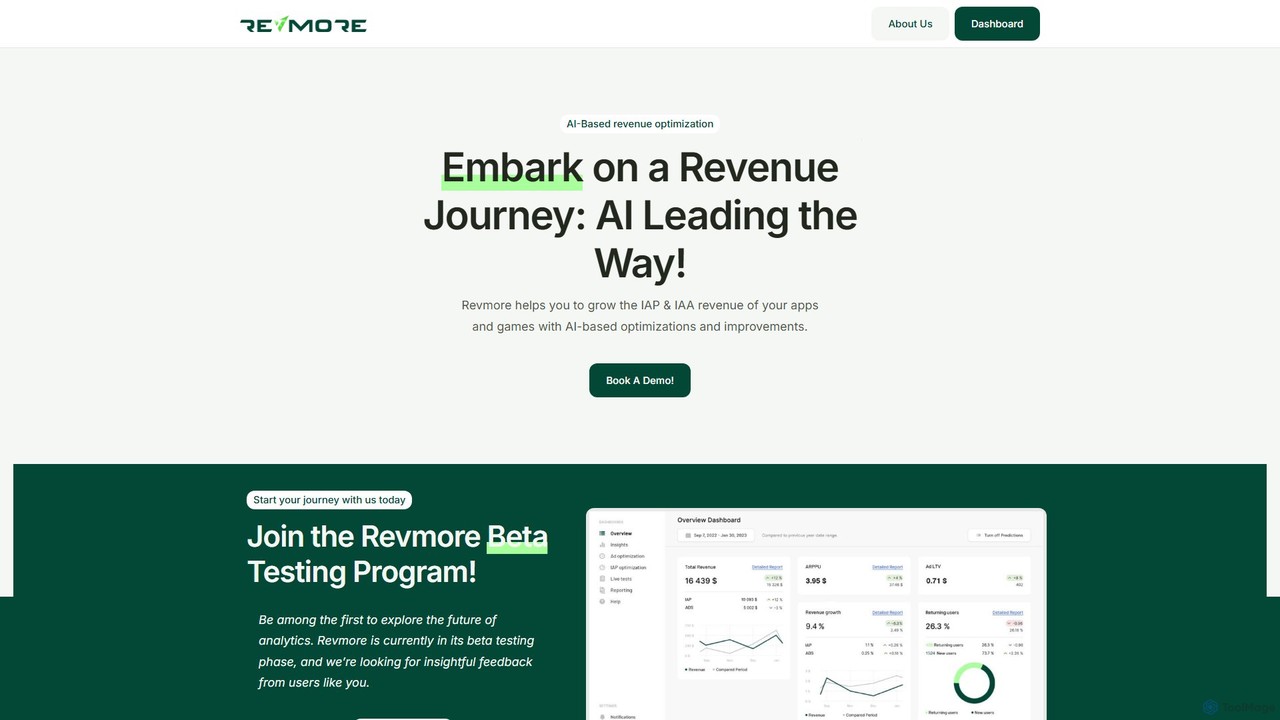
Revmore is an AI-powered platform designed for app and game developers to optimize revenue. It leverages AI-based A/B testing and analytics to increase both In-App Purchase (IAP) and In-App Advertising (IAA) income. By providing data-driven insights and automating monetization strategies, Revmore helps developers maximize profitability and enhance user value without extensive manual effort.

B Testing
Visits 5.4KFavorites 124Likes 123

About Monetization

AI Monetization tools are a specialized category within marketing technology that leverage artificial intelligence to optimize and automate revenue generation strategies. These sophisticated tools analyze vast datasets, predict customer behavior, and personalize offerings to maximize income from products, services, content, or data. They empower businesses to identify new revenue streams, enhance existing ones, and make data-driven decisions for sustainable growth, acting as a crucial component in a comprehensive marketing strategy by directly impacting the bottom line.

Core Features

  • Dynamic Pricing Optimization: Automatically adjusts product or service prices in real-time based on market demand, competitor pricing, customer segments, and inventory levels, ensuring optimal revenue capture across various market conditions.
  • Personalized Offer & Recommendation Engines: Utilizes AI to deliver highly relevant product recommendations, promotions, and content to individual users or specific customer segments, significantly increasing conversion rates and average order value.
  • Subscription & Churn Management: Predicts customer churn risk by analyzing usage patterns and engagement metrics, automating proactive retention efforts, while also optimizing subscription models and pricing tiers for maximizing recurring revenue.
  • Ad & Content Monetization: Optimizes ad placement, targeting, and content delivery across digital platforms to maximize advertising revenue, or facilitates direct monetization through paywalls, premium content, and virtual goods.
  • Sales & Lead Conversion Automation: Employs AI to qualify leads more effectively, personalize sales outreach messages, and intelligently guide prospects through the sales funnel, thereby accelerating the conversion process and boosting sales efficiency.

Use Cases

Businesses across various sectors utilize AI monetization tools to refine their revenue strategies and unlock new income potential. E-commerce platforms employ them for dynamic pricing adjustments and personalized product recommendations to boost sales. Media companies use these tools to optimize ad inventory, manage content subscriptions, and implement paywalls effectively. SaaS providers leverage AI for intelligent subscription tiering, proactive churn prevention, and identifying upsell opportunities, ensuring steady and growing recurring revenue streams.

How to Choose

When selecting an AI monetization tool, it's crucial to consider its specific capabilities and how well they align with your unique business model, whether it's e-commerce, SaaS, or content-driven. Evaluate its seamless integration with your existing CRM, ERP, or marketing automation systems to ensure a unified data flow. Assess the level of customization and control it offers over AI algorithms, allowing you to fine-tune strategies. Compare pricing models, including subscription fees and revenue-share options, to ensure alignment with your budget and expected ROI. Finally, thoroughly review its analytics and reporting features for comprehensive, actionable insights into your monetization performance.


Monetization use cases

1

Dynamic Pricing for E-commerce Products

An online retailer uses AI monetization tools to automatically adjust product prices in real-time. The AI analyzes competitor pricing, customer demand, inventory levels, and even time of day to set optimal prices. This ensures maximum profit margins during peak demand and competitive pricing during slower periods, leading to increased sales volume and overall revenue without manual intervention.

2

Personalized Subscription Tier Recommendations

A SaaS company leverages AI to analyze user engagement, feature usage, and demographic data to recommend the most suitable subscription tier to new and existing customers. The AI identifies patterns indicating potential for upsell or a better fit for a higher-value plan, presenting personalized offers that increase average revenue per user (ARPU) and reduce churn by matching users with appropriate value propositions.

3

Optimizing Ad Inventory for Digital Publishers

A digital news platform employs AI monetization tools to optimize the placement and targeting of advertisements across its website and mobile app. The AI predicts which ad formats and placements will yield the highest eCPM (effective cost per mille) for specific user segments, ensuring that advertisers get better results and the publisher maximizes ad revenue from its available inventory.

4

AI-Driven Content Paywall Optimization

An online learning platform uses AI to determine the optimal moment and content for presenting a paywall to users. By analyzing user consumption patterns, engagement metrics, and content type, the AI identifies users most likely to convert to a paid subscription. This personalized approach to paywall implementation maximizes conversion rates for premium content, turning casual browsers into paying subscribers.

5

Automated Upselling and Cross-selling in CRM

A B2B software vendor integrates AI monetization capabilities into its CRM system. The AI analyzes customer purchase history, support interactions, and product usage to identify opportunities for upselling additional modules or cross-selling complementary products. It then triggers automated, personalized outreach to sales teams or directly to customers, significantly boosting additional revenue from existing client relationships.

6

Identifying New Revenue Streams from User Data

A mobile app developer utilizes AI monetization tools to analyze anonymized user data for potential new revenue streams. The AI might identify underserved user segments, popular feature requests that could be premium add-ons, or patterns indicating demand for new data-driven services. This proactive data analysis helps the developer innovate and launch new monetization strategies based on genuine user insights.

Monetization FAQ

What are AI Monetization tools?

AI Monetization tools are software solutions that use artificial intelligence to help businesses and individuals generate revenue more effectively. They analyze data to optimize pricing, personalize offers, manage subscriptions, and identify new income opportunities. These tools are a critical part of a broader marketing strategy, specifically focusing on converting value into revenue by leveraging predictive analytics and automation.

How do AI tools optimize pricing strategies?

AI tools optimize pricing by employing dynamic pricing algorithms. They continuously analyze various factors such as real-time market demand, competitor pricing, customer segmentation, inventory levels, and even external economic indicators. Based on this analysis, the AI automatically adjusts prices to maximize revenue and profit margins, ensuring products or services are priced optimally at any given moment for different customer groups.

What's the difference between AI monetization and traditional marketing tools?

Traditional marketing tools primarily focus on promotion, branding, and lead generation, often relying on manual analysis and rule-based automation. AI monetization tools, while part of the marketing ecosystem, specifically focus on the revenue generation phase. They use advanced machine learning to predict behavior, personalize offers at scale, and dynamically adjust strategies (like pricing) in real-time, offering a level of optimization and automation far beyond traditional methods.

Who can benefit most from using AI monetization tools?

Businesses with large customer bases, diverse product portfolios, or recurring revenue models benefit most. This includes e-commerce retailers, SaaS companies, digital publishers, and subscription-based services. AI monetization tools are particularly valuable for organizations that need to optimize pricing, personalize customer experiences, manage churn, or identify new revenue streams from complex data sets, leading to significant increases in profitability.

What should I consider when choosing an AI monetization platform?

When selecting an AI monetization platform, evaluate its core features like dynamic pricing, personalization engines, and subscription management against your specific business needs. Consider its integration capabilities with your existing tech stack (CRM, ERP). Assess the platform's scalability, data security, and compliance. Look for robust analytics and reporting, and understand the vendor's support and implementation services. Finally, compare pricing models and potential ROI.